Trump Dragged Into Atiku's Past: Ex-Rep Demands US Probe Review!
A former Nigerian lawmaker, Hon. Ehiozuwa Johnson Agbonayinma, has petitioned U.S. President Donald Trump, seeking a review of a historical financial-crime investigation involving former Vice-President Atiku Abubakar. The petition calls for a re-examination of allegations including money laundering and bribery, urging U.S. authorities to determine the legal actionability of past transactions.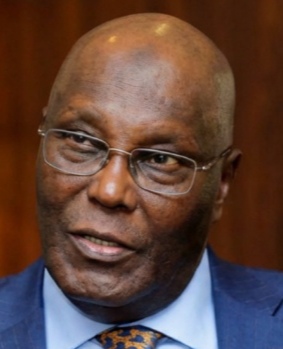
A former member of Nigeria's Federal House of Representatives and ex-Federal Commissioner of the Code of Conduct Bureau (CCB), Hon. Ehiozuwa Johnson Agbonayinma, has formally petitioned United States President Donald Trump. The petition, dated September 24, 2026, calls for a comprehensive review of a historical U.S. financial-crime investigation linked to former Vice-President Atiku Abubakar and associated transactions.
In his detailed petition, Agbonayinma urged President Trump to instruct appropriate U.S. authorities to revisit an investigation originally initiated by a June 22, 2006 letter from the U.S. Attorney’s Office to Nigerian authorities, specifically referenced as MEW:DPW:KDL:AV 1 File 182-23818. He specifically requested a thorough review of this original 2006 investigative request and all related documentation, including materials generated by Nigeria's Economic and Financial Crimes Commission (EFCC) in response to the U.S. request.
Furthermore, the former lawmaker emphasized the importance of a fresh examination of the findings from the U.S. Senate Permanent Subcommittee on Investigations. These findings stemmed from a significant February 4, 2010 hearing titled, "Keeping Foreign Corruption Out of the United States: Four Case Histories." Agbonayinma highlighted that the historical records referenced in his petition involve serious allegations, including bribery, money laundering, wire fraud, conspiracy, and other financial transactions tied to entities and individuals associated with Atiku Abubakar.
He clarified that his call for review should not be misconstrued as an assertion of criminal guilt against any individual. Instead, he stated, “This call is not a declaration that any individual is guilty of a crime, but a demand that the appropriate authorities examine the historical investigative record and determine whether any matter remains legally actionable.”
Particular attention was drawn to the 2010 Senate investigation, which notably included an “Abubakar Case Study: Using Offshore Companies to Bring Suspect Funds Into the United States.” According to Agbonayinma, the congressional record examined millions of dollars transferred through various offshore entities and U.S. financial institutions. These transactions involved key individuals and entities such as Jennifer Douglas Abubakar, American University in Washington, D.C., Guernsey Trust Company Nigeria Ltd., LetsGo Ltd., Sima Holdings Ltd., and entities associated with Intels.
The Edo-born politician also requested that U.S. authorities scrutinize historical EFCC materials to ascertain if any of the transactions identified in the congressional record still fall within U.S. jurisdiction or are legally actionable. He posited, “If the competent authorities determine that the evidence no longer supports any legal action, they should say so. If, however, there are matters that remain within the jurisdiction of the United States and are legally actionable, then those matters should be addressed in accordance with American law.”
Agbonayinma further urged the U.S. Department of Justice, the FBI, and other relevant agencies to cooperate with Nigerian authorities on any outstanding cross-border financial-crime issues that may arise from the historical investigation, provided it is legally permissible. He stressed that any renewed examination must strictly adhere to due process, applicable statutes of limitation, established evidentiary standards, jurisdictional requirements, and the fundamental presumption of innocence.
Defending his petition, Agbonayinma asserted that it represents a plea for institutional accountability rather than political persecution. He concluded, “Nobody should be above the law. Let the evidence speak. Let the law take its course.” His objective is to establish the legal status of the matter without prejudging any individual, urging President Trump and the relevant U.S. authorities to determine if the historical records warrant further action.