Toy Story 5 Triumphs: Critically Acclaimed Sequel Revives Beloved Franchise
"Toy Story 5" masterfully blends nostalgia with modern themes like technology and social anxiety, cementing the franchise's legacy. With Jessie taking the lead, the film explores the "age of toys is over" dilemma as Bonnie's screen time increases, pushing tech and traditional toys into an unlikely alliance to save imaginative play. This exceptional installment delivers nuanced character arcs and stunning visuals, making a powerful statement on childhood in the digital age.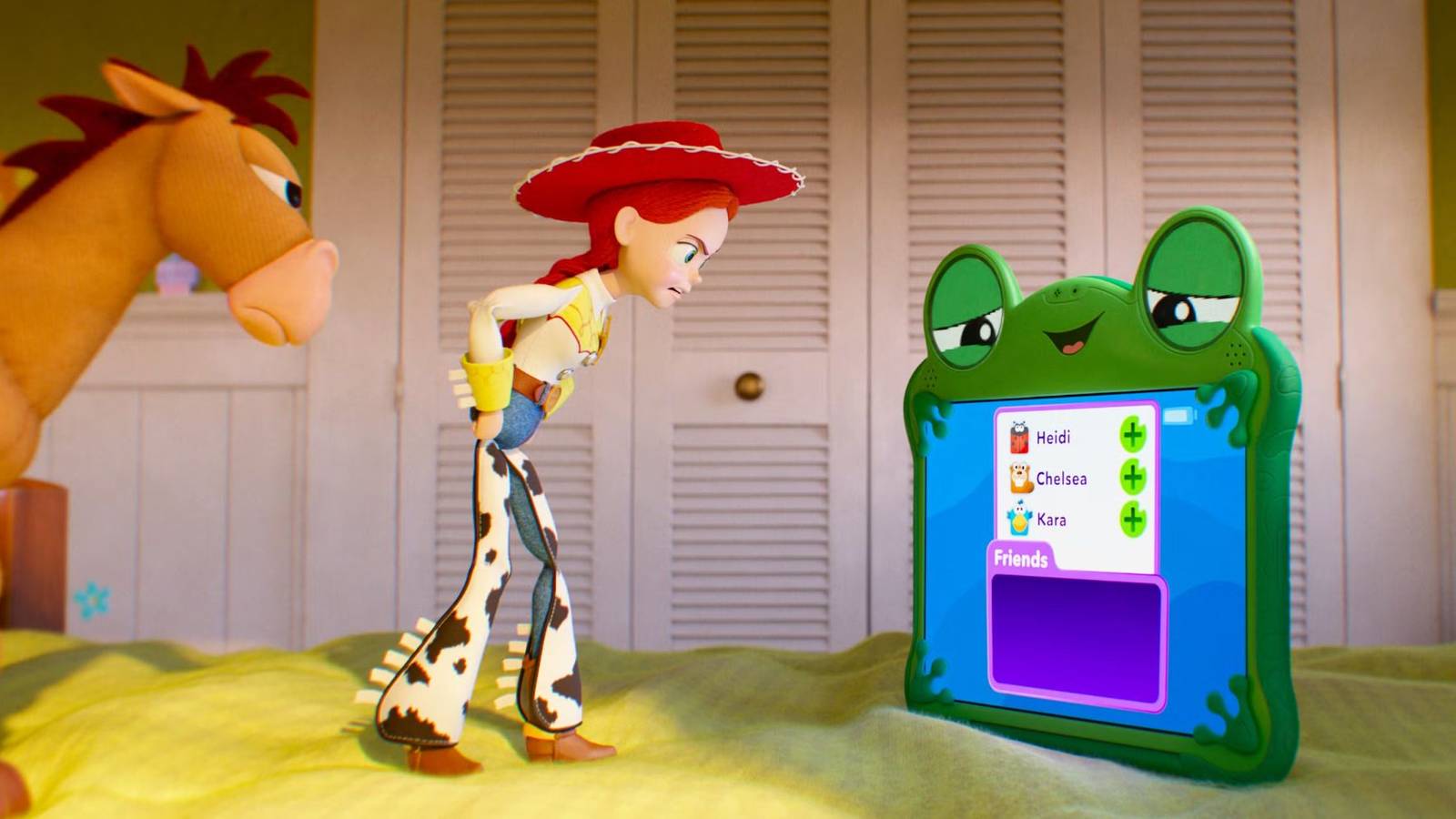
The Toy Story franchise stands as a testament to unparalleled quality in animation, with every installment boasting exceptionally high ratings. The enduring relevance and beloved status of the series for over thirty years raised both excitement and apprehension for its newest chapter. Happily, "Toy Story 5" proves to be an exceptional addition, seamlessly blending cherished nostalgia with timely new themes such as technology, social anxiety, and PTSD. It offers a surprising depth of nuance, rivaling many adult-oriented films, and is poised to ignite significant conversations while remaining universally entertaining and deeply moving for audiences of all ages.
The central thesis of "Toy Story 5" boldly declares, "The age of toys is over." This rude awakening confronts Jessie (Joan Cusack), who effectively takes the lead role, after observing children captivated by screens and their toys neglected. The fear intensifies when Bonnie (Scarlett Spears) acquires a tablet, Lilypad (Greta Lee), to aid her in making friends. Initially, the tablet seems beneficial as Bonnie connects with peers online, but soon, she faces bullying for her continued affection for "babyish" toys, leading her to abandon Jessie and the gang in an effort to fit in. A series of events during a sleepover leads Jessie and Bullseye (Alan Cumming) to the home of Blaze (Mykal-Michelle Harris), a girl near Bonnie’s age who now lives in Jessie’s first owner’s house. Jessie believes Blaze, with her active imagination, could be the key to helping Bonnie. Despite initial reluctance to collaborate with Blaze’s other toys—older model tech toys from the same company that manufactures Lilypad—Jessie forms an unlikely alliance to save playtime and reconcile Bonnie with her toys. The film explores critical questions: Can tech and traditional toys coexist? Can imaginative play be preserved in a screen-dominated world?
"Toy Story 5" resonates powerfully with contemporary society, tackling the growing exposure of children to technology and increasing screen time. It intelligently navigates the complexities of this evolving cultural landscape for both parents and children, examining both the advantages and pitfalls without outright demonizing digital life. Initially portrayed as antagonists, characters like Lilypad, a potty-training game named Smarty Pants (Conan O'Brien), a camera named Snappy (Shelby Rabara), and a map toy named Atlas (Craig Robinson) quickly demonstrate that they are not inherently evil. They, too, aspire to help their kids and face the constant threat of obsolescence as new gadgets emerge, subtly touching on themes of consumerism. These new characters serve ingenious narrative functions while providing abundant entertainment, with Lee perfectly capturing a robotic cadence infused with spunky wit, and O’Brien delivering sophisticated bathroom humor. Even minor roles are memorable and specific, unearthing nostalgic memories of past popular toys. While the sheer number of characters makes the film feel crowded at times, each is given sufficient screen time to feel additive rather than overwhelming.
Jessie, a beloved character since "Toy Story 2," shines as the film's lead, imbued with courage and heart by Joan Cusack. Her journey includes overcoming prejudiced views of certain toys, learning to apologize, and, most maturely, processing and healing from the trauma of past abandonment. A poignant reveal recontextualizes her past, providing a deeply emotional arc. The enduring rivalry-slash-friendship between Woody (Tom Hanks) and Buzz Lightyear (Tim Allen) continues to delight, from their playful squabbles over Jessie’s deputy status to Buzz’s endearing struggle to propose. The film showcases a natural progression of relationships spanning decades, offering satisfying payoffs to long-planted emotional seeds, epitomizing the potential for growth in long-running franchises. A minor critique involves a subplot featuring new, technologically advanced Buzz Lightyears; while their antics are entertaining and eventually contribute to the plot, their integration feels somewhat disjointed, akin to a separate short.
Beyond the toys, the film masterfully crafts its human characters. Bonnie and Blaze are authentic, fleshed-out young girls whose emotions are taken seriously. The depiction of healthy and supportive parenting by Bonnie’s mom (Lori Alan) and dad (Jay Hernandez) and Blaze’s mother (Krys Marshall) adds a heartwarming layer. Visually, the direction and animation by Andrew Stanton are stunning. The film is a vibrant spectacle, with meticulously detailed settings and character designs brimming with personality. A brilliant artistic choice is the distinct animation style used for playtime sequences, which vividly captures the immersive and special nature of a child's imagination. In an era often characterized by digital blandness, "Toy Story 5" is a colorful and visually rich feast for the eyes.
"Toy Story 5" not only justifies its existence but emerges as a necessary and powerful response to the profound societal shifts of the past three decades. It expertly balances faithfulness to the franchise's core appeal with adaptation to the modern age, merging iconic characters with charming new additions. By exploring the vanishing act of imaginative play and advocating for real connection in a virtualizing world, the film delivers a profound message: slow down, be real, and play. The fun you take is equal to the fun you make. It is poised to be one of the best films of the year, family-oriented or otherwise.