Appeal Court Intervenes in Heated Legal Battle: Halts Deregistration of Five Opposition Parties
A major controversy has erupted in Nigeria after a Federal High Court judge ordered the deregistration of five political parties despite a pending appeal. Civil society groups have petitioned the judicial authorities, while the Court of Appeal has since ordered a stay of execution, condemning the judge's conduct as "judicial rascality." INEC has also sought a stay, effectively pausing the contentious ruling that impacts key political figures ahead of crucial elections.
The Court of Appeal in Abuja has ordered a stay of execution of the judgment that directed the Independent National Electoral Commission to deregister the African Democratic Congress and four other political parties.
n a unanimous decision on Tuesday, a three-member panel led by Justice A. B. Mohammed condemned Justice Peter Lifu of the Federal High Court in Abuja for flouting a May 22 order that directed him to suspend proceedings before him, describing his conduct as the gravest form of judicial misconduct.
The petition alleges that Judge Lifu issued the deregistration order despite a pending appeal and a subsisting Court of Appeal order that explicitly stayed proceedings in the case.
Court of Appeal’s intervention arrived barely 24 hours after Mr Lifu delivered the controversial judgement on Monday ordering INEC to deregister the African Democratic Congress (ADC), Accord, Action Alliance, Action Peoples Party and Zenith Labour Party, andsome of which have established themselves as formidable rivals to the ruling All Progressives Congress (APC) in upcoming national and off-cycle governorship elections.
The plaintiff argued that the five political parties failed to meet the constitutional requirements for continued registration, including winning a minimum share of votes or elective positions.

Judge Lifu agreed, ruling that none of the parties satisfied these conditions and were therefore liable for deregistration.
Before the judgment was delivered, lawyers for some affected parties informed the court of a Court of Appeal order directing a stay of proceedings.
However, Judge Lifu declined to halt the case, stating that no valid stay order had been served on his court and that nothing legally prevented him from delivering judgment.
Meanwhile, the Tap Initiative for Citizens’ Development warned that the ruling could have significant implications for Nigeria’s democracy.
The group argued that disregarding appellate court proceedings could undermine public confidence in the judiciary, create conflicting legal outcomes, and heighten political tensions ahead of the 2026 governorship and 2027 general elections by limiting political competition and voter choice.
Consequently, Tap Initiative urged the NJC to investigate Judge Lifu for "possible judicial misconduct," specifically examining whether the judgment was delivered "in disregard of pending appellate proceedings" and a subsisting stay order.
They called for an assessment of possible breaches of the Code of Conduct for Judicial Officers and appropriate disciplinary action if wrongdoing is established, stressing the need to reaffirm appellate court authority and reinforce judicial hierarchy to sustain public confidence.
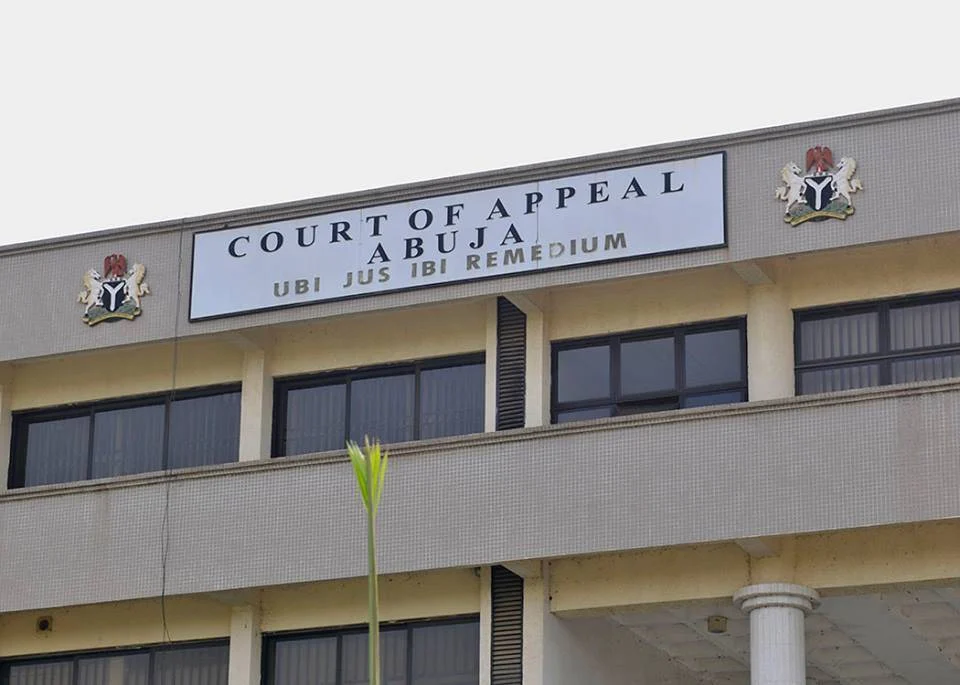
In a significant turn of events, the Court of Appeal in Abuja has since ordered a stay of execution of Judge Lifu’s judgment.
A three-member panel of the appellate court "berated" Judge Lifu for proceeding with the case and issuing the deregistration order despite an earlier Court of Appeal order and the case's pendency before it, characterizing his action as "judicial rascality."
This appellate decision provides immediate relief for the affected political parties.
The legal battle intensified as INEC approached the Court of Appeal, seeking a stay of execution of the Federal High Court judgment pending the resolution of all appeals.
The move temporarily shields prominent politicians, including former Vice President Atiku Abubakar and Osun State Governor Ademola Adeleke, from potential disqualification.
Both Accord and ADC have rejected the ruling, describing it as unfair and politically motivated, and have vowed to challenge it through all legal means.
Legal experts believe INEC’s action may delay the implementation of the deregistration order until the courts reach a final decision, making the appeal process crucial as preparations for future elections continue.