Chaos in Ceuta: Migrant Surge Triggers Global Alarm as Italy Halts Schengen
The Spanish enclave of Ceuta faced an unprecedented migration crisis as around 60,000 irregular migrants, mostly Moroccans, crossed its borders, bringing the city to a halt. While the EU maintains no migrants moved to mainland Europe, the event sparked intense diplomatic rows between Spain and other member states like Italy, and drew international commentary from figures like Donald Trump and Elon Musk. Many migrants have already returned, highlighting the complex challenges of border security and humanitarian aid.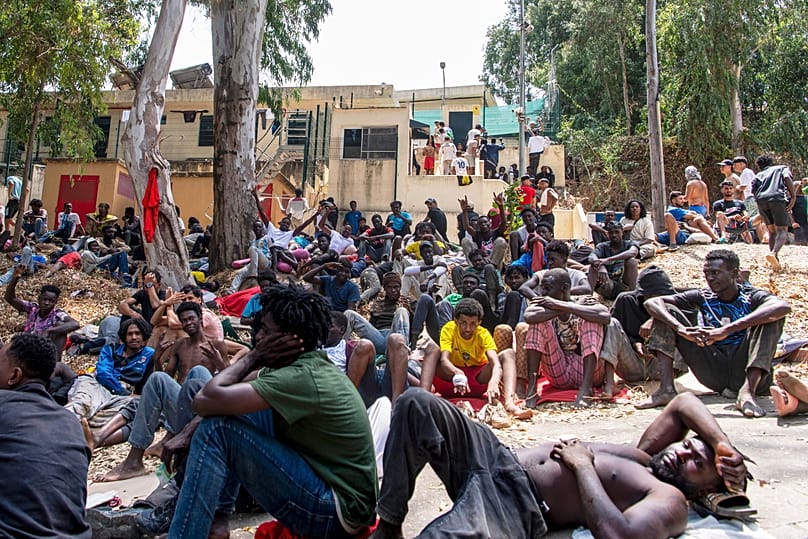
The Spanish North African enclave of Ceuta recently experienced an unprecedented migration crisis, with approximately 60,000 irregular migrants, predominantly Moroccans, storming its borders. This massive influx, described as the largest surge of irregular arrivals ever recorded on EU territory, sent immediate shockwaves across Europe and triggered a complex humanitarian, logistical, and political emergency. The crisis brought the autonomous city of Ceuta to a standstill, forcing the closure of businesses, causing shortages of essential goods like fresh bread, and overwhelming local medical services which treated cases of hypothermia, anxiety, and fractures. The Ceuta government was compelled to suspend planned patron saint festivities as authorities struggled to regain control amidst the widespread disruption and palpable sense of unease among residents.
In response to the crisis, the European Commission emphatically stated that no irregular migrants had moved from Ceuta to the European mainland. EU officials underscored that migrants who crossed the border irregularly would be unable to proceed to other member states. Under the Schengen system, checks on individuals leaving Ceuta remain rigorously in place, treating the enclave as an external EU border. Schengen’s free-movement rules apply only to EU citizens, those with valid residence permits, or legal travellers; individuals entering Ceuta without authorization cannot board ferries or flights to mainland Spain without identity verification. Furthermore, if an irregular migrant applies for asylum, they face an accelerated procedure, are not permitted to leave Spain pending a decision, and are liable for return if found elsewhere in the EU. Morocco is designated a "safe country of origin" under EU rules, meaning its citizens are generally ineligible for international protection and face a very low asylum recognition rate of 6%, making return orders highly likely for the vast majority. Indeed, Spanish authorities reported that nearly half of those who entered Ceuta had already voluntarily returned to Morocco by Friday, with police actively directing groups towards the border crossing.
The crisis ignited fierce diplomatic tensions and varied reactions among EU member states. Initially, several countries, including Italy, Finland, and Denmark, criticized Spain's Prime Minister Pedro Sánchez's government for allegedly failing to adequately protect Europe's external borders. Italy's Interior Ministry went further, ordering the temporary closure of its sea and air borders with Spain, suspending the Schengen free movement regime between the two nations. Prime Minister Giorgia Meloni and Deputy Prime Ministers Antonio Tajani and Matteo Salvini justified this "necessary choice" to safeguard Italian security and defend European borders, emphasizing shared responsibility in managing uncontrolled migrant flows and countering the threat of terrorism. France, too, responded by strengthening controls along its land border with Spain. Spanish Prime Minister Sánchez vehemently pushed back, asserting that "solidarity and empathy are optional. Respect for European treaties and the facts is not," while citing Frontex figures to argue Italy had recorded more irregular entries between 2021 and 2026. Spain's Foreign Minister José Manuel Albares condemned Italy's call to suspend Schengen and summoned Italy's ambassador. However, by Friday, several EU countries, including Finland, the Netherlands, Denmark, the Czech Republic, and Sweden, had moved closer to Italy's position, echoing concerns about Spain's border protection. Commissioner Magnus Brunner reiterated that "there are no movements towards mainland Europe or other member states" and that special provisions of the Schengen Borders Code apply to Ceuta.
Beyond Europe, the Ceuta crisis became a subject of international political commentary, particularly in the United States. Former US President Donald Trump seized upon the mass migrant crossings to issue a stark warning to Americans, suggesting a similar situation could unfold in the US if Democrats were to return to power. Blaming "far-left globalist policies" for the crisis, where at least 43 people reportedly died, many while swimming, Trump used the events to reinforce his calls for stricter border controls. The White House joined in, attributing the crisis to such policies and people-smuggling networks, which Spanish Prime Minister Sánchez also condemned. Elon Musk, too, weighed in on social media, comparing footage of migrants entering Ceuta to a scene from a zombie film and later linking it to images from the US-Mexico border under the Biden administration. These developments risked opening another front in the often-strained relationship between Washington and Madrid, though their primary disagreement traditionally revolves around defence spending.
The crisis highlighted the profound humanitarian challenges for both the migrants, many of whom faced harsh conditions and chose to return, and the residents of Ceuta, who experienced fear and disruption. Residents reported migrants stopping vehicles for food or to use phones, and some expressed fears of violence, with one witness seeing a person with a katana chasing a Moroccan boy. Mohammed, a taxi driver, noted that many migrants returned upon realizing the dire conditions and lack of opportunities in the city, stating, "There is nothing here. Those of us who are from here are struggling to get by." With around 37,500 individuals already returned to Morocco according to Spanish authorities, the situation underscores the complex interplay of human suffering, border security, and diplomatic relations at the periphery of the European Union.