Top Cop Exit: IGP Egbetokun Resigns, Tinubu Appoints New Police Chief Tunji Disu Amid Shake-Up

President Bola Ahmed Tinubu, GCFR, has accepted the resignation of Inspector-General of Police, Kayode Egbetokun, and swiftly approved the appointment of Assistant Inspector-General of Police Tunji Disu to serve as Acting Inspector-General of Police with immediate effect. The Presidency, through media aide Bayo Onanuga, stated that Egbetokun's resignation, received on February 24, was due to pressing family considerations, and President Tinubu expressed profound appreciation for his decades of distinguished service to the Nigeria Police Force and the nation. Egbetokun, appointed in June 2023, was serving a four-year term scheduled to conclude in June 2027, in line with the amended provisions of the Police Act.
However, conflicting reports from multiple presidential sources suggest that Egbetokun was, in fact, asked to step down during a meeting with President Tinubu at the Presidential Villa on Monday evening, preceding the official announcement of his resignation. This narrative contrasts with the official statement but points to the immediate need for a leadership change within the police force.
In view of the prevailing security challenges confronting the nation, President Tinubu's approval of AIG Disu's appointment was made in accordance with extant laws and legal guidance. The President expressed confidence that AIG Disu’s extensive experience, operational depth, and demonstrated leadership capacity will provide steady and focused direction for the Nigeria Police Force during this critical period. In compliance with the provisions of the Police Act 2020, President Tinubu is set to convene a meeting of the Nigeria Police Council to formally consider Disu’s appointment as substantive Inspector-General of Police, after which his name will be transmitted to the Senate for confirmation. The administration reaffirmed its commitment to enhancing national security and strengthening institutional capacity within the police force.
The appointment of Tunji Disu, an experienced career officer, has brought renewed attention to one of the Nigeria Police Force’s most visible operational commanders. Born on April 13, 1966, in Lagos Island, Disu holds a Bachelor of Arts in English from Lagos State University and a Master’s Degree in Public Administration from Adekunle Ajasin University. He joined the Nigeria Police Force on May 18, 1992, embarking on a professional journey spanning over three decades. Throughout his career, he has served in various operational and administrative roles, building a reputation shaped by field experience. His professional development includes advanced training such as Small Arms Smuggling Training in Botswana, Internet Fraud Training at Cambridge University, UK, and Forensic Investigations and Criminal Intelligence Course at the University of Lagos. Disu was formerly the Commander of the Rapid Response Squad (RRS) in Lagos State and later headed the Police Intelligence Response Team (IRT) from August 2021 following the suspension of DCP Abba Kyari. He has also served as Commissioner of Police in strategic commands like Rivers State and the Federal Capital Territory, and was a Commander of the Nigeria Police Contingent to the African Union Peace Keeping Mission in Darfur, Sudan. Prior to his new role, Disu served as the Assistant Inspector-General of Police in charge of the Force Criminal Investigation Department (FCID) Annex, Alagbon, Lagos.
Disu's emergence as Acting IGP has sent ripples through the Nigeria Police Force, particularly at Louis Edet House, the headquarters in Abuja, where uncertainty now surrounds the fate of numerous senior officers. According to reports, no fewer than 29 senior police officers, including 8 Deputy Inspectors-General of Police (DIGs) and 21 Assistant Inspectors-General of Police (AIGs) who were promoted before Disu became AIG, are likely to be retired. This move is consistent with police tradition, which often sees superior officers affected when a subordinate is appointed to lead the Force. Among the DIGs whose potential exit is anticipated are Frank Mba, Mohammed Gumel, Basil Idegwu, Adebola Hamzat, Yahaya Abubakar, Bzigu Kwazhi, Adebowale Williams, Idris Abubakar, and Fayoade Adegoke Mustapha. While some observers argue it would be inappropriate for these senior officers to serve under a junior, experts note that such retirements are not always fixed, citing past instances where DIGs completed their terms despite a junior AIG's appointment as IGP.
The appointment has also drawn criticism from a Civil Society Organisation (CSO), Visionary Leaders Consensus (VLC), which opposed Disu’s selection. VLC, through its National Chairman Ibrahim Bature and Secretary Comrade Bello Roba, highlighted two major structural disadvantages: Disu's impending retirement in April 2026, when he reaches the mandatory age of 60, which would give him barely two months in office if appointed now, potentially creating leadership instability. The CSO also raised concerns about the forced resignation of at least 16 senior officers triggered by his appointment, and argued that applying another tenure extension, similar to the controversial amendment to the Police Act that benefited Egbetokun, would further undermine institutional integrity and public confidence in police leadership selection processes. Furthermore, human rights activist and former Presidential Candidate, Omoyele Sowore, welcomed Egbetokun’s removal as a
You may also like...
Football Superstar Osimhen Teases Future: 'Why Not?' Player Reveals Dream Serie A Club

Nigerian star Victor Osimhen, after a historic spell with Napoli and a difficult departure, has expressed openness to re...
NBA Under Fire: Carlisle Blasts League Over $100K Fine, Cites Lack of Medical Consult
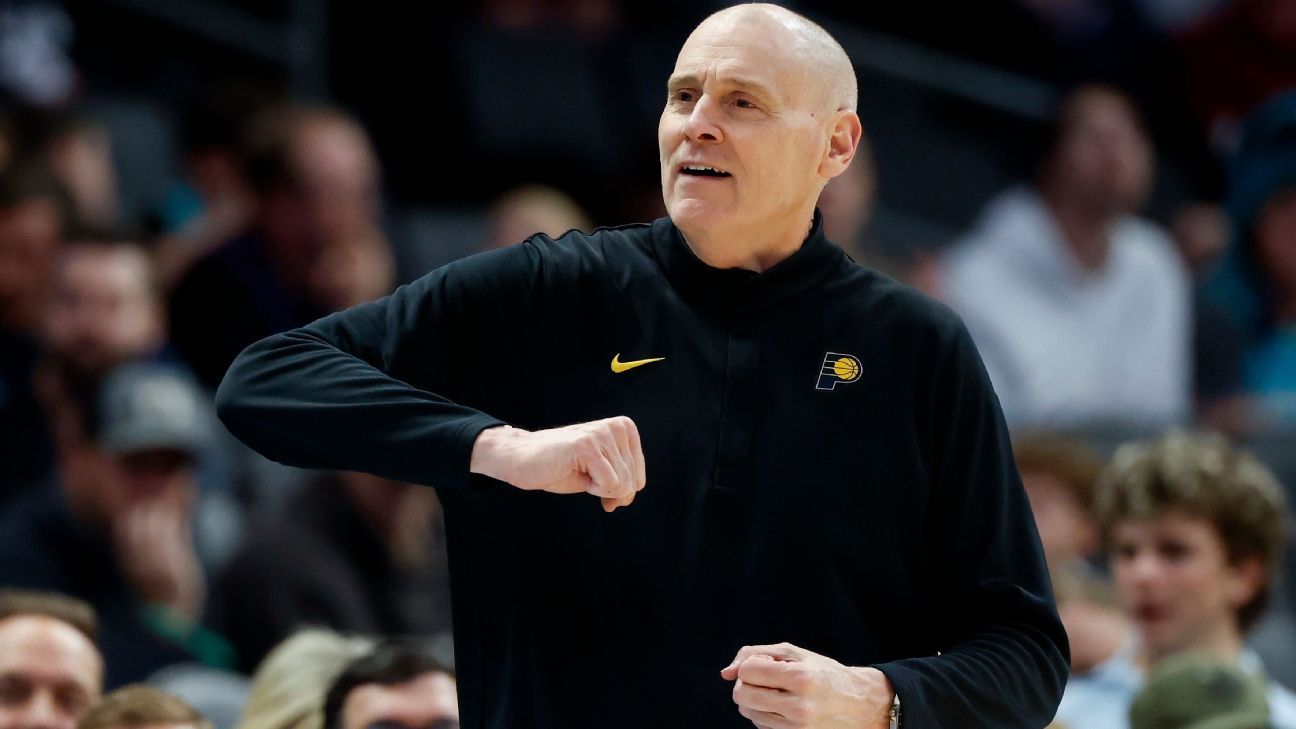
Indiana Pacers coach Rick Carlisle claims NBA investigators did not speak with team doctors or players before fining the...
Scream Queen's Stance: Neve Campbell Refused 'Scream 6' Over 'Unfair' Pay

Neve Campbell, the beloved star of the "Scream" franchise, recently reflected on her challenging decision to opt out of ...
Hollywood Hit: Writers Guild Strike Escalates, Threatens Awards Season

A staff strike at the Writers Guild of America West is jeopardizing the union's annual awards show, with management issu...
Iron Maiden's 'Burning Ambition': The Definitive Documentary Unveils Metal History

Luke Combs Dives Deep: Unfiltered Thoughts on Body Image and Weight-Loss Drugs

Luke Combs revealed his personal struggles with body image and self-doubt on the New York Times' Popcast, sharing fears ...
Blockbuster Alert! Star-Studded Cast Unveiled for 'The Black Book: Old Scores'!

Anakle Films has unveiled the stellar cast and extensive crew for "The Black Book: Old Scores," the anticipated sequel d...
Nigeria's Music Royalty: Spotify Declares Most Streamed Artists!

Spotify celebrates five years in Nigeria, revealing massive growth in user engagement, artist presence, and diverse list...