The Vampire Lestat's Bloody Brilliance: Star & Creator Spill Secrets, Brutal Interview Declared Season's Best Episode
"Toronto," the third episode of "The Vampire Lestat," intensely explores the unhealed traumas of Lestat and Louis as they confront their pasts. Lestat's relentless interview with Daniel Molloy unearths the tragic stories of Nicky de Lenfent and his maker Magnus, leading to a cathartic musical epiphany. Simultaneously, Louis embarks on a brutal quest for vengeance, culminating in a powerful dual narrative of breaking points and fractured healing.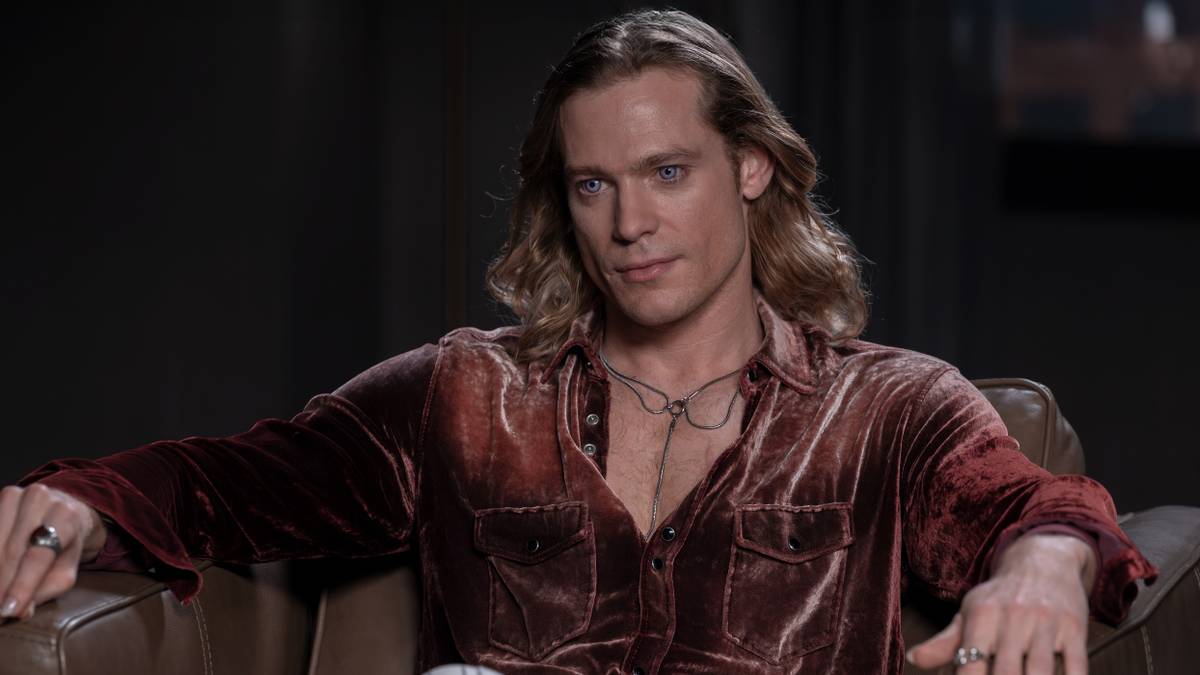
The third episode of "The Vampire Lestat," titled "Toronto," dramatically escalates the emotional stakes, delving deep into the unhealed traumas of both Lestat de Lioncourt (Sam Reid) and Louis de Pointe du Lac (Jacob Anderson). Helmed by writer Anusree Roy and director Claudia Llosa, this installment magnificently portrays the devastating, yet artistic, exploration of grief and past wounds that the series, rebranded from "Interview with the Vampire," has perfected. The episode begins with Lestat and Gabriella (Jennifer Ehle) after a kill, but quickly shifts to Daniel Molloy (Eric Bogosian) demanding Lestat's presence for a documentary interview, setting the stage for a profound confrontation with his past.
Lestat's official interview with Daniel Molloy becomes a relentless psychological battle. Lestat, true to his theatrical nature, initially deflects, introducing himself with a list of things that can kill him—lines famously lifted from Anne Rice's novel—and jokingly adding "Jefferson Starship." Daniel, however, is merciless, dissecting Lestat's song lyrics like "Long Face" and "Black Licorice" and pressing him on his childhood stutter. Lestat, ever the thespian, insists his lyrics are profound reflections of his life and society's existential crisis, or perhaps an amplification of his "performative vampire" persona. Despite his bravado and sarcastic deflections about his stammer and "wolfkiller" infamy, Daniel's persistence slowly chips away at Lestat's carefully constructed armor, revealing repressed vulnerability. Gabriella, lounging nearby, observes with a subtle unease as Daniel hunts for the "secret truth."
The core of Lestat's unraveling lies in the transformative moments of his twenty-ninth year, particularly his relationship with Nicolas "Nicky" de Lenfent (Joseph Potter). Escaping his abusive family in Auvergne, Lestat travels to Paris, where he reconnects with Nicky, a gifted but insecure violinist. While Lestat glosses over the intimate details of their love affair, he concedes to Daniel's claim of mourning Nicky for a century. Crucially, Lestat clarifies that a music box he keeps is not a loving memento, but a constant, self-loathing reminder of his culpability in Nicky's tragic end. Despite Gabriella's warnings, Lestat turns Nicky into a vampire at his distraught request. Immortality, however, only amplifies Nicky's wounded sensitivity, leading to mental scattering, perfectionist self-hatred, and ultimately, self-mutilation. The tragedy culminates with Armand (Assad Zaman) holding Nicky down in a fireplace until he disintegrates, as Lestat, unable to strike the final blow, watches his first love turn to "nothingness."
Further deepening Lestat's trauma is the horrifying story of his making by Magnus (Damien Atkins), explored through the song "Your Biggest Fan." Lestat initially refuses to label Magnus as abusive, presenting the ordeal in a campy '80s music video style. Yet, as Lestat's memories draw closer to the truth, the facade crumbles: Magnus dragging him from his bed, throwing him into a room of corpses, and psychologically tormenting him for a month before forcibly turning him. This traumatic memory is punctuated by an abrupt silence, followed by Lestat's shift to his and Nicky's post-Magnus reunion. Adding another layer of complexity, Lestat reveals he turned his mother, Gabriella, who then followed him to Paris. While he claims she died young, the unsettling presence of the woman calling herself Sofia, who Daniel realizes is Gabriella, calls this into question, especially after she disrupts the interview by having animalistic sex with Lestat's doppelganger.
The emotional intensity culminates as Lestat reaches his breaking point. A bloody tear escapes, and he barely suppresses a panic attack, acknowledging his ego has been battered by poor tour sales. He drives away, leaving Gabriella behind, only for Magnus's ghostly taunts to continue, culminating in Lestat purposefully wrecking his car. From the wreckage, Lestat emerges with an epiphany: music can serve as his "ego-driven therapy." He doesn't have to outrun his demons if he accepts the inescapable loneliness of his eternal life. He debuts "The Loneliness" on stage, an evocative anthem about embracing suffering and making peace with his muses. The song's potent lyrics, "You can’t fuck away the loneliness/It’ll wait ’til you’re done/’Til you come/Like a vampire," symbolize his new outlook. During this cathartic performance, Magnus and Gabriella depart, unable to drain his sanity further, while Nicky's vision remains, amused. Lestat's levitation during the song, a callback to Season 1, signifies a moment of pure, extreme emotional elation and release.
Daniel Molloy's initial ecstasy over Lestat's vulnerability quickly sours into rage. He discovers that Lestat's deep confessions about Nicky, Magnus, and his past were delivered telepathically, leaving no recorded proof—just minutes of awkward silence on camera. This deliberate manipulation by Lestat, playing Daniel "like a cat plays with a mouse," is a calculated punishment for publishing Louis' interview, cementing Daniel's adversarial view of Lestat. Sam Reid explains that Lestat's discussion of his stutter was not an admission of shame, but a demonstration of his ability to "make a change and become somebody else" through sheer will, emphasizing his transformed identity.
Meanwhile, Louis de Pointe du Lac (Jacob Anderson) pursues his own linear path of grief-driven vengeance. Arriving at the Detroit coven's lair, Louis brutally decapitates a vampire named Vester (Taylor Wint) and effortlessly eliminates others in his relentless hunt for Bruce (Damon Daunno), the perpetrator of Claudia's assault. Confronting Bruce and Baby Jenks (Ella Ballentine), Louis reads aloud from Claudia's (Bailey Bass) graphic diary, detailing the assault. This scene is intercut with Lestat's car crash, drawing a powerful parallel between their respective confrontations with agonizing trauma. As Lestat is forced to relive his abduction by Magnus, desperately reciting an 18th-century prayer, Louis sets Claudia's diary page, and Bruce by extension, on fire, completing his act of fiery retribution. Louis later visits a diner, seeking solace in the sight of Regina (Delainey Hayles), who resembles Claudia.
"Toronto" serves as a profound dual narrative of breaking points and catharsis. Both Lestat and Louis, albeit through vastly different methods, are forced to confront the deepest, most agonizing parts of their pasts. Lestat, despite totaling his vehicle, finds a new form of healing through music, embracing the "fracturing and the cracking" of his mind as a release. Louis, through brutal vengeance, honors Claudia's memory and finds a destructive resolution. The episode was notably challenging to produce, with creator Rolin Jones praising Sam Reid's "finest hour" performance and acknowledging composer Daniel Hart's song "The Loneliness" as the crucial unlock for the narrative. The aggressive mixing of audience sound during Lestat's performance was a deliberate choice to create a "you-had-to-be-there" historical moment, solidifying the episode as a pivotal exploration of trauma, self-awareness, and the complex journey towards a new form of existence for its central characters.