The Life and Legacy of Babatunde Kwaku Adadevoh
Meet Prof. Babatunde Kwaku Adadevoh, the Nigerian physician, academic, and medical pioneer who helped shape modern medical education, led national medical research development, and built a legacy of service that continues to influence healthcare and public health in Nigeria today.
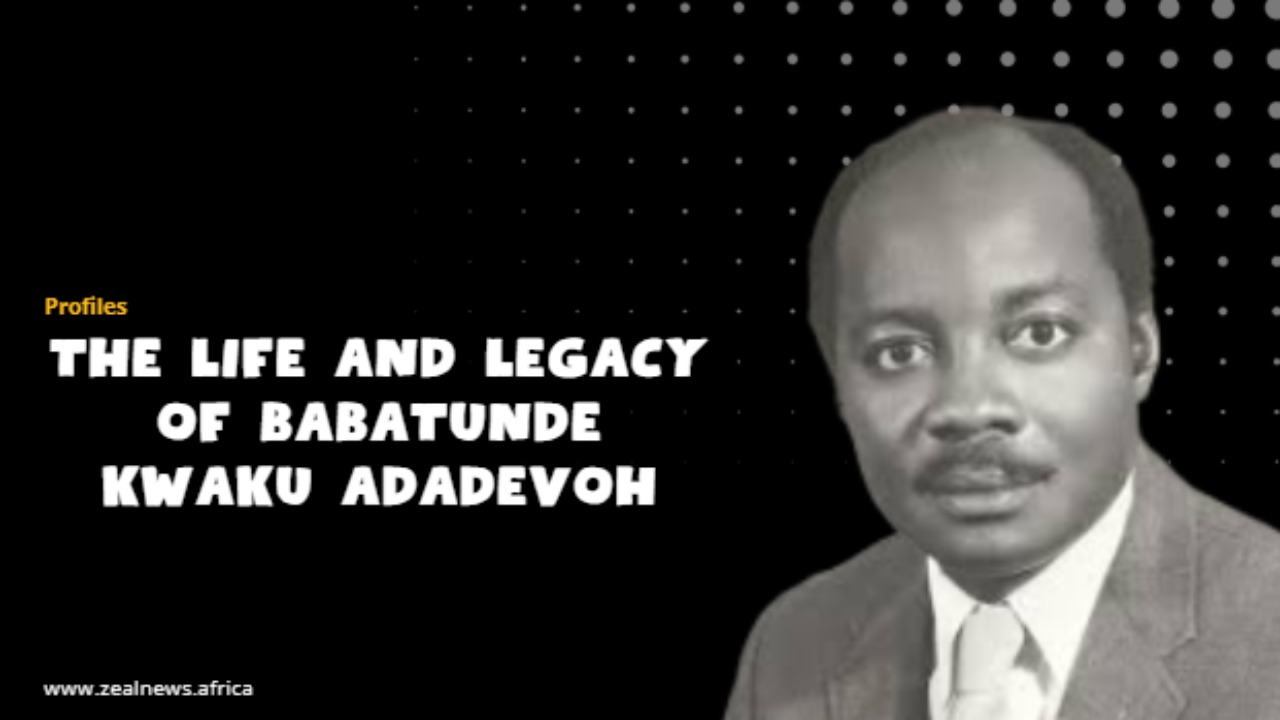
Nigeria’s medical space has always been quite progressive and its growing capacity did not emerge overnight.
It was built in laboratories that lacked equipment, in lecture halls filled with possibility, and in the minds of individuals who believed that Nigeria could train its own world-class medical professionals.
Among those individuals was Babatunde Kwaku Adadevoh, a physician, scholar, and institutional pioneer whose influence helped shape Nigeria’s medical education and research system, while he was alive.
He was not just merely a professor, he was part of a generation that transformed medicine in Nigeria from a colonial inheritance into a national intellectual enterprise.
His work bridged science, leadership, and policy.
His legacy, with no doubt has extended beyond his lifetime, influencing not only institutions but also the ethos of medical responsibility in Nigeria.
To understand modern medical education and research governance in Nigeria, one must understand the man who helped lay its foundation.
A Physician Shaped by Heritage And National Purpose
Born in 1933, Babatunde Kwaku Adadevoh was welcomed to a lineage deeply connected to both royalty and nationalism.
His father, Julius Gordon Kwasi Adadevoh, was a prince from the Royal House of Anyako in Ghana, linking him to West Africa’s traditional aristocratic structures.
His mother, Sarah Abigail Idowu Adadevoh, was the daughter of Herbert Macaulay, widely regarded as one of the pioneers of Nigerian nationalism.
This heritage placed him at the point of two powerful traditions: royal heritage and intellectual resistance.
Herbert Macaulay’s legacy, in particular, was defined by a commitment to national development, political consciousness, and institutional independence.
These values would quietly shape Adadevoh’s life path.
From an early age, he demonstrated academic excellence and discipline.
He attended Baptist Academy in Lagos, one of Nigeria’s oldest secondary schools, before proceeding to Igbobi College, to further his education.
At a time when Nigeria was still under colonial administration and opportunities for advanced medical training were limited, his academic brilliance earned him a Federal Government scholarship to study medicine.

This opportunity placed him among the earliest generation of Nigerians trained to build the country’s indigenous medical expertise.
His career soon reflected not only professional success but national significance.
Building a Career That Strengthened Nigeria’s Medical and Academic Institutions
Adadevoh pursued his medical education at University College Ibadan, then affiliated with the University of London, and later continued his training at the University of Birmingham.
These institutions exposed him to rigorous scientific training and advanced laboratory medicine, particularly in chemical pathology, a field focused on diagnosing diseases through laboratory analysis of bodily fluids.
At a time when Nigeria urgently needed trained specialists to build its healthcare infrastructure, Adadevoh returned home rather than pursuing opportunities abroad.
In 1964, he began his academic career as a Lecturer in Medicine at the University of Lagos.
His teaching career quickly progressed, and he became a Senior Lecturer, contributing to the training of young Nigerian doctors during a critical period in the country’s post-independence development.
His expertise and leadership soon led him to the University of Ibadan, where he became Professor of Chemical Pathology.
There, he played a pivotal role in advancing laboratory medicine in Nigeria.
At the time, diagnostic medicine in Nigeria was still evolving, and chemical pathology was essential in improving the accuracy of disease detection and treatment.
But his influence extended beyond teaching and research. In 1976, he was appointed the first Director of Medical Research and Secretary to the Medical Research Council of Nigeria.
This appointment was historically significant. It placed him at the center of developing Nigeria’s medical research policies and infrastructure.
He helped establish structured research governance, ensuring that medical research in Nigeria followed scientific standards and addressed national health priorities.
His leadership abilities soon propelled him to one of the most influential academic roles in the country.
In November 1978, he became Vice-Chancellor of the University of Lagos, one of Nigeria’s foremost universities.
His academic leadership continued when he served as Professor of Chemical Pathology at the University of Maiduguri, contributing to the growth of medical education in northern Nigeria.
Throughout his career, he trained doctors, built institutions, and strengthened Nigeria’s capacity for medical research and scientific independence.
A Legacy That Extended Beyond Institutions Into Generations
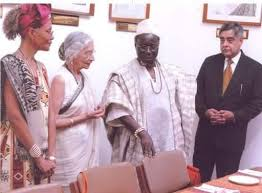
The true measure of Adadevoh’s life is not only in the positions he held, but in the systems he helped build and the legacy he left behind.
His work helped establish the foundations of structured medical research in Nigeria.
He was part of the intellectual generation that ensured Nigeria could train its own medical experts, conduct its own research, and build its own healthcare systems without complete reliance on foreign institutions.
His influence also extended into his family. He was the father of Ameyo Adadevoh, the Nigerian physician who became internationally recognized for her courage during the 2014 Ebola outbreak in Lagos.
Her decision to identify and contain Nigeria’s first Ebola patient prevented a national catastrophe. Her sacrifice saved countless lives.
Her actions reflected the values her father embodied: medical excellence, courage, and responsibility to society.
Prof. Babatunde Kwaku Adadevoh passed away in 1997, but his legacy continues to live on in Nigeria’s universities, laboratories, and hospitals.
Every Nigerian doctor trained in structured academic systems, every medical researcher contributing to national health knowledge, and every institution committed to scientific progress reflects part of the foundation and vision he helped build.
His life offers enduring lessons. It demonstrates the importance of returning knowledge home.
It shows the power of building institutions rather than pursuing individual success alone.
It proves that national progress often depends on individuals who work quietly, consistently, and purposefully behind the scenes.
He belonged to a generation that believed Nigeria could build its own excellence and because of people like him, it did.