The Grand Deception: How the Plunder of Africa’s Treasures Fuelled the Myth of a “Continent Without
They said Africa had no history. But that narrative was built on a lie, solidified by the systematic theft of its cultural soul. Discover the truth.
For centuries, a pervasive colonial myth claimed Africa was a "continent without history," a blank slate awaiting European civilization.
This article will expose how the systematic plunder of African art, artifacts, and historical documents during and after colonialism was not merely an act of theft, but a deliberate and calculated strategy to bolster this false narrative.

SOURCE: Writer
By stripping the continent of its tangible historical records – the very evidence of its sophisticated kingdoms, complex belief systems, advanced technologies, and vibrant cultures – colonial powers aimed to erase African agency and justify their dominance.
We'll delve into the mechanisms of this cultural dispossession, from brutal military expeditions that looted royal palaces to scholarly expeditions that "collected" artifacts under dubious pretenses, and examine how their continued absence in Africa perpetuates this historical injustice.
Dehumanization Through Dispossession: The Colonial Gaze
The physical removal and subsequent display of African artifacts in Western institutions were not innocent acts of collection; they served as a powerful tool to dehumanize Africans and aggressively support the colonial ideology of "civilizing missions."
By stripping artifacts of their original context and re-presenting them through a distorted lens, European powers constructed a narrative of African inferiority.

SOURCE: Google
When these treasures arrived in European museums, they were often exhibited as mere "curiosities" or "primitive art," detached from their intricate cultural, spiritual, or historical significance. Labels often failed to mention the complex societies that produced them, instead focusing on perceived exoticism or reinforcing racist stereotypes.
This presentation implied a lack of intellectual or artistic sophistication, suggesting that Africans were incapable of creating such objects independently or that their purpose was purely superstitious.
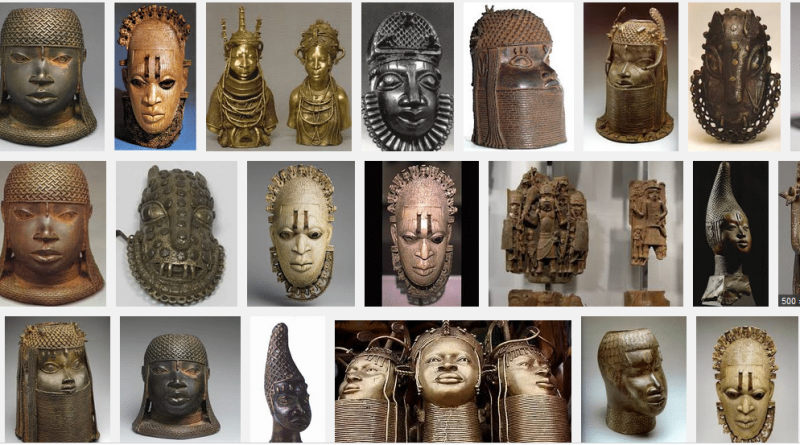
The British Museum's display of the Benin Bronzes, for instance, often presented them as ethnographic curiosities rather than masterworks from a highly organized and technologically advanced Edo Kingdom.

SOURCE: The New York Times
This framing reinforced the colonial justification that Africa needed European intervention, implying that a people who supposedly lacked complex history or sophisticated culture required external "civilizing."
Furthermore, the very act of looting itself was a demonstration of power designed to break the spirit and cultural cohesion of colonized peoples.
The infamous Punitive Expedition of 1897 against the Kingdom of Benin saw British forces systematically pillage thousands of brass and ivory artifacts, destroying a royal palace and seizing symbols of spiritual and political authority.

SOURCE: Writer
These acts were intended to demoralize resistance and assert European dominance, creating a psychological vacuum where indigenous self-worth was undermined.
The acquisition of these items by force, and their subsequent display in Europe, physically manifested the colonial power dynamic: what was once a symbol of African sovereignty became a trophy of European conquest.
The narrative crafted around these objects in Western institutions effectively erased African agency. Instead of celebrating the ingenuity and historical depth of the cultures that created them, the focus shifted to the European "discoverers" or "collectors."
This subtly perpetuated the myth of a "continent without history" by denying African contributions to global civilization and positioning Europe as the sole purveyor of art, science, and historical record.
This intellectual plunder laid the groundwork for policies that disregarded African knowledge systems and justified the imposition of European administrative and educational models.
Vital Records: Beyond Mere Art
These stolen treasures were not merely "art" in the Western aesthetic sense; they were vital historical documents, spiritual objects, and even scientific records crucial to understanding African societies.
Their removal created immense gaps in the historical memory and knowledge systems of the continent.
Consider the Benin Bronzes again. These exquisite plaques and sculptures, looted from the Royal Palace of Benin, were not merely decorative.
They served as a meticulously crafted visual archive of the Edo Kingdom's history, depicting pivotal events, royal lineages, daily life, military campaigns, and diplomatic relations.
They were historical chronicles in metal, providing unique insights into a complex pre-colonial African civilization.
Their absence in Nigeria makes it challenging for scholars and future generations to directly access and interpret their own documented past, leaving huge gaps in historical understanding that cannot be filled by colonial records alone.
As argued by scholars and institutions like the Open Society Foundations, these artifacts embody the narrative of a rich, sovereign state.
Similarly, numerous sacred masks, ancestral figures, and ritual objects now housed in Western museums were central to African spiritual practices, judicial processes, and community cohesion. These were not simply idols but embodied spirits, historical figures, or facilitated communication with the divine.
Their removal severed vital links between communities and their spiritual heritage, disrupting traditional governance, healing practices, and ceremonial life. The disruption went beyond the physical loss; it had profound spiritual and social consequences.
For example, specific power figures or Nkisi Nkondi from Central Africa, now often displayed as curiosities, held immense legal and spiritual authority within their communities, serving as arbiters of justice and protectors.

SOURCE: Google
Furthermore, many African artifacts, though not always recognized as such by European collectors, encapsulated scientific knowledge, technological advancements, and sophisticated craftsmanship.
The intricate metalwork of the Benin Bronzes, for instance, testifies to advanced metallurgical techniques that rivaled contemporary European capabilities. Ancient Ethiopian manuscripts, some now in European collections, contain invaluable records of indigenous medicine, astronomy, and philosophy.
These were not just objects but repositories of complex knowledge systems, providing empirical data and practical insights into advanced civilizations that existed long before European contact.
Their absence hinders contemporary African scholars from fully appreciating and building upon their ancestors' scientific and technological legacies, perpetuating the false notion of African historical backwardness.
History
Rewind the Stories that Made Africa, Africa
A Journey Through Time, Narrated with Insight.
Reclaiming Narrative: Repatriation and Identity
The continued absence of such a significant portion of Africa's material history in its continent has profound consequences for contemporary African identity and scholarship.
Consequently, the push for repatriation directly counters the "no history" narrative, serving as a fundamental fight to reclaim Africa's narrative and prove its profound historical depth.
For contemporary African identity, the presence of these treasures is crucial for cultural reconnection and pride.
Generations of Africans have grown up without direct access to the most magnificent manifestations of their ancestral ingenuity, forced to view their heritage through a foreign lens, often with reductive or demeaning interpretations.
The return of artifacts allows young Africans to physically connect with their history, fostering a sense of pride, belonging, and continuity that has been deliberately fragmented.
It re-establishes the tangible evidence of complex, self-governing societies that thrived before colonialism, offering powerful counter-narratives to lingering colonial stereotypes.
Repatriation helps to heal a collective psychological wound, affirming the richness and validity of African cultures.
For African scholarship, the accessibility of these artifacts on African soil is transformative. Currently, researchers, historians, and art historians in Africa often have to travel to Europe, facing significant financial and logistical barriers, to study their own heritage.
This disproportionately disadvantages African institutions and scholars. Repatriation would decentralize access to these vital primary sources, enabling richer, more nuanced, and African-centric interpretations of history.
It would foster new research, inspire local artistic movements, and facilitate public education programs that are deeply rooted in indigenous perspectives, free from the colonial gaze that previously framed these objects.
For example, the planned restitution of the Benin Bronzes to a new museum in Benin City would provide Nigerian scholars and the public unparalleled access to their own heritage, facilitating a more complete understanding of their history.
Repatriation directly counters the "no history" narrative by physically demonstrating Africa's sophisticated past. Each returned artifact serves as irrefutable proof of advanced societies, complex governance, profound spirituality, and technological prowess.
It dismantles the notion that African history only began with European intervention or that it consists merely of oral traditions. By bringing these objects home, African nations can rebuild their historical archives, educate their citizens on their rich heritage, and assert their rightful place in global history on their own terms.
This is not just about ownership; it is about restoring historical truth, fostering self-determination, and empowering future generations with a complete and accurate understanding of who they are and where they come from. The movement for restitution is thus a powerful act of decolonization, restoring agency and narrative control to the continent itself.
