The Forgotten December Morning That Started the Aviation Revolution
A reflective and insightful commentary on the Wright Brothers’ first flight on December 17, 1903, exploring the forgotten December morning that transformed global history and offering lessons in innovation, resilience, and visionary thinking for today.
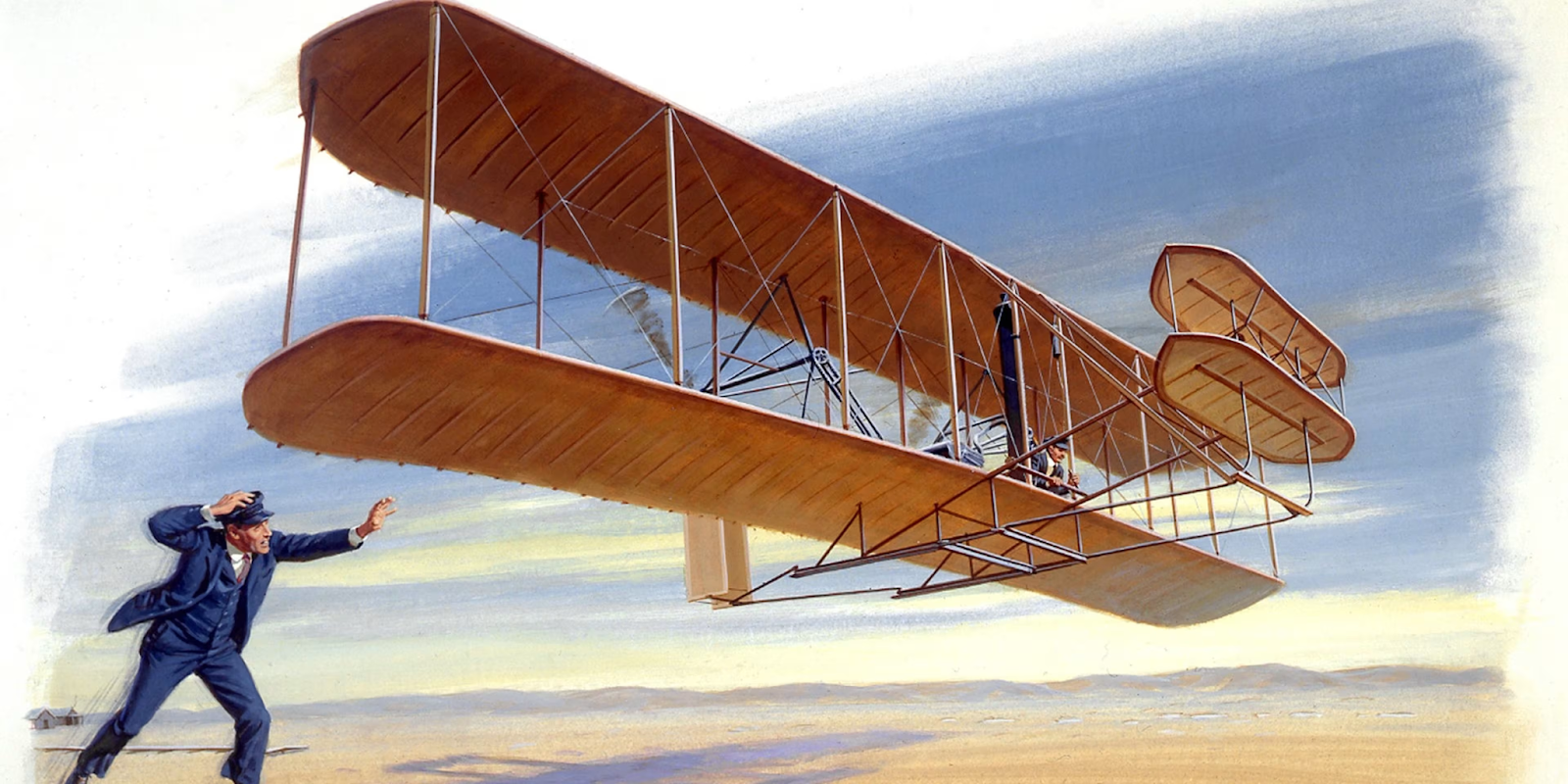
More than a century ago, the question of whether humans could ever take to the skies divided thinkers across the world. Some argued that flight was not something that could be possible for humans and maybe it was just reserved for birds saying it would take humans one to ten million years to develop a flying machine, and that it was something the human body or human engineering could not conquer yet. Others believed it was only a matter of time before someone unlocked the physics behind sustained flight. By the late 19th century, these debates were loud, passionate, and often dismissive of any dreamer attempting to challenge gravity. Yet amidst all this noise, on December 17, 1903,two brothers Orville and Wilbur Wright quietly ended the argument and invented the world's first airplane known as the Wright Flyer.
That morning in Kill Devil Hills, North Carolina, was cold, still, and unremarkable to anyone not present. The dunes carried the usual winter chill, the wind was brisk but steady, and nothing in the atmosphere suggested that the world was about to change forever. The brothers, bicycle makers from Dayton, Ohio, were not celebrated scientists, engineers, or academics. They were men who combined curiosity with discipline, self-education with experimentation, and ambition with humility. Their invention, crude by today’s standards, was a fragile flyer made of wood, canvas, and meticulous calculation. It did not look like a world-changing device. Yet it would become the blueprint for an industry that now connects continents, organizes economies, and shapes global geopolitics.
What happened that morning has been referenced countless times, but often without depth. It is easy to treat the first flight as a neat historical milestone rather than the culmination of relentless trial, intellectual courage, and unwavering belief. The Wright Brothers defied not only the physical laws of their time but also the psychological limitations imposed by society. In that moment, they took an idea that many dismissed as impossible and turned it into a phenomenon that would redefine the twentieth century. Their story remains a powerful reminder that innovation does not always announce itself loudly. Sometimes, it arrives quietly on an ordinary December morning.
The Long Road to a 12-Second Miracle
The flight that lasted a mere twelve seconds was the result of years of painstaking study rather than a spark of spontaneous brilliance. Long before their success, the Wright Brothers immersed themselves in the works of earlier aviation pioneers, from Otto Lilienthal’s gliding experiments to the theoretical writings of Sir George Cayley. They were students of failure, recording, analyzing, and learning from every crash, stall, and miscalculation.
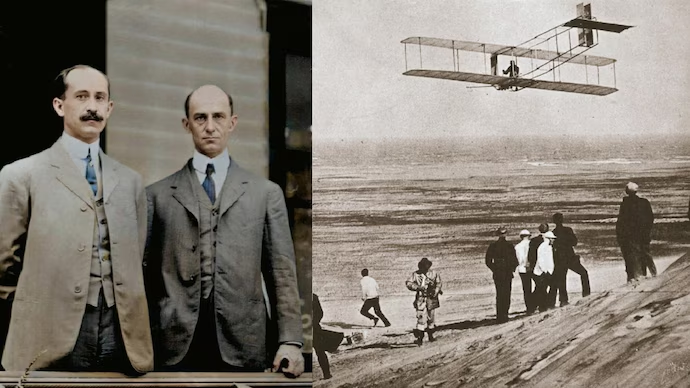
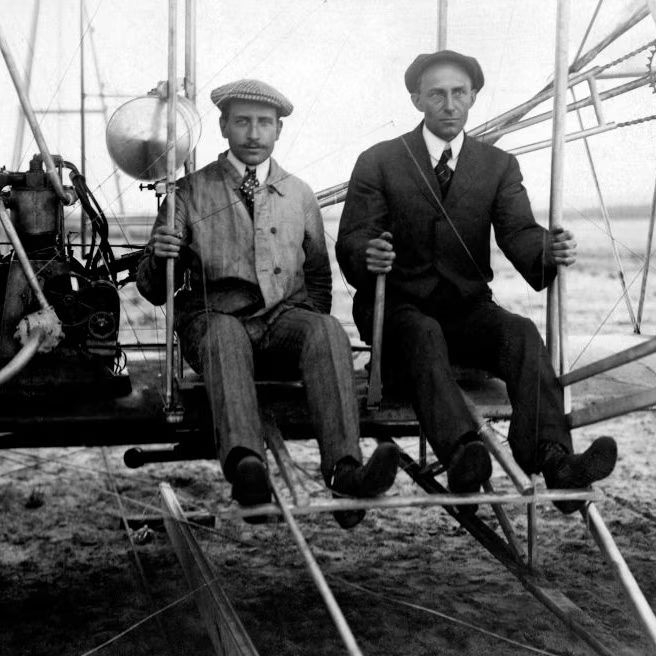
Their approach was grounded in methodical engineering culture. They built wind tunnels in their workshop, tested hundreds of wing shapes, and collected volumes of data on air pressure and lift. Their work was not rooted in luck but in disciplined experimentation. They were obsessed with understanding flight mechanics at a time when many inventors relied on intuition or spectacle. The brothers refused to guess; they calculated, tested, and refined.
This is what separated them from others who attempted to fly before them. The early aviation landscape was filled with dreamers, tinkerers, and showmen who built impressive machines that lacked scientific foundation. While some sought fame and others sought shortcuts, the Wrights sought accuracy. They allowed science, not hype, to guide their decisions. Their persistence revealed an essential truth about innovation: breakthroughs are rarely the result of genius alone but the outcome of patience, deliberate effort, and the courage to challenge widely accepted assumptions.
The world often celebrates the moment of triumph and forgets the countless failures that make triumph possible. The Wright Brothers remind us that invention is a long road paved with mistakes, corrections, doubt, and resilience. The twelve-second flight was only a fraction of the true journey. It was a symbol of what happens when preparation finally meets opportunity.
A World Awakens: From Local Curiosity to Global Disruption
The first flight did not immediately capture the world’s imagination. In fact, local witnesses were few, and reports of the achievement were often met with skepticism. Newspapers hesitated to publish the story, and engineers dismissed the possibility. It took years before the global community recognized the significance of what had happened in the dunes of North Carolina.
The Wright Brothers themselves faced discouragement, criticisms, and attempts to discredit their work. Yet they pressed on. Their progress demonstrates that even the most transformative ideas can be misunderstood at first. The world often clings to what feels reasonable, logical, or historically consistent, making it difficult to recognize change when it emerges quietly. The brothers’ perseverance is a lesson in not allowing fact-based discouragement to halt a vision. Innovation always appears unreasonable until it becomes inevitable.
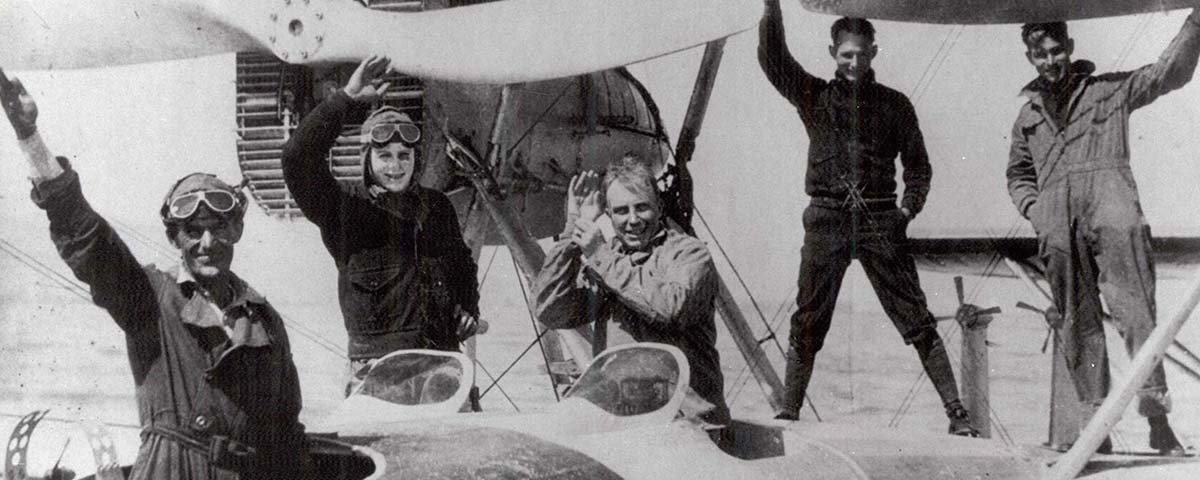
Once their achievement gained recognition, the aviation world grew at an astonishing pace. The fragile flyer of 1903 evolved into advanced aircraft that could cross oceans, carry passengers, move goods, and wage wars. Aviation reshaped diplomacy by shrinking geographic boundaries. It restructured economies by enabling global trade. It redefined travel by collapsing distances into hours instead of weeks. By the mid-20th century, flight had become not just a technological marvel but a cornerstone of global civilization.
History
Rewind the Stories that Made Africa, Africa
A Journey Through Time, Narrated with Insight.
The world that emerged was one the Wright Brothers could barely have imagined. Their twelve-second flight ignited a chain reaction that rewired the century. From commercial airlines to military jets, from air ambulances to space exploration, the spirit of that December morning became the foundation for the modern age.
Lessons from Kill Devil Hills: What the First Flight Teaches Us Today
The Wright Brothers’ journey carries lessons that extend far beyond the aviation industry. It is a reminder that innovation rarely comes from comfort zones or conventional paths. Their work shows that transformative ideas often start with people who dare to see what others ignore, believe what others doubt, and commit to what others abandon.
For Africa, especially, the story of the first flight offers powerful insights. The continent is filled with young innovators, creators, and thinkers who face systemic challenges, limited resources, and societal skepticism. The Wright Brothers operated with similar circumstances, limited funding, modest education, and minimal institutional support. Yet they built something the world thought impossible. Africa’s progress will be shaped not by the loudest voices of doubt but by the quiet persistence of individuals who choose to rethink what is possible.

The same innovative spirit that enabled the first flight should drive modern breakthroughs, attract young minds to harness the power of artificial intelligence, renewable energy and even space exploration. Today’s world is defined by rapid technological shifts, and how we position ourselves and create magic will determine how the next revolution will emerge from various places across the continent that still be underestimated. History teaches us that greatness rarely comes from where the world expects it. The Wright Brothers proved that ordinary people with extraordinary commitment can change humanity’s trajectory.
Remembering December 17, 1903, is not simply an act of nostalgia. It is a reminder that transformative moments often begin unnoticed. A seemingly insignificant morning can reshape an entire century. The Wright Brothers did not wait for validation before they pursued their vision. They built, tested, failed, and improved until the impossible became undeniable.
Their legacy challenges us to imagine boldly, work patiently, and trust the process even when the world doubts us. The sky did not open itself to humanity; humanity insisted on reaching it. And in doing so, it discovered its capacity to rise above limitations.