The Digital Heist: The Rise Of Crypto Scams And Biometric Fraud
From SIM swap fraud to billion-dollar crypto heists, digital fraud is quietly gutting Africa's financial gains. Here's how it works, who's losing, and why the solutions remain stuck on paper.

There is a particular cruelty to digital fraud in Africa. It does not just steal money. It steals rent, school fees and even medical bills, because this money is the lifeline of many.
These are carefully assembled savings of people who had very little to begin with and now have even less. And the systems built to protect them are either too slow, too underfunded, or too unserious to stop it.
There have been high cases of digital fraud across the African continent and they don't just end on headlines are numbers and statistics, they aren't. These are the income of individuals who might have a saviour after the incidence of fraud.
The numbers are not abstract, they are real. Nigeria lost ₦52.26 billion to fraud in 2024, a 196% increase over five years.
Kenya recorded 4.6 billion cyber threats in just three months of 2025, with total losses hitting Sh29.9 billion.
South Africa, the continent's most regulated financial market, saw digital banking fraud surge 86% in a single year.
These are not statistics from a distant crisis. They are the financial texture of everyday life across Africa's most connected economies.
The SIM Card at the Centre of Everything
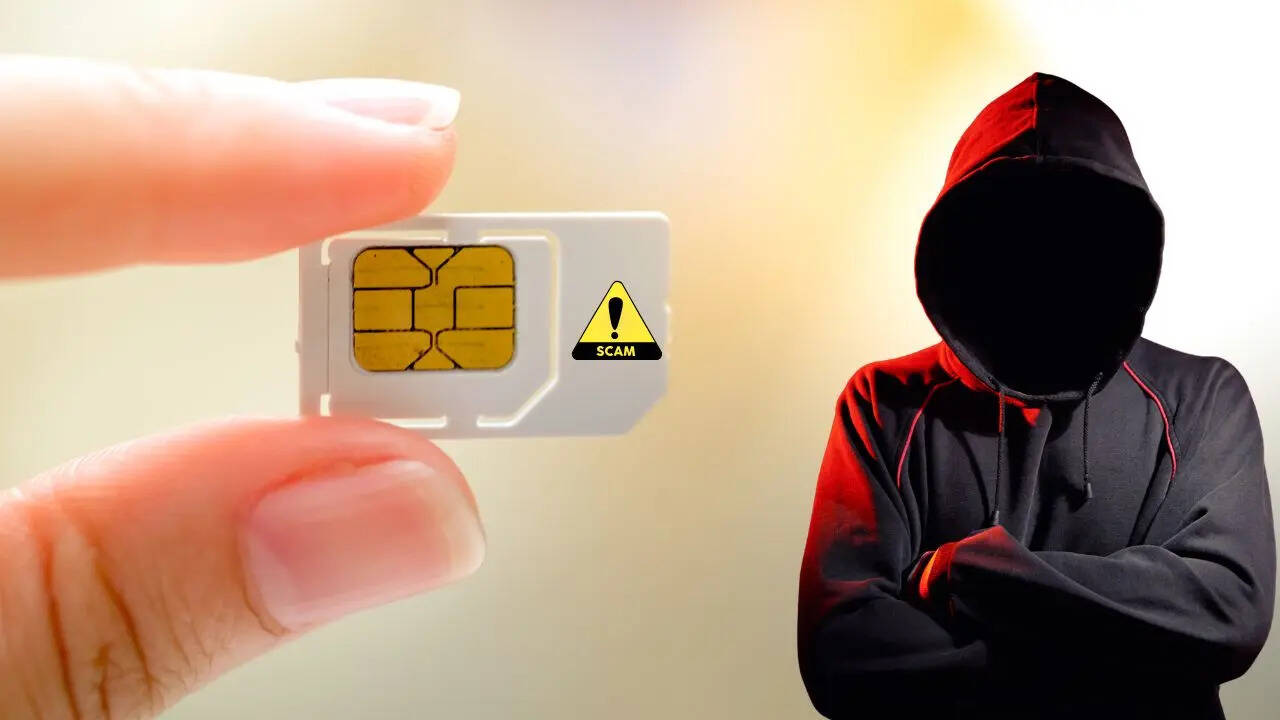
If there is a single vulnerability holding Africa's digital economy hostage, it is the SIM card.
Mobile money has been one of the continent's most celebrated innovations, a genuine leap that brought financial access to millions who had never held a bank account.
M-Pesa, MTN Mobile Money, Airtel Money, these platforms redrew the boundaries of economic participation.
But the infrastructure that made them revolutionary is also the infrastructure that makes them dangerous.
An estimated 63.5% of mobile money transactions run through USSD, not smartphone apps, translating to about 516 million times.
USSD is unencrypted, easily intercepted, and entirely dependent on a SIM card that can be stolen, cloned, or swapped by an insider with the right access and the wrong intentions.

SIM swapping, the process by which a fraudster convinces or bribes a telecom employee to transfer a victim's number to a new SIM, has become the master key to Africa's financial infrastructure.
Once a number is hijacked, every SMS-based authentication code, every one-time password, every account recovery option attached to that number belongs to the attacker.
Bank accounts drain fast and mobile wallets empty in the blink of an eye. And the victim, often hours away from the nearest physical branch, has no fast path to recourse.
The fix exists and is not complicated: mandatory biometric verification for SIM replacements, 24-hour cooling-off periods before a swapped SIM can access financial services, instant alerts to the account holder, and criminal liability for telecom employees who facilitate the process.
What is missing is not the solution. It is the political will to enforce it.

RECOMMENDED READ:The Growing Threat of SIM Swap Fraud And Identity Theft in Africa’s Digital Economy
Cryptocurrency: Africa's Most Expensive Experiment

If mobile money is the established battleground, cryptocurrency is the lawless frontier and Africa is paying a price disproportionate to its share of the market.
Africa accounts for the smallest crypto economy globally by volume, around $8 billion transacted annually.
Yet it has produced some of the most catastrophic fraud events in the history of digital assets.
The Africrypt collapse in 2021, where two brothers vanished along with $3.6 billion in Bitcoin, was, at the time, the largest cryptocurrency theft in global history, not in Africa.
On the global frontier, Mirror Trading International wiped out $588 million. Kenya lost the equivalent of $43 million to crypto fraud in 2024 alone, a 73% increase from the previous year.
The structural problem is that most African countries built the adoption before they built the regulation.
Nigeria's Central Bank previously banned banks from facilitating crypto transactions, which succeeded only in pushing activity to peer-to-peer platforms, less visible, less traceable, and far more vulnerable to exploitation.
Kenya's Virtual Asset Service Providers Bill, passed in 2025, is a genuine step forward. But the gap between legislation and enforcement remains wide, and fraudsters operate comfortably in that gap.
The Solutions Exist, Deployment Does Not.
The most frustrating truth about digital fraud in Africa is that the tools to fight it are proven and available.
Biometric authentication, when properly implemented, reduces fraud by 72%. AI detection systems flag thousands of fraudulent transactions in real time.
Agent training programmes in Tanzania reduced fraud by 51%. INTERPOL operations arrested over 1,200 cybercriminals across the continent and recovered nearly $100 million.
The problem is not knowledge. It is scale, funding, and coordination. Fraudsters do not respect borders.
A SIM swap in Lagos can drain an account in Accra. A crypto scheme headquartered in South Africa can victimise investors in Zambia.
Single-country enforcement consistently fails because the architecture of the crime is deliberately cross-border.
What is needed is not another report. It is mandatory biometric SIM protection across telecom networks, transaction limits for SMS-authenticated operations.
Consumer protection laws with actual reimbursement mechanisms should be put in place, and a permanently funded cross-border coordination framework that treats digital fraud with the same urgency as any other organised crime.
Until then, Africa's digital economy will keep growing and so will the cost of its exposure.