Ten African History Facts You Should Know
An insightful and fact-based exploration of ten essential African history facts, highlighting the continent’s civilizations, innovations, and global contributions often overlooked in mainstream narratives.
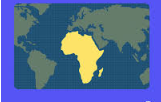
Africa’s history is often introduced through a narrow lens, colonial timelines, slavery, and conflict—leaving out the depth, innovation, and civilization that long defined the continent before external contact. Yet Africa is not a footnote in world history; it is one of its foundations. Long before modern nation-states, Africans built systems of governance, trade, science, art, and philosophy that shaped human development in lasting ways.
These facts are not random trivia. They are deliberate reminders that Africa was building, governing, trading, innovating, and documenting its world while much of the globe was still finding its footing. To understand Africa properly, one must first unlearn the idea that its greatness is recent or borrowed.
This is not an attempt to romanticize the past, but to restore balance to the narrative. These ten facts are carefully chosen, historically grounded, and interconnected. Together, they reveal Africa not as a continent that waited to be discovered, but as one that has always been actively shaping the world.
Africa Is the Birthplace of Humanity
Modern science confirms what African oral traditions have long held: humanity might actually have begun in Africa and there is evidence to these claims . Fossil evidence such as Australopithecus afarensis (famously known as “Lucy”), discovered in Ethiopia, and Homo sapiens remains found across East and Southern Africa, show that modern humans originated on the continent over 200,000 years ago. From Africa, humans migrated to populate the rest of the world. Every human being alive today carries African ancestry at some point in their lineage, making Africa not just a place of origin, but the shared homeland of humanity.
Ancient Egypt Was a Black African Civilization Rooted in the Continent
Ancient Egypt did not emerge in isolation from Africa; it was deeply African in culture, population, and worldview. The Nile Valley civilization shared linguistic, religious, and cultural similarities with Nubia and other African societies. Long before Greek philosophers arrived to study in Egypt, Africans had developed complex systems of mathematics, astronomy, medicine, and architecture. The pyramids were not miracles of mystery but results of advanced engineering knowledge that have been passed down through generations of African scholars.
Africa Had Universities Before Europe’s Medieval Era
The University of Sankore in Timbuktu, Mali, was one of the world’s leading centers of learning as early as the 14th century. At its height, Timbuktu hosted thousands of scholars and hundreds of thousands of manuscripts covering law, medicine, astronomy, mathematics, philosophy, and theology. While Europe was emerging from the Dark Ages, African scholars were debating science, documenting legal systems, and preserving knowledge that would later influence global intellectual development.
The Mali Empire Was One of the Wealthiest Empires in Human History
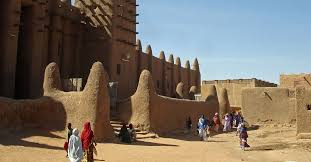
Under the reign of Mansa Musa in the 14th century, the Mali Empire controlled vast reserves of gold and salt, two of the most valuable resources of the era. Mansa Musa’s famous pilgrimage to Mecca was so extravagant that his distribution of gold reportedly destabilized economies along his route. This was not accidental wealth; it was the result of organized trade networks, taxation systems, and governance structures that connected West Africa to North Africa, the Middle East, and Europe.
Africa Had Complex Political Systems Without Western Models
Before colonialism, Africa had a wide range of governance systems, from centralized kingdoms to participatory republics. The Igbo people of present-day Nigeria practiced a form of decentralized democracy long before modern democratic theory. The Ashanti Empire operated with a constitution, checks on royal power, and a council system. These systems were not primitive; they were adapted to local realities and often prioritized consensus, community accountability, and balance of power.
African Trade Networks Connected the World
Africa was not isolated from global commerce; it was central to it. Trans-Saharan trade routes connected West Africa to North Africa and the Mediterranean world. The Swahili Coast linked East Africa to Arabia, India, and China through Indian Ocean trade. African merchants traded gold, ivory, textiles, spices, and knowledge. These networks predated European maritime expansion and demonstrated Africa’s long-standing role in globalization.
Colonial Borders Ignored African Realities
Many of Africa’s present-day conflicts stem from borders drawn without regard for ethnic, cultural, or historical realities. During the Berlin Conference of 1884–1885, European powers divided Africa on maps, often splitting ethnic groups across different colonies or forcing rival communities into one political unit. These artificial borders disrupted existing systems and continue to affect governance, identity, and stability across the continent today.
The Great Wall of Benin Was Among One of the Largest Man-Made Structures in History
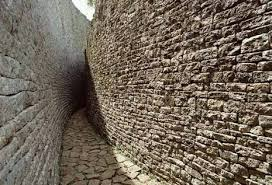

Often excluded from global architectural discussions, the Great Wall of Benin stands as one of Africa’s most astonishing engineering feats. Built between the 13th and 15th centuries around the Benin Kingdom in present-day Nigeria, this vast system of earthworks stretched over 16,000 kilometers when accounting for its full network.
Constructed without modern machinery, the walls served as fortifications, administrative boundaries, and symbols of organized urban planning. British colonial forces destroyed much of it during the 1897 invasion, erasing physical evidence of African engineering brilliance. Yet historians now recognize the Great Wall of Benin as larger than the Great Wall of China in total length, making it one of the greatest human construction efforts ever undertaken.
African Knowledge Influenced Global Science and Culture
African contributions to science and culture extend far beyond the continent. Early iron-smelting techniques in Africa predated many European methods. African agricultural knowledge shaped crops such as coffee, sorghum, and millet. Musical rhythms, storytelling traditions, and artistic forms traveled through the diaspora, profoundly influencing global culture, from jazz and blues to modern fashion and philosophy.
Africa Is Not Stuck in the Past—Its History Is Ongoing
You're African and you are stuck in the past neither are we living off imported civilization, African history did not start or end with colonialism. Independence movements only reshaped a political consciousness in the 19th century, and contemporary Africa should continue to innovate in technology, art, entrepreneurship, and social movements because Africa has always been doing that and we shouldn't stop now. Understanding African history is not about nostalgia; it is about recognizing continuity. The same creativity and resilience that built ancient empires are visible today in modern African cities, industries, and cultural movements and we should ensure that it doesn't end in our time.
Conclusion: Reclaiming the Narrative
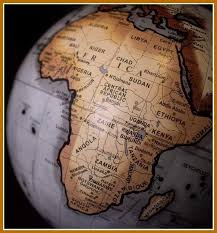
Africa’s history is not a collection of isolated facts; it is a continuous story of human ingenuity, adaptation, and contribution. When these histories are ignored or simplified, Africa is misunderstood. When they are studied honestly, the continent emerges not as a passive recipient of global forces, but as a central architect of civilization itself.
To know African history is not only to honor the past, but to better understand the present and to imagine a future rooted in confidence rather than erasure.