Super Bowl 2026: Bad Bunny's Halftime Spectacle and Game Highlights Spark Frenzy
Bad Bunny's Super Bowl LX halftime show delivered a powerful cultural statement, blending Puerto Rican pride with political messages and vibrant community representation, while Sam Darnold achieved redemption by leading the Seattle Seahawks to a Super Bowl victory. The event was further characterized by a mix of memorable and forgettable commercials and a professional NBC broadcast.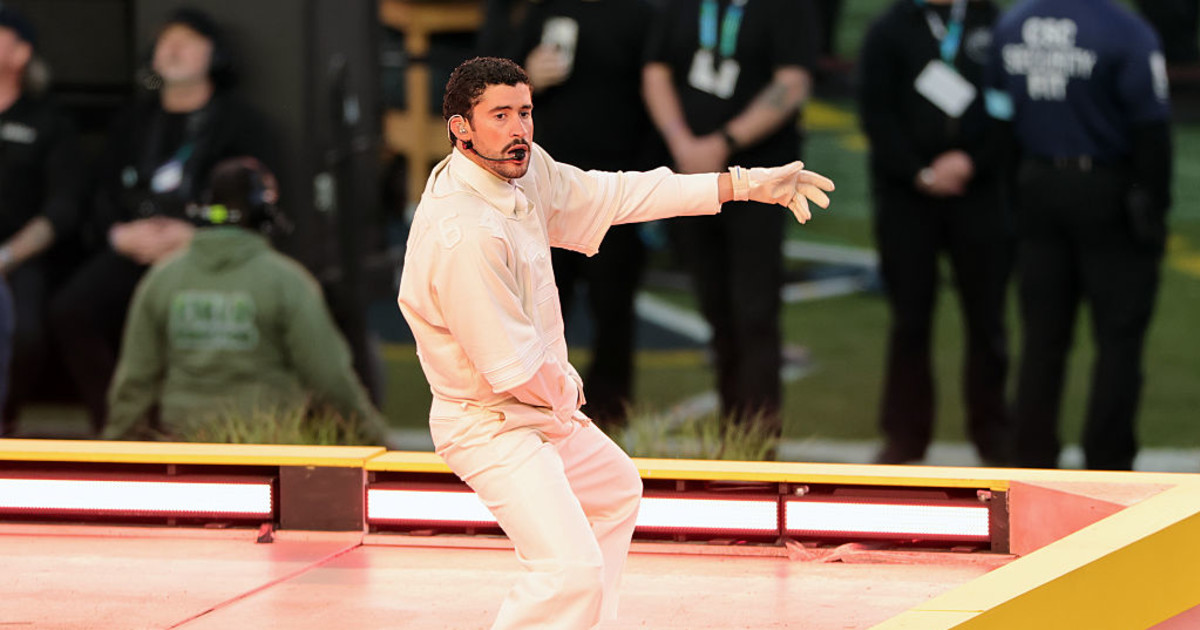
Super Bowl LX transcended a typical championship game, becoming a multifaceted event that blended high-stakes football with profound cultural statements and a spectacle of advertising. While the game itself featured a dominant defensive performance and a story of redemption, the halftime show, helmed by Bad Bunny, drew significant attention for its artistic and political undertones, alongside a diverse array of commercials that vied for viewer engagement.
The announcement of Bad Bunny for the Super Bowl halftime show immediately sparked discussions about his potential to “Make a Statement.” Despite backlash concerning a Spanish-language performance being deemed “un-American” and skepticism regarding the NFL stage’s capacity for meaningful challenge post-Kaepernick, Benito Antonio Martínez Ocasio delivered a powerful and unapologetic ode to Puerto Rican identity. His latest work, “Debí Tirar Más Fotos” (2025), served as a monumental backdrop, documenting Puerto Rican struggles, cautioning against the erosion of the island’s culture due to foreign tax incentives, and honoring Afro-Puerto Rican musical traditions like bomba and plena. His 31-show residency in Puerto Rico, which injected millions into the local economy, underscored his commitment to never compromising his land, identity, or history.
Dubbed the “Benito Bowl,” the performance opened with a young man carrying a Puerto Rican flag, delivering the benediction, “Qué rico es ser Latino. Hoy se bebe.” Dressed in a bespoke Ocasio jersey-suit-jacket emblazoned with his mother’s birth year, Benito performed “Titi Me Preguntó,” embodying his multi-faceted persona. He meticulously crafted an ecosystem of community on stage, featuring domino players, street vendors selling coco frío and piraguas, boxers, and even a marriage proposal during the femme-forward “Yo Perreo Sola,” celebrating women dancing without fear globally. The stage also featured a replica of a Puerto Rican casita and a “yearbook of stars,” including Karol G, Pedro Pascal, Cardi B, and Lady Gaga.
Bad Bunny deftly navigated the challenge of performing explicit songs like “Safaera” by highlighting its many bleeps and FCC-unfriendly lines. The show escalated into a dizzying medley of reggaetón’s heaviest tracks, including Tego Calderón’s “Pa’ Que Retozen,” Don Omar’s “Dale Don,” Daddy Yankee’s “Gasolina,” and his own “EoO,” all while honoring the pantheons of Puerto Rican legends across various music genres.
Unexpectedly, Lady Gaga joined for a beautiful, Latine boda-style rendition of “Baile Inolvidable,” with a literal wedding onstage. Later, Ricky Martin delivered a powerful performance of “Lo que le pasó a Hawaii.” Amidst a reconstruction of barbershops and bodegas, Toñita of Williamsburg’s Caribbean Social Club, a beacon of community resistance since 1974, also made a memorable appearance.
The political message was starkly delivered during “El Apagón,” where Benito ran a light-blue Puerto Rican independence flag across the field, as performers on power lines symbolized the island’s frequent blackouts due to decaying infrastructure. This somber reflection quickly transitioned to the jubilant “Café Con Ron” with Los Pleneros de la Cresta. Concluding his performance, Benito proclaimed, “God bless America,” then inclusively named Chile, Argentina, all of South and Central America, and the Caribbean, before finishing with the United States, Canada, and Puerto Rico, declaring “Seguimos aquí” (“We’re still here”) and spiking a football emblazoned with “Together, we are America.”
His recent Grammy acceptance speech for “Debí Tirar Más Fotos,” where he stated “ICE out” and affirmed, “We are humans, and we are Americans,” further underscored his political stance against immigration enforcement and for the preservation of Caribbean identity. His performance served as a powerful reminder of love, community, and joy created in spite of adversity, challenging the limitations of televised revolution.
The game itself saw Sam Darnold complete a remarkable journey of redemption, achieving a Super Bowl victory in his 101st career start. After failed stints with the Jets, Panthers, 49ers, and Vikings, Darnold, now 28, finally reached the pinnacle with the Seattle Seahawks, beating the Patriots 29-13 at Levi’s Stadium. His victory was a testament to his perseverance and the strength of a formidable Seahawks team, which leaned on Kenneth Walker III’s 135 rushing yards, a suffocating “Dark Side” defense, and five field goals from Jason Myers.
While Darnold’s stat line (19-for-38, 202 yards) was pedestrian, his ability to avoid costly mistakes, a past weakness, was crucial. He threw a 16-yard touchdown pass to AJ Barner in the fourth quarter to extend the lead. The win was sealed by an interception by Julian Love and a 44-yard pick-six by Uchenna Nwosu. Darnold’s emotional post-game reflections highlighted the unwavering belief of his parents and fiancée, Katie. Coach Mike Macdonald praised Darnold as a great teammate and player, emphasizing his steadfast approach. Darnold's journey proved that