States Clash with Paramount Over Warner Bros. Merger, Accusations Fly!
A coalition of 12 state attorneys general has filed an antitrust lawsuit to block the $111 billion merger of Paramount Skydance and Warner Bros. Discovery, despite U.S. Justice Department approval. The states argue the deal violates antitrust laws by reducing competition in film distribution and cable, threatening higher prices and less content, while Paramount defends the merger as essential for competing against dominant streaming platforms.
A proposed of $111 billion merger between Paramount Skydance and Warner Bros which has ignited a major antitrust battle, pitting a coalition of 12 Democratic state attorneys general against the media giants.
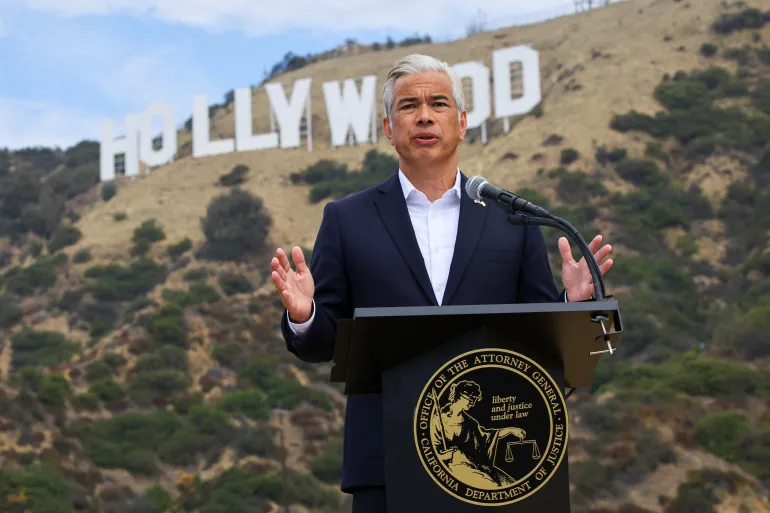
The lawsuit, filed by states led by California Attorney General Rob Bonta, whoaims to block the transaction despite a recent approval from the U.S. Justice Department, challenging the deal's potential impact on competition within the entertainment industry.
The Paramount Skydance, was formed by Skydance Media’s takeover of Paramount Global in August 2025, sharply criticized the lawsuit, calling it a "fundamentally flawed application of the antitrust laws" and a "misrepresentation of competition in the entertainment industry today."
The company reiterated its stance that the merger would create a "stronger competitor against dominant streaming and technology platforms" like Netflix, Amazon, and Disney, which it claims have harmed the market for theatrical exhibition and entertainment jobs.
Paramount asserted it would "vigorously defend the transaction," arguing that delaying it would only harm entertainment workers who have already faced disruption.
The company maintains that the deal has been cleared by regulators in 24 jurisdictions, including the U.S. Justice Department in mid-June without imposing divestitures.
Paramount anticipates closing the Warner Bros. Discovery deal in the third quarter of 2026, or sometime after July 22, and has committed to a "ticking fee" of 25 cents per share per quarter (approximately $650 million cash value each quarter) if the deal isn't completed after September 30.
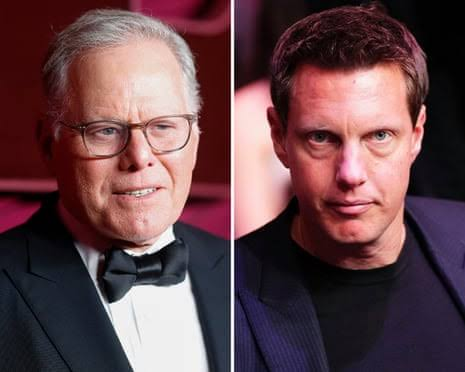
Paramount Skydance, CEO David Ellison has promised the combined company will release at least 30 films annually, maintaining and expanding current output.
The coalition of states, including Arizona, California, Colorado, Connecticut, Massachusetts, Minnesota, Nevada, New Jersey, New Mexico, New York, Oregon, and Washington, who alleges the transaction which violates the Clayton Act.
They argue that the merger would lessen competition in three critical markets: wide-release theatrical distribution, "top-grossing" theatrical distribution (blockbuster films), and basic cable licensing.
According to the lawsuit, the combined entity would control approximately 27% of wide-release theatrical distribution, 30% to 33% of anticipated blockbuster film distribution, and 27% to 33% of the basic cable bundle, encompassing 50 of the most popular cable TV channels.
California AG, Rob Bonta stated that such consolidation would lead to "higher prices, lower quality, and less content for film and television, harming movie theaters, basic cable distributors, and ultimately, audiences."
Bonta emphasized the cultural importance of the entertainment industry, arguing that consolidation would result in fewer opportunities for diverse stories, ideas, and perspectives to come to life, and would reduce the number of journalists informing the electorate.
He highlighted that Paramount and Warner Bros. are two of the five remaining legacy studios, and their merger would exacerbate market control, as the top five studios already dominate 86% of theatrical distribution and 90% of blockbuster distribution.
Furthermore, Warner Bros. and Paramount are the second- and third-largest basic cable distributors, respectively.
The lawsuit received support from Cinema United, a trade group representing theater owners, whose CEO Michael O’Leary warned of "significant and lasting" ramifications.
Hollywood unions, including the Writers Guild of America West and East, also voiced strong opposition, warning that further industry consolidation threatens thousands of jobs and could cause "irreparable harm."
The states are expected to seek an injunction to block the transaction. Attorney General Bonta also criticized the "Trump administration's DOJ" for approving the deal, suggesting they ignored advice from their own staff and "affirmatively making things worse."
This case underscores a growing trend of states independently pursuing antitrust actions, even when federal regulators approve deals.

Bonta cited California's strong antitrust and consumer protections as a model, asserting that "competition is the heartbeat of a vibrant entertainment industry" and that America has "no kings in government or our economy."
He likened unchecked consolidation to the Gilded Age robber barons, warning against monopolies that lead to increased unaffordability, job losses, and fewer consumer choices.
The legal battle highlights a fundamental disagreement over whether the merger fosters robust competition against powerful tech companies or stifles it within traditional media sectors, with significant implications for consumers, creators, and the future landscape of entertainment.