STAR WARS SHOCKWAVE: George Lucas' Final Project Unveiled After 13-Year Hiatus!
After years as 'lost media,' George Lucas's final Star Wars creative project before Disney's acquisition, the animated comedy series <i>Star Wars Detours</i>, is finally set to be screened. Originally scrapped by Disney due to concerns about its comedic tone before the sequel trilogy, the series will now be viewable at the Lucas Museum of Narrative Art opening in September, showcasing a unique and family-friendly take on the galaxy far, far away.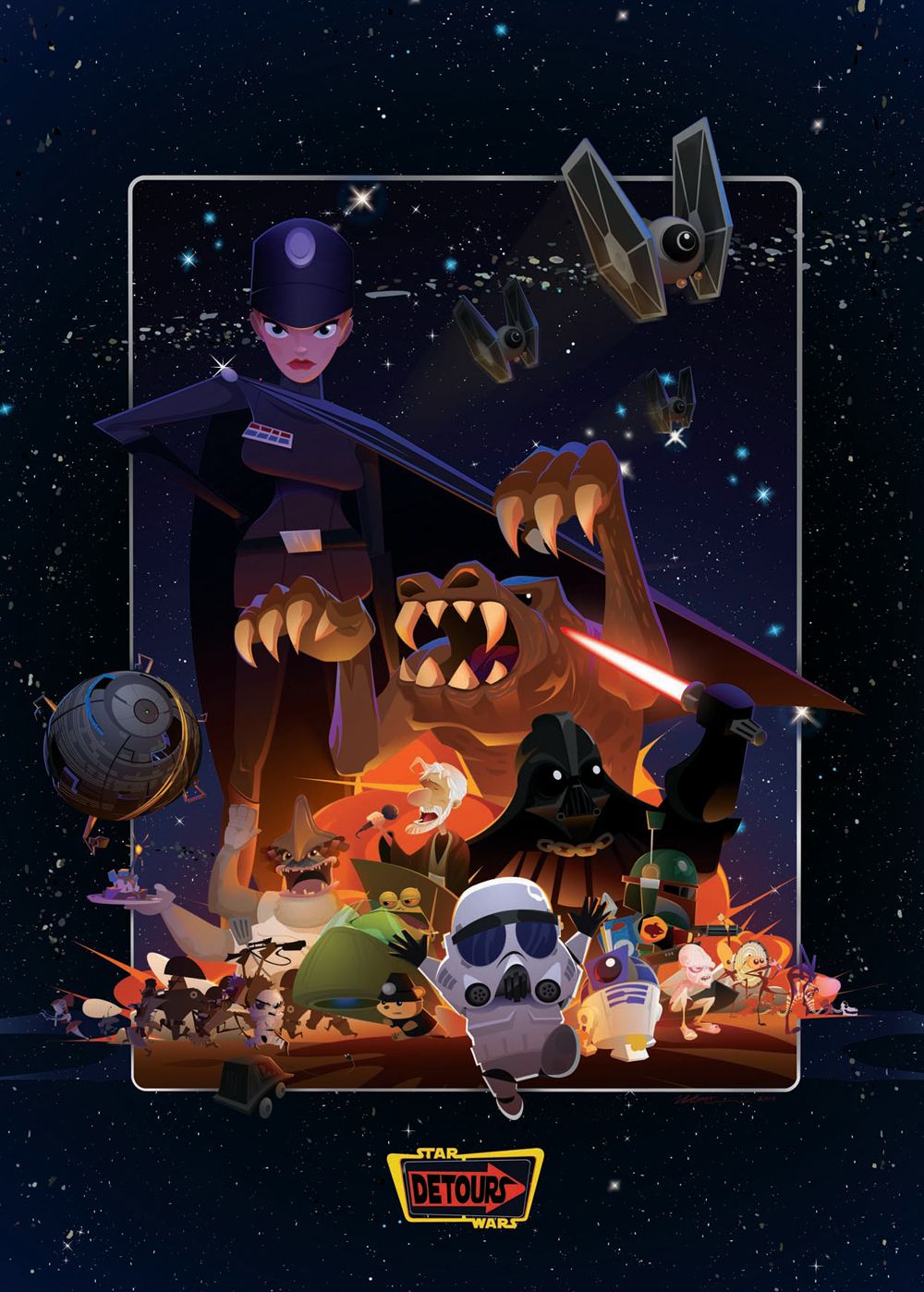
The multifaceted role George Lucas has played within the Star Wars franchise has consistently captivated fans and critics alike, marked by periods of both intense criticism and widespread acclaim. Lucas remained deeply involved in the development of Star Wars projects until 2012, when Lucasfilm was acquired by The Walt Disney Company. This acquisition prompted his official retirement from active filmmaking, allowing him to dedicate his efforts to a passion project: the Lucas Museum of Narrative Art. It quickly became evident that Lucas held a distinct vision for the future trajectory of the Star Wars universe, a vision that diverged significantly from Disney's plans. Glimpses of his forward-looking ideas were revealed at Star Wars Celebration VI in 2012, where he unveiled a slate of upcoming projects. The highlight of this convention was undoubtedly Star Wars Detours, an animated comedy series spearheaded by Seth Green and Matthew Senreich.
For many years, Star Wars Detours was relegated to the status of "lost media," believed to be permanently archived and inaccessible to the public. However, recent developments have brought exciting news: fans finally have a confirmed date for its public availability. The inspiration for Star Wars Detours stemmed directly from Green and Senreich's highly successful Robot Chicken Star Wars parody specials. George Lucas himself was a great admirer of these parodies, so much so that he made a cameo appearance as himself in one of them. Despite the completion of 39 episodes and the readiness of over 62 scripts, Disney ultimately chose to scrap the show from its release schedule. This decision, made ahead of the launch of the sequel trilogy, was reportedly driven by concerns that introducing overtly comedic versions of beloved Star Wars characters might negatively impact the audience's perception of the new, more serious films.
Updates regarding Star Wars Detours have been scarce over the 14 years since its initial announcement. Nevertheless, Seth Green recently disclosed that the series is slated for an exclusive screening at the Lucas Museum of Narrative Art, which is scheduled to open its doors in September. The production history of Star Wars Detours itself was quite unique, unfolding during a particularly interesting era for Lucasfilm Animation. At this time, Lucas had been increasingly gravitating towards animated projects, partly due to the growing unlikelihood of his ambitious live-action series, Star Wars: Underworld, coming to fruition. Concurrently, Star Wars: The Clone Wars had been evolving towards more mature themes, with extensive plans for several additional seasons before it, too, faced cancellation by Disney.
George Lucas has always demonstrated a remarkable willingness to embrace self-parody and has largely disregarded criticisms about injecting irreverent humor into the Star Wars universe. His admiration for the Robot Chicken trilogy of specials, which notably featured several original Star Wars cast members, solidified his confidence in Green and Senreich's ability to develop an entire series. This new series adopted a comedic approach, set specifically in the timeline immediately preceding the original trilogy. Seth MacFarlane also lent his voice talents to the project, as Lucas had previously expressed similar enthusiasm for the Star Wars parodies featured on Family Guy. A significant distinction between Lucas’s vision for Detours and the parodies by Robot Chicken and Family Guy was its intended audience: Star Wars Detours was conceived to be more family-friendly, aligning with Lucas’s consistent assertion that he created the original Star Wars saga with children in mind.
Despite its satirical nature, Star Wars Detours boasted an impressive ensemble voice cast, featuring numerous Star Wars veterans. Billy Dee Williams reprised his iconic role as Lando Calrissian, Anthony Daniels returned as C-3PO, and Ahmed Best once again brought Jar Jar Binks to life. Dee Bradley Baker voiced several different characters, while Catherine Taber, known for portraying Padmé Amidala in The Clone Wars, took on the role of Princess Leia. Seth Green himself was cast as Obi-Wan Kenobi, and Seth MacFarlane reprised his memorable portrayal of Emperor Palpatine from the beloved Robot Chicken sketch "The Emperor’s Phone Call." The cast further expanded to include past collaborators of Green and MacFarlane, such as Joel McHale, Andy Richter, Zachary Levi, Donald Faison, Breckin Meyer, and even "Weird Al" Yankovic, who contributed original songs to the series.
The protracted delays in releasing Star Wars Detours eventually began to feel less like unavoidable circumstances and more like convenient excuses, particularly after the launch of the Disney+ streaming service. With the sheer abundance of Star Wars content now available, including several comedic and kid-friendly new shows, the initial concern that Star Wars Detours might tarnish the franchise's serious reputation became largely moot. Furthermore, Disney+ had already begun restoring many older programs on its "Vintage Star Wars" tab, encompassing 1980s animated shows, the 2003 microseries, and the Ewoks television films. Despite rampant speculation about what Lucas might have done differently had he remained at the helm of Lucasfilm, curiously little attention was given to the final project he had actually personally overseen.
Ultimately, Star Wars Detours profoundly deserves to see the light of day. The immense efforts of the animators and creatives involved, working on a show that received George Lucas’s personal blessing, warrant their work being seen by a wider audience, especially given the clear dedication and love poured into its production. The irony is palpable: any potential backlash Star Wars Detours might have received upon its original release for being "too childish" has almost certainly subsided. This is especially true given the current perceived uncertainty surrounding the franchise's future, evidenced by recent box office struggles. While Star Wars animation continues to thrive, it often faces an issue of perceived conformity, with many of the "Dave Filoni shows" adopting a similar style of animation and frequently reusing the same characters and thematic elements. George Lucas stands as undeniably one of the most influential filmmakers of all time, and his final, personal contribution to Star Wars storytelling is unquestionably worthy of being experienced by a much larger public.