SpaceX Convinced $117M Worth of Ordinary People to Fund Its Future. How Exactly Did This Happen?
Retail investors poured $117.6 million into SpaceX on its first trading day, more than any IPO since 2018. What is the behavioral and financial architecture that made that possible?

On June 12, 2026, retail investors handed SpaceX $117.6 million in net buying on its first day of trading. Purchases, made at market open, by ordinary people who had spent weeks being told that missing this moment would be a decision they'd regret.
The number sits at the top of a chart that spans eight years of large-cap initial public offerings (IPOs), and it isn't close. Coinbase drew $92 million on its debut day in 2021. Uber pulled $58.7 million in 2019. SpaceX more than doubled them all. These weren't irrational people acting without information.
They were people responding, with near-perfect precision, to a system designed to make them feel exactly what they felt: that the window was closing, that the opportunity was singular, and that hesitation was a form of failure. The mechanics of that system deserve far more scrutiny than they receive.
The Architecture of Artificial Urgency
There is a well-documented concept in behavioral finance called scarcity-induced demand. It holds that perceived scarcity, whether real or manufactured, triggers loss aversion before a transaction even occurs. Applied to IPOs, it works like this: a company approaching its public debut is, by definition, offering something that doesn't yet exist in the open market. There is no trading history.
There are no quarterly earnings calls to review. There is only the story the company tells about itself, and the urgency frame that story is delivered within. Nobel Prize-winning psychologist Daniel Kahneman's research found that emotions drive roughly 90% of financial decisions. IPO marketing doesn't fight that finding. It builds on it.
SpaceX's approach to its June 2026 debut was instructive. The company launched a dedicated website, spacexipo.com, and made its roadshow presentation, materials typically reserved for institutional investors behind closed doors, publicly available to anyone with an internet connection. The stated purpose was democratization.
The actual function was amplification. Making the roadshow public didn't reduce information asymmetry in any meaningful way. It gave tens of millions of retail investors the same pitch deck that was designed to move institutional money, without the analytical infrastructure those institutions have to interrogate it. The information wasn't equal. The access to process it was not.
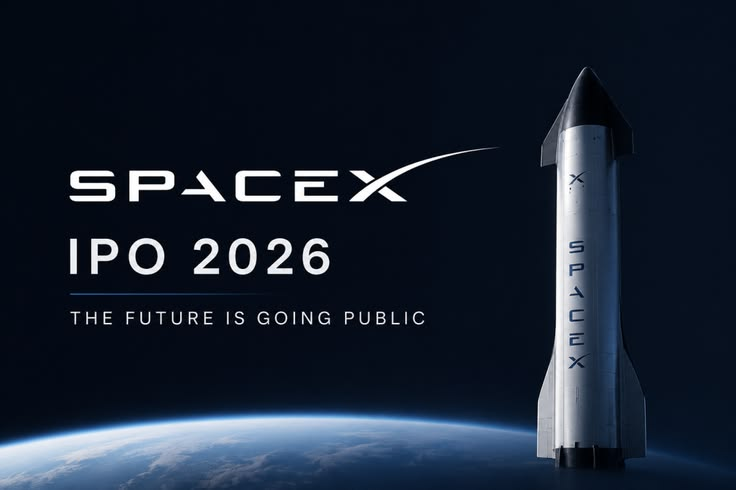
Twenty-one banks underwrote the deal, and Goldman Sachs led. Retail investors were allocated 30% of the float, three times the standard norm for a mega-cap offering. By the time the IPO priced at $135 per share on June 11, total investor demand had exceeded $250 billion for a deal raising $75 billion.
The oversubscription ratio wasn't a sign of the company's merit. It was the inevitable output of a demand-manufacturing process that had been running for months before a single share changed hands publicly.
What the Chart Is Actually Measuring
The Vanda Research data charting single-day net retail buying since 2018 is, on its surface, a record of enthusiasm. Beneath the surface, it's a record of how effectively different companies deployed narrative capital at the moment of maximum investor attention.
Coinbase's $92 million debut day in April 2021 didn't happen because retail investors had independently concluded that cryptocurrency exchanges were undervalued.
It happened because Bitcoin had climbed from roughly $7,000 to nearly $65,000 in the preceding fourteen months, and Coinbase represented the first clean, regulated way to hold that story in a brokerage account.
The company's timing was deliberate. Its executives had watched the crypto cycle carefully, and they chose a public debut at the cycle's peak. The retail buying wasn't spontaneous. It was the predictable response to years of accumulated narrative, finally given a ticker symbol.
Uber's $58.7 million debut in May 2019 tells a different story with the same structure. Uber arrived on the public market after a decade of relentless brand-building that had inserted the company's name into daily life as a verb. This is the underappreciated function of consumer-facing tech companies in the IPO context: their products are their marketing.
Every ride, every meal delivered, every app interaction becomes a touchpoint that builds familiarity and, critically, emotional ownership. When Uber filed, millions of users already felt, on some inarticulate level, that they had a relationship with the company.
The IPO was presented as the formalization of that relationship. The $58.7 million in first-day retail buying was the price of admission for people who had been primed, through use, to feel like insiders.
Research into pre-IPO analyst behavior is even more direct about the mechanics. A 2024 study published by ScienceDirect examining IPO-affiliated analysts found that their revenue and income forecasts exceeded actual company performance 70 to 90% of the time, with the optimistic bias growing larger the further out the forecast extended.
The investors absorbing these projections didn't reduce their participation in response. IPO demand doesn't decrease with the extent of the hype. It increases with the confidence of the presentation.
The Democratization Argument and Its Limits
There is a version of the retail IPO story that frames expanded access as an unambiguous good. The argument goes that institutional investors have historically captured the lion's share of IPO gains, buying at the offering price while retail investors could only access shares in the secondary market, after the first-day pop had already transferred wealth upward.

Opening 30% of a float to retail, as SpaceX did, corrects that asymmetry. The argument is not wrong. But it is incomplete in ways that matter.
The standard institutional-versus-retail split across all IPOs sits at roughly 90 to 10 in favor of institutions, according to Fidelity's internal data. Stocks have popped by an average of 19% from their offering price on the first day of trading, based on data from Jay Ritter at the University of Florida, covering the period from 1980 through 2025.
That gap represents genuine, sustained wealth transfer from late-buying retail participants to early-allocated institutional ones. Broadening IPO access does address part of this problem. What it doesn't address is the valuation question, which is where the real risk concentrates.
SpaceX entered the public market at a price-to-sales ratio of roughly 94, on $18.7 billion in 2025 revenue, while carrying a net loss of $4.94 billion for the same year and an accumulated deficit of $41.3 billion. Morningstar initiated coverage and placed fair value at approximately $780 billion, less than half the IPO valuation.
The stock peaked at $225.64 intraday on June 16, four days after listing, before falling sharply in three consecutive sessions to trade near $165 by June 22. The 180-day lock-up period, during which insiders cannot sell their shares, expires around December 2026.
The retail investors who bought on day one, driven in part by the same urgency architecture that had been running since the prospectus dropped, now hold shares at prices shaped by sentiment, not by earnings. The democratization was real. The risk transferred along with it.
When Belief Becomes the Asset
The deeper pattern across the eight-year chart isn't really about any single company. It's about the conditions under which retail investors consistently choose narrative over analysis, and the degree to which IPO machinery is engineered to produce those conditions.
An NYU Stern and National Bureau of Economic Research (NBER) report found that retail investors allocate an average of six minutes to researching a stock before purchase. A 2024 study found that 68% of cryptocurrency investment decisions were driven by fear of missing out (FOMO) rather than analysis.
The behavioral finance literature on herding establishes that sequential decision-making in IPO markets, where investors observe earlier buyers and treat that action as a signal of superior information, consistently inflates initial valuations beyond what fundamentals justify.
Companies with household recognition don't create this dynamic accidentally. Airbnb's December 2020 debut, which produced $44.3 million in retail buying on its first day, followed months of deliberate cultural positioning around the idea that travel was transforming permanently and that Airbnb owned that transformation.
Roblox's $22.8 million debut came wrapped in a generational narrative about gaming, the metaverse, and digital economies. Palantir's $30.4 million day was built on a decade of deliberate mystique, an intelligence-community adjacency that made institutional-grade data software feel like access to something classified.
In each case, the product on offer wasn't simply equity. It was participation in a story about the future, sold at the moment when that story felt most urgent.
This is where the analysis has to arrive at something uncomfortable: the retail investor isn't simply a victim of this system. They're also a necessary participant in its function.
Companies need the legitimacy that broad ownership confers. Retail buying on debut day signals social consensus, which stabilizes institutional confidence, which holds the price through the lock-up period.
The $117.6 million that flowed into SpaceX on June 12 wasn't just money. It was a vote, extracted through carefully constructed urgency, that the price was real. The question worth sitting with isn't whether retail investors understand this. It's whether, understanding it, the decision to participate is still rational, or whether it has simply become the only bet the system makes feel available.