SHE100: From Rural South Africa to Olympic Glory, The Story of Caster Semenya
Caster Semenya is one of South Africa’s most successful middle-distance runners and a two-time Olympic champion in the 800 metres. Her outstanding achievements in international athletics and her role in global debates about fairness in sports have made her one of the most influential athletes in modern track and field.
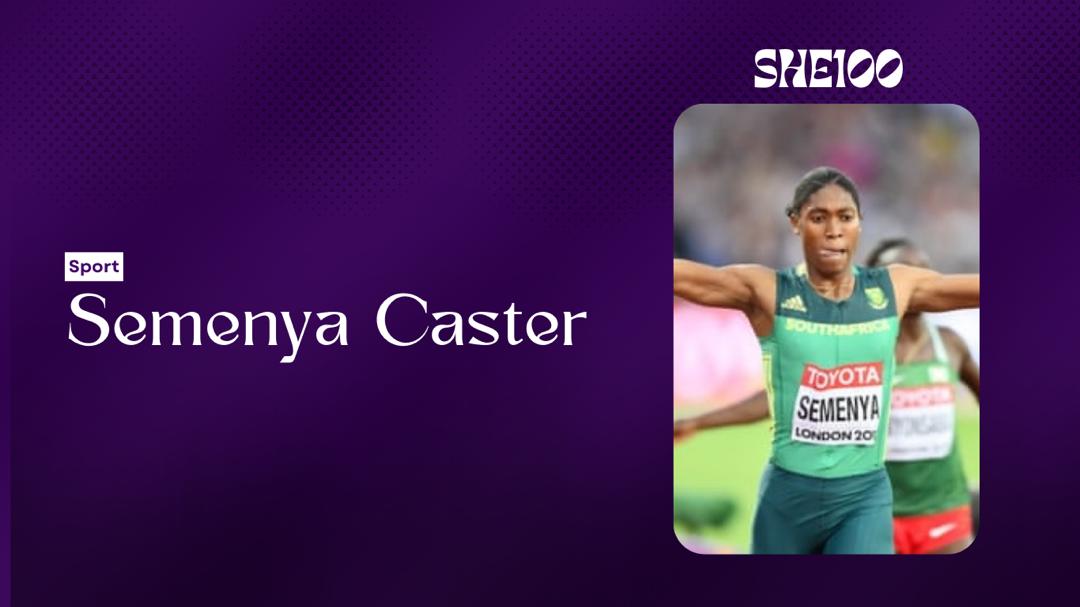
In the world of athletics, few names have sparked as much admiration and conversation as Caster Semenya.
Known for her extraordinary strength, speed, and determination,the South African middle-distance runner has become one of the most dominant athletes in the 800-metre race.
From humble beginnings in rural South Africa to standing on the world’s biggest sporting stages, Semenya’s journey is a powerful story of talent, resilience, and perseverance.
Her achievements have brought pride to South Africa and inspired millions of athletes across Africa and beyond.
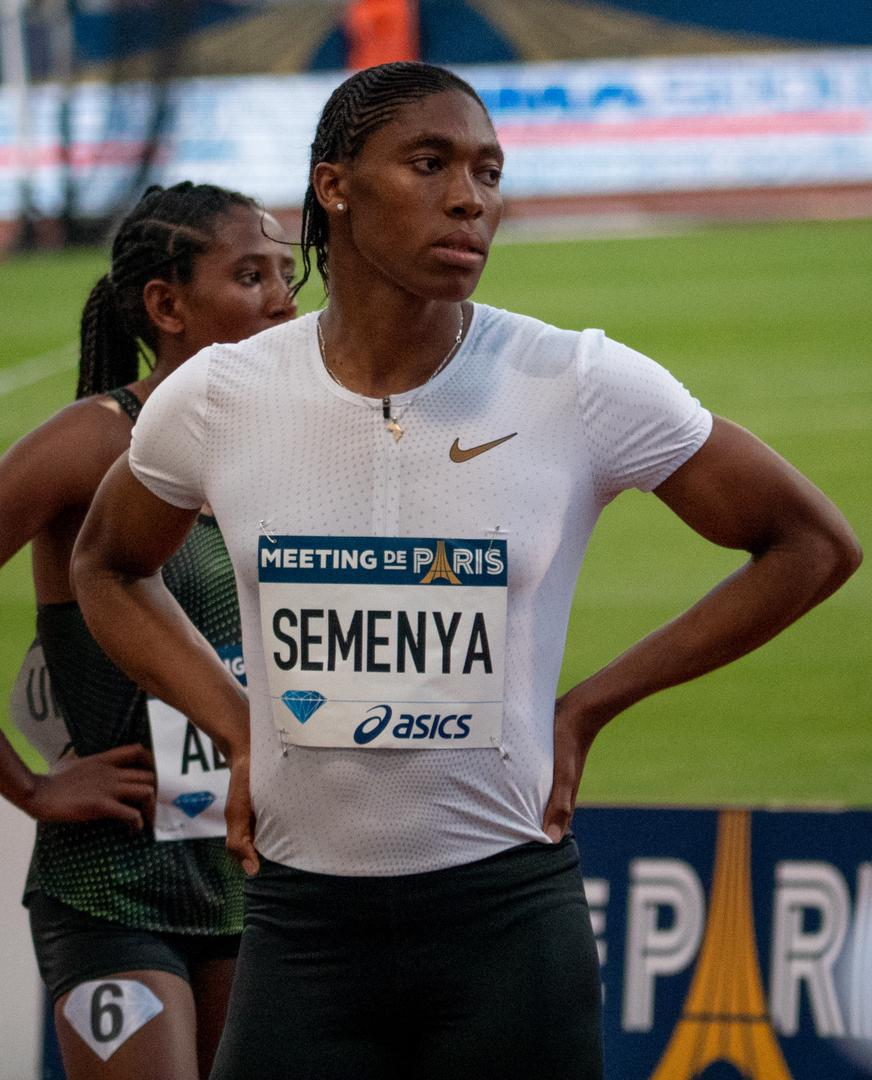
Early Life and Discovery of Talent
Semenya was born on January 7, 1991, in Ga-Masehlong, a village in South Africa nearPolokwane, and grew up in the village of Fairlie in South Africa's northernLimpopoprovince.
She has three sisters and a brother.
Semenya attended Nthema Secondary School and theUniversity of North Westas asports sciencestudent.
She began running as training forassociation football.
Growing up in a rural community, she lived a simple life and developed a passion for sports at a young age.
As a child, Semenya enjoyed playing soccer and running races with friends and classmates.
Her natural athletic ability quickly caught the attention of teachers and coaches.
They noticed her exceptional stamina and speed during school competitions and encouraged her to pursue athletics seriously.
With proper training and guidance, Semenya began competing at higher levels, eventually joining the athletics program at the University of Pretoria, where she further developed her skills and competitive mindset.
Rise to Global Stardom
Caster Semenya is a winner. The 29-year-old South African is the two-time women’s 800m Olympic champion, a three-time 800m world champion and a double Commonwealth Games middle distance gold medallist.
Caster Semenya first gained international recognition in 2009 when she competed at the World Athletics Championships in Berlin.
At only 18 years old, she stunned the world by winning the gold medal in the women’s 800 metres, finishing far ahead of many experienced athletes.
Her Rivals and commentators alike speculated openly on the “masculinity” of her build and the ease with which she dominated the race.

This victory marked the beginning of an extraordinary career.
Over the years, Semenya continued to dominate middle-distance running, winning numerous international titles.
Her most notable achievements include:
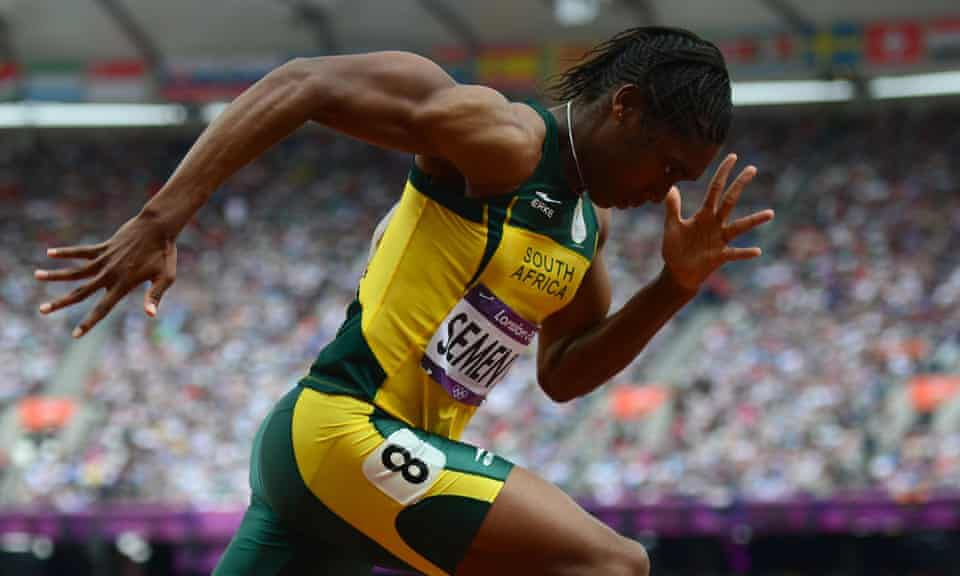
Olympic Gold Medal – 800m at the 2012 London Olympics
Olympic Gold Medal – 800m at the 2016 Rio Olympics
Multiple World Championship Series
Commonwealth Games medals
African Championships winner
Semenya is particularly known for her powerful finishing speed, often overtaking competitors in the final stretch of the race.
Challenges and Global Conversations
Despite her remarkable success, Semenya’s career has also been marked by controversy related to international athletics regulations.
To wrap those figures in further context, when Semenya won the Doha Diamond League 800m in May 2019, it was her 30th consecutive victory over the distance.
Put simply, when fit, in-form and free to run without distraction, Semenya is almost unbeatable over the 800m.
But these are not circumstances often afforded to Semenya, who lives with a condition in which her body produces a much higher level of testosterone than most other women.
In 2009, on the eve of the women’s 800m World Championship final, it was revealed that World Athletics (then the IAAF) had asked her to undergo gender verification testing.
Semenya was permitted to compete in the final and won gold but was subsequently stopped from competing for nearly a year.
In 2011 the IAAF established official rules restricting female athletes with elevated levels of testosterone, arguing it presents an unfair advantage.
From 2011 to 2019 Semenya was locked in a cycle of appeals and court cases until the Court of Arbitration for Sport ruled in favour of IAAF regulations stating that female athletes with differences of sexual development (DSD) are required to take testosterone-reducing medication to compete in track events from 400m to the mile.
The case sparked worldwide debate about fairness, gender identity, and human rights in sports.
Through it all, Semenya has remained determined and outspoken, becoming a powerful voice for athletes’ rights and equality.
Conclusion
Caster Semenya’s story is about far more than medals and records.
She represents determination, courage, and resilience in the face of both triumph and controversy.
From a young girl running in rural South Africa to an Olympic champion and global icon, Semenya has left a lasting mark on athletics.
Her achievements continue to inspire athletes across Africa, proving that talent, perseverance, and confidence can break barriers and create history.
Today, Semenya is regarded as one of the greatest middle-distance runners of her generation, and her influence continues to shape discussions about equality and fairness in international athletics.