Senate Shake-Up: New Rules Ignite Fierce 2027 Power Struggle
A major controversy has erupted in Nigeria's Senate following an amendment to its Standing Orders that restricts eligibility for presiding offices in the 11th National Assembly. The new rule, requiring eight years of consecutive service, has sparked accusations of political manipulation and constitutional breaches, raising significant questions about the 2027 leadership contest and potentially leading to judicial intervention.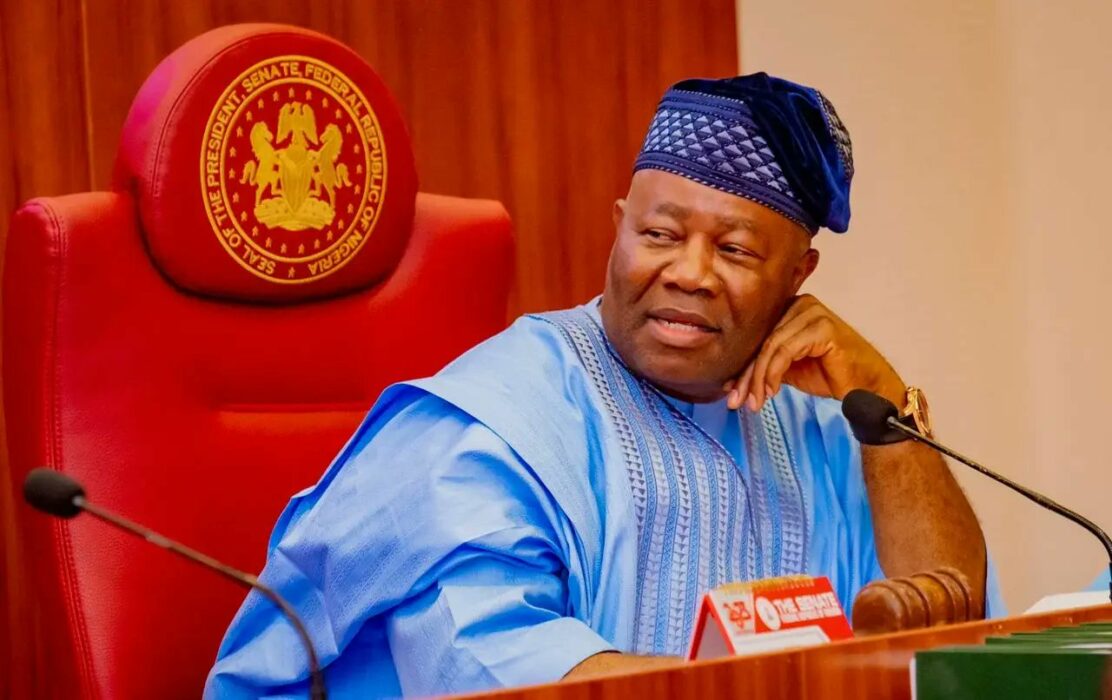
A significant controversy has erupted within the Nigerian Senate following an amendment to its Standing Orders, which imposes stringent restrictions on eligibility for presiding offices in the upcoming 11th National Assembly. These changes have ignited intense constitutional debates, fierce clashes among lawmakers, and widespread accusations of political manipulation, despite the Senate's subsequent partial reversal of certain controversial provisions related to oath-taking procedures.
The amendment, officially announced by Senate President Godswill Akpabio after its adoption via a voice vote during plenary, has generated considerable contention. Critics within the National Assembly view it as a strategic maneuver designed to narrow the field of contenders for the leadership of the 11th Senate in 2027. In its practical application, the new rule effectively excludes several categories of experienced politicians, including former senators seeking a return in 2027, newly elected senators entering the 11th Assembly, influential political figures returning after a hiatus, and governors or ministers aspiring to Senate leadership positions upon their re-entry into the chamber.
Under the new arrangement, only current members of the 10th Senate who successfully secure re-election into the 11th Senate will qualify to contest for the coveted offices of Senate President and Deputy Senate President. This implies a strict requirement of having completed two consecutive terms immediately preceding the nomination, effectively necessitating eight years of continuous parliamentary service in the Senate. While officially presented as a measure to foster institutional continuity and enhance parliamentary stability, the amendment's profound political implications have become a focal point of public and legislative discourse.
This development is widely believed to directly impact the political aspirations of several prominent individuals. Notably, Senator Adams Oshiomhole of Edo North and Imo State Governor Hope Uzodimma, who has been linked with a potential Senate presidency bid after his gubernatorial term ends in 2027, are among those affected. Uzodimma, a former senator, would be disqualified under the amended rules due to not currently serving in the 10th Senate. His appearance before the All Progressives Congress (APC) screening committee, ahead of a possible return to the Senate in the 11th Assembly, highlights the immediate and personal consequences of the new regulation.
The controversy swiftly fueled speculation that the amendment was less about genuine legislative reform and more about a calculated strategy of political exclusion. At the heart of the constitutional arguments lies an intense struggle for control of the Senate in anticipation of the 2027 general elections. Several senators, including Oshiomhole and Senator Ezenwa Onyewuchi representing Imo East Senatorial District, openly asserted that the amendment was engineered to entrench the dominance of ranking lawmakers and prevent external challenges to existing power structures.
Senator Onyewuchi mounted a strong constitutional challenge, declaring the amendment a violation of Section 50 of the Nigerian Constitution. He argued that Section 50 simply mandates that the Senate President and Deputy Senate President be elected “by members from among themselves,” deliberately omitting any additional qualifications for these offices. For Onyewuchi and other critics, once an individual is duly elected as a senator, they should possess equal constitutional rights to contest any office within the chamber; any further imposition, they contend, constitutes constitutional overreach. Onyewuchi further invoked Section 1(3) of the Constitution, which renders any law inconsistent with the Constitution void to the extent of its inconsistency, cautioning that the amendment could foster a dangerous perception that the leadership of the 11th Senate was being predetermined well before the 2027 elections, thereby eroding public trust in democratic institutions.
Prior to this amendment, any ranking senator — defined as a lawmaker with at least four years of legislative experience — was eligible to contest for presiding offices. The new rule instantly provoked resistance within the chamber, with Senator Oshiomhole, despite being a member of the ruling APC, emerging as a leading voice against it. The disagreement escalated during a plenary session when Oshiomhole vehemently challenged the adoption of the Senate Votes and Proceedings, insisting that the records failed to accurately reflect the deliberations surrounding the amendment. Senate President Akpabio, however, overruled him, emphasizing adherence to Senate procedures and issuing a warning against unruly conduct.
While the Senate subsequently re-amended a portion of the rules concerning the procedure for electing presiding officers on inauguration day, the contentious clause mandating eight years of consecutive service remained untouched. This re-amendment restored the previous practice, enabling senators-elect to first elect the Senate President and Deputy Senate President before taking their oath of office. Senate Leader Opeyemi Bamidele explained that this adjustment was crucial to rectify constitutional inconsistencies and align Senate procedures with parliamentary convention. The initial hurried amendment had, in fact, run afoul of the 1999 Constitution by altering the inauguration procedure, specifically Sections 2(2) and 3(1), which contradicted Section 52 that permits lawmakers to participate in leadership elections before oath-taking. Bamidele's intervention led to the reversal of the oath-taking provision, a move that reinforced the concerns raised by critics like Oshiomhole about the rushed and flawed amendment process.
Despite this partial reversal, the core amendment restricting eligibility for Senate leadership positions was retained. Senator Adeniyi Adegbomire (SAN), Chairman of the Senate Committee on Judiciary, Human Rights and Legal Matters, clarified that only the oath-taking procedure was rescinded, not the eligibility requirements. This clarification signifies that the battle has now shifted from procedural adjustments to fundamental constitutional interpretation. Legal analysts widely anticipate that the courts may ultimately be tasked with determining the legality of the Senate's authority to impose additional qualifications for leadership roles beyond those explicitly stipulated in the Constitution.
Such controversies are not unprecedented in the history of Nigeria's National Assembly. Past instances include the 4th Assembly, where the late Umar Ghali Na’Abba amended House rules to protect the leadership structure post-2003 elections, a strategy that ultimately failed when he lost his re-election bid. Similarly, during the 8th Senate, Bukola Saraki faced legal challenges over allegations of manipulating Senate rules to facilitate his emergence as Senate President. Ironically, current Deputy Senate President Barau Jibrin, who had challenged Saraki's ascension, has not publicly opposed the latest amendment, despite its far-reaching implications.
Political observers interpret the amendment as indicative of deepening divisions within the Senate, intensifying the battle for control ahead of the 2027 succession. Insiders suggest that the move is part of broader calculations by the Akpabio leadership to consolidate power in the 11th Senate, particularly if the current political zoning arrangements persist. However, several uncertainties loom, including the ruling APC's ability to maintain its Senate majority and the re-election of Akpabio and other key leaders. Furthermore, the potential emergence of fresh contenders from various states could still challenge existing power dynamics.
Senator Oshiomhole, speaking to journalists, reiterated his stance that the amendment was self-serving and unconstitutional, criticizing the use of voice votes for such critical decisions. He also highlighted the inconsistency, pointing out that Akpabio himself had not completed eight consecutive years in the Senate before assuming the presidency, thereby questioning the principle of leading by example. Senator Abdul Ningi of Bauchi Central echoed these sentiments, describing the amendment as clearly driven by selfish interests, drawing parallels to previous instances where concerns over the Electoral Act were ignored. Ningi lamented that the principle of ranking had been disregarded in 2023 when first-term senators were appointed to principal officer roles and major committee chairmanships, suggesting that lawmakers often only protest when issues directly affect their personal ambitions rather than national interest. He concluded that such personalized laws, tailored to specific groups or party advantages, would continue unless the underlying menace of self-interest is addressed.
Despite the significant backlash and strong opposition, proponents of the amendment maintain that the new rule is essential for ensuring that only experienced lawmakers rise to leadership positions, thereby strengthening institutional stability and the overall integrity of the upper chamber.