Samsung Galaxy F56: A Real-World Look at the Features

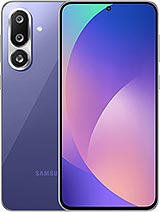
In the increasingly competitive landscape of mid-range smartphones, manufacturers are under constant pressure to strike the right balance between performance, aesthetics, and price. The Samsung Galaxy F56, launched in May 2025, is said to be a promising entrant in this segment, offering a sleek design, capable internals, and long-term software support. While its spec sheet is appealing on paper, real-world comparisons and a closer analysis reveal a more nuanced picture — one that includes strengths and compromises.
Screens, Screens, Screens
The Galaxy F56 is said to come equipped with a 6.7-inch Full HD+ Super AMOLED+ display, which, for perspective, is roughly the size of a small paperback book or two stacked passports side by side. It is reported to be large enough to make watching videos immersive, without feeling bulky in hand.
The Super AMOLED+ technology is expected to deliver deeper blacks and more vibrant colors than standard LCD displays. This is because AMOLED screens light up each pixel individually, so when the screen is showing black, the pixels are turned off — saving battery and making contrast levels pop. The result? pictures are should look richer, and dark scenes in movies or games should not look washed out.
Add to that a 120Hz refresh rate, and the display should be silky-smooth in motion. In practical terms, this means animations and scrolling should feel more fluid — like flipping through a well-oiled photo album rather than a creaky old one.
With a peak brightness of 1200 nits, visibility would remain excellent even in bright sunlight — so whether you're reading messages at a bus stop or watching highlights under midday sun, your screen should not leave you squinting.
Performance and Throughput
The Samsung Galaxy F56, powered by the Exynos 1480 and 8GB of RAM, offers smooth multitasking and solid performance for everyday use and moderate gaming, supported by a vapor chamber cooling system that keeps it steady under pressure.
Water Resistance
One notable difference is water resistance. The Samsung Galaxy F56 does not come with an official water resistance rating, meaning it is not designed to withstand submersion or heavy water exposure. While it may handle light splashes or brief exposure to water, it’s said to be best avoided in wet conditions. In contrast, the iPhone 15 is said to offer IP68 water and dust resistance, capable of withstanding submersion in up to 6 meters of water for 30 minutes. This makes the iPhone a better choice for users who need a phone that can endure harsher conditions, especially for those involved in outdoor activities or those near water.
Memory
The Samsung Galaxy F56 offers solid memory options with internal storage configurations of 128GB or 256GB, which should be more than enough for most users to store their apps, photos, videos, and documents. However, one drawback is that the storage is not expandable, meaning users cannot increase the storage capacity with a microSD card. While the ample internal storage is great for everyday use, it could be limiting for users with large media libraries or those who need to store high-resolution videos and apps. The device also comes with sufficient RAM (likely 4GB or 6GB), which ensures smooth multitasking and performance for general use. However, users who rely on resource-heavy apps or multitasking might find the RAM a bit restrictive. Overall, the F56’s memory setup works well for typical users, but those needing more flexibility or running intensive applications might find it a bit limiting in the long term.
Battery Life
Latest Tech News
Decode Africa's Digital Transformation
From Startups to Fintech Hubs - We Cover It All.
In terms of battery, the F56’s 5000mAh capacity with 45W wired fast charging is said to ensure the phone can last through a typical day and then some. Even under stress — say, a three-hour Call of Duty: Mobile session — the F56 is said to get you through without a panic search for a charger. Charging is said to be efficient, reaching full capacity in roughly 70 minutes, though wireless charging is not specified as part of the features.
Camera System: More Than Enough, But Not a DSLR
The camera department on the Galaxy F56 is led by a 50MP main sensor with Optical Image Stabilization (OIS), accompanied by an 8MP ultra-wide and a 2MP macro lens. On the front, there is said to be a 12MP selfie camera. The results are said to be consistently good in well-lit conditions and respectable in low light thanks to Samsung’s image processing. This feature is especially great for night selfies and night portraits, delivering clearer, more detailed shots even in challenging lighting.
The 2MP macro lens on the Galaxy F56, while not offering the same level of detail as higher-resolution macro lenses on professional cameras, is still quite capable for basic close-up photography. It's great for capturing subjects like flowers and insects, where you want to get up close and appreciate the intricate details of the natural world. You may not capture the razor-sharp details of a professional macro lens, but for casual users or photography enthusiasts, it allows you to explore the world of macro photography without needing specialized equipment. You’ll still be able to capture textures, patterns, and delicate features, like the veins of a flower petal or the fine hairs on an insect’s legs, making it a fun and accessible way to experiment with macro shots in everyday environments.

Software and Longevity
Running Android 15 with One UI 7, the F56 is said to be supported by six years of software and security updates, making it a strong choice for users looking to hold on to their device for the long term. Samsung’s interface is said to be mature, feature-rich, and regularly improved, with tools like Samsung Knox Vault providing robust security features. For those who love to tweak the display on their phones, One UI is said to be both friendly and functional — without the bloat found in some other ecosystems.
Developer-Friendly Features
- Android Ecosystem Flexibility: The F56, running Android 15, offers a more flexible environment for cross-platform development. If you’re using tools like Flutter, React Native, or Xamarin, which are popular for cross-platform development, Android devices like the Galaxy F56 allow for easier testing, debugging, and integration.
- USB Debugging and ADB: With USB debugging and Android Debug Bridge (ADB), you can directly test and debug your app on the Galaxy F56 while developing for multiple platforms.
Conclusion
The Samsung Galaxy F56 impresses with its 50MP camera, 5000mAh battery, and large screen, making it a great value for content creators anddevelopers seeking flexibility.