Salima Mukansanga: The First African Woman to Officiate at a Men’s FIFA World Cup
Before she made history at the World Cup, Salima Mukansanga had already fought her way through a football world that was not built with women like her in mind. This is the story of the Rwandan referee who became the first African woman to officiate at a men’s FIFA World Cup.
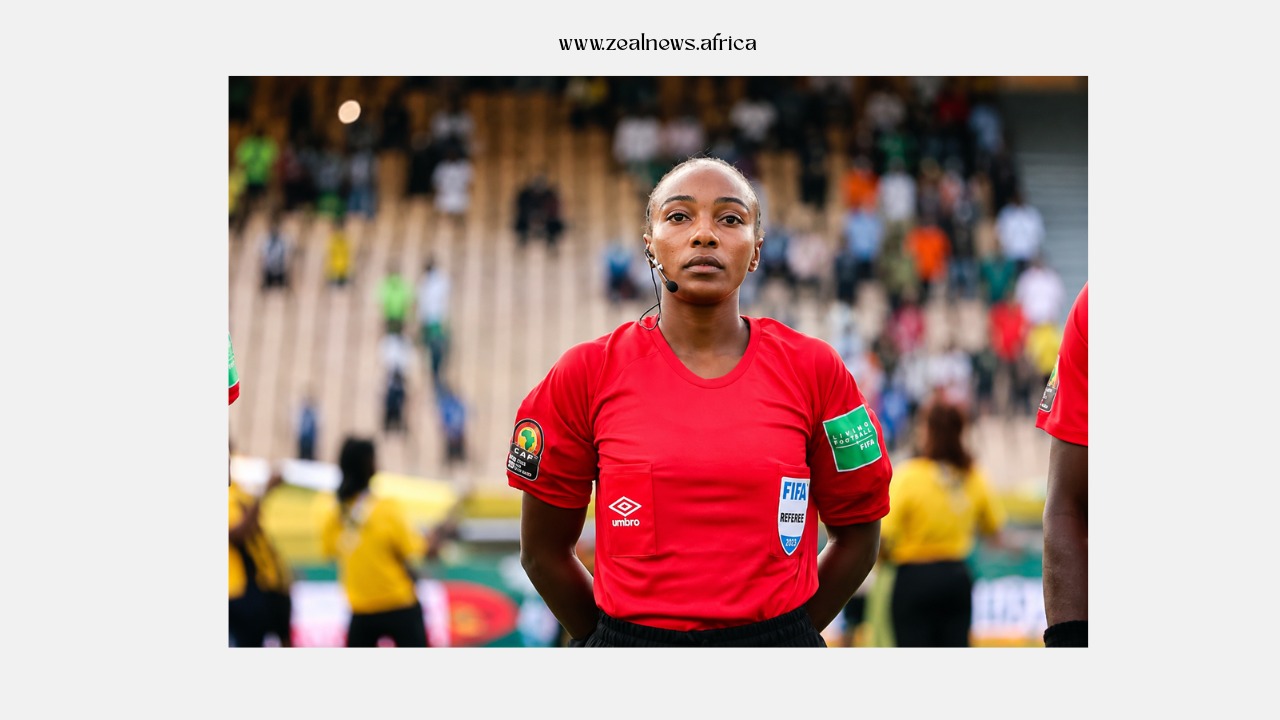
For decades, football's biggest stages had something in common: the players could be African, Asian, European, or South American, but the referees in men's competitions were overwhelmingly men.
Then Salima Mukansanga walked into the picture.
The Rwandan referee became one of the six women selected as match officials for the 2022 FIFA World Cup in Qatar, the first World Cup to appoint women to its officiating team.
Mukansanga was among three women selected as referees, alongside France's Stéphanie Frappart and Japan's Yoshimi Yamashita.
For Mukansanga, however, Qatar was not where the story began.
By the time she arrived at the World Cup, she had already spent years working her way through African football, officiating men's and women's matches and building an international career that had taken her to the Olympics and FIFA Women's World Cup.
Earlier in 2022, she had already broken another barrier by becoming the first woman to referee a match at the men's Africa Cup of Nations.
Her journey to those stages began with an entirely different sporting ambition.
From Basketball to the Centre of the Pitch
Mukansanga was born in Rwanda in 1988 and grew up around sport. As a young girl, she was interested in football, but her parents eventually discouraged her from playing because of the injuries they saw occurring in the informal games around her.
She then turned her attention to basketball and hoped to make Rwanda's Under-17 team.She did not make the team, and that disappointment unexpectedly redirected her career.
Football, however, had never really left her.
Her father had run a football team, and Mukansanga had grown familiar with the role of referees. She was particularly interested in the authority they carried on the pitch: unlike the players, referees were responsible for interpreting and enforcing the rules.
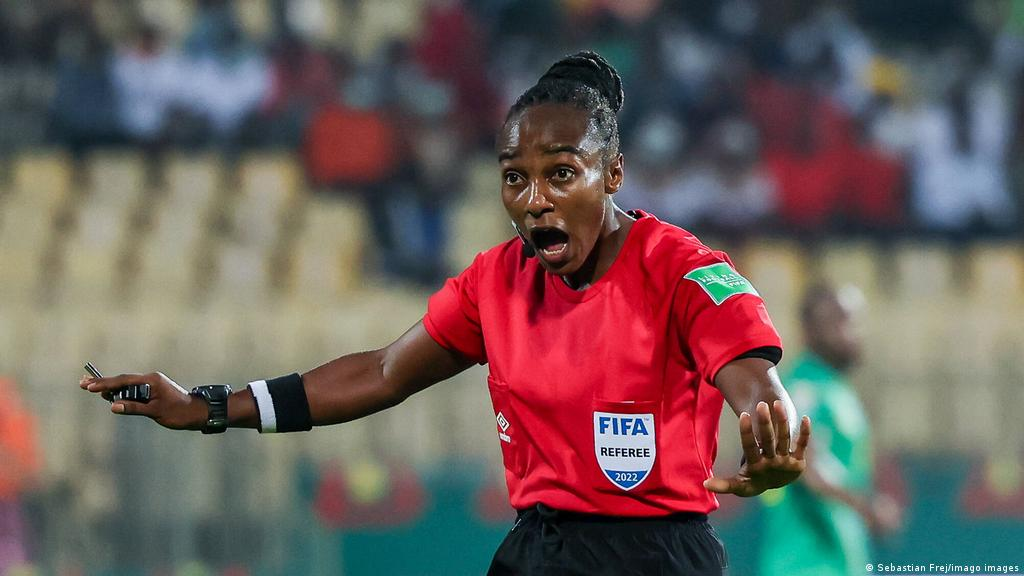
After losing the opportunity to pursue basketball at the level she wanted, she began asking how she could become a football referee.
The path was not immediately welcoming.
She initially faced resistance when trying to enter referee training and was told she was too young. Instead of abandoning the idea, she persisted. She eventually completed her referee training and began building experience in Rwanda.
Her early assignments included men's Second Division matches and women's top-flight football. She was not developing her career exclusively within women's football. She was also learning to manage the pace, physicality and expectations surrounding men's matches.
By 2012, Mukansanga had been placed on the FIFA international referee list, opening the way for her to officiate beyond Rwanda.
Her career continued to expand. She officiated at the 2016 Women's Africa Cup of Nations, the 2018 FIFA U-17 Women's World Cup and the 2019 FIFA Women's World Cup in France. At the 2019 World Cup, she refereed the group-stage match between Sweden and Thailand. She also worked at the Tokyo 2020 Olympic Games.
And while football was becoming increasingly central to her professional life, Mukansanga was also pursuing another career.

She earned a bachelor's degree in nursing and midwifery from the University of Gitwe in Rwanda. In an interview with the BBC, she explained that choosing between nursing and refereeing was not an automatic decision. At one point, she spent three days thinking about which path she wanted to pursue.
She chose the whistle. It turned out to be a decision that would take her much further than she could have known at the time.
The AFCON Moment That Changed Everything
On January 18, 2022, Salima Mukansanga entered the Ahmadou Ahidjo Stadium in Yaoundé for Zimbabwe's match against Guinea at the Africa Cup of Nations.
The match ended 2–1 in Zimbabwe's favour.
But the result became secondary to what Mukansanga represented.
She had become the first woman to referee a match at the finals of the men's Africa Cup of Nations. CAF confirmed the historic achievement after Mukansanga took charge of the Group B match.
It was a significant moment because the AFCON had existed since 1957, and for decades its matches had been officiated exclusively by men. Mukansanga's appointment therefore represented a major break with the competition's history.
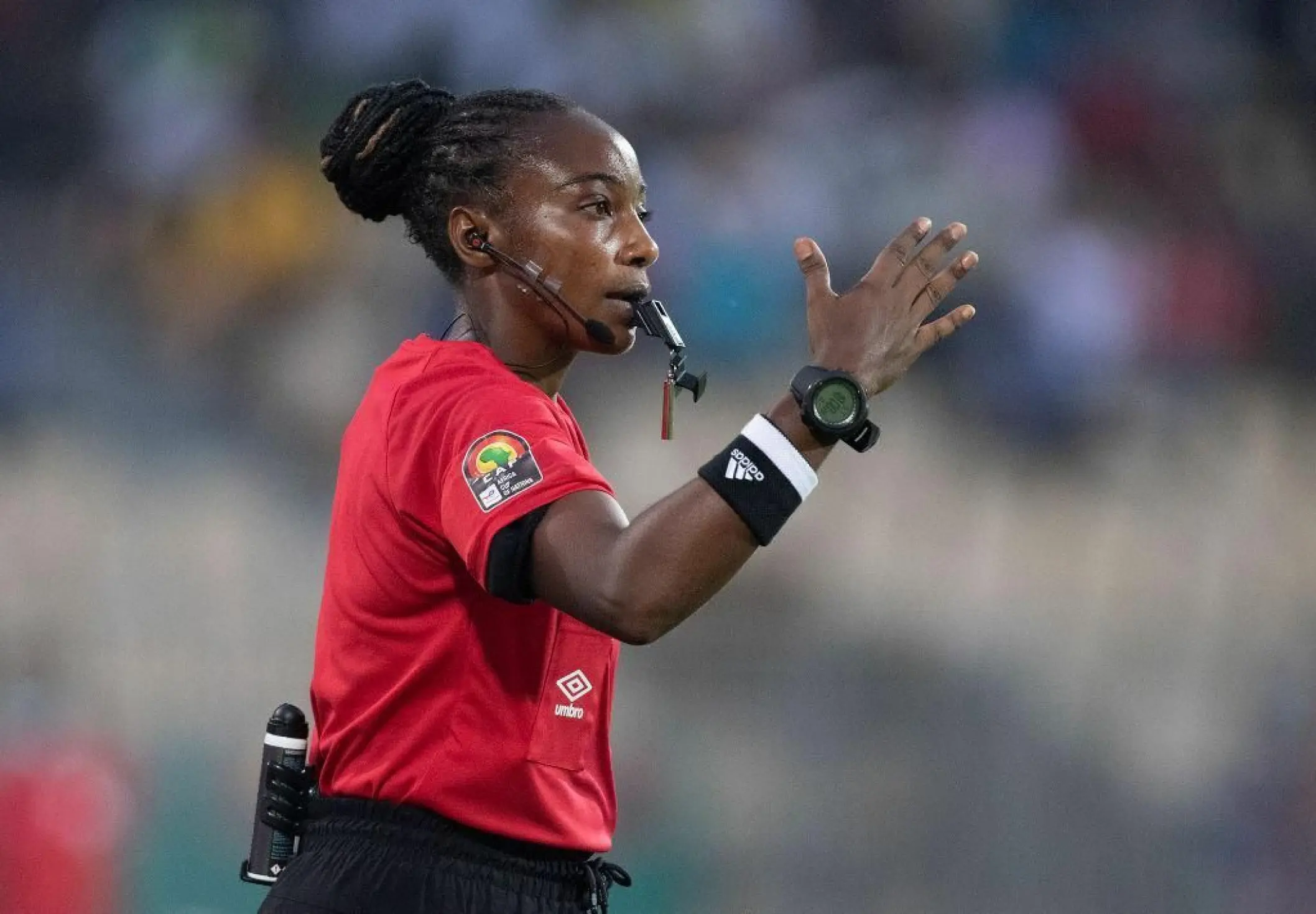
She was also part of a wider moment for African women in refereeing. Moroccan official Bouchra Karboubi and Cameroon's Carine Atemzabong were also part of the historic officiating group at the tournament.
But Mukansanga was the central referee.
She was the person responsible for making the decisions in the middle of the pitch.
Afterward, she did not speak about the achievement only as a personal victory. During CAF's Referees' Open Day, she described the opportunity as a way to demonstrate what African women could do and to help open the door for those who would come after her.
That idea would become central to understanding her career.
Mukansanga was not simply trying to prove that she could become an elite referee. She was operating in a profession where her success could change what other young African women believed was possible.
And only a few months after making history in Africa, she was given a much larger stage.
FIFA selected Mukansanga as one of 36 referees for the 2022 men's World Cup in Qatar. It was the first time women had been appointed to the officiating team at a men's FIFA World Cup. Alongside Mukansanga were Frappart and Yamashita, while Brazil's Neuza Back, Mexico's Karen Díaz Medina and the United States' Kathryn Nesbitt were selected as assistant referees.
FIFA's refereeing leadership was clear about why the women had been selected. The decision, it said, was based on quality rather than gender.
Mukansanga's presence in Qatar was historic because she was a woman and an African. But she had not arrived there simply because FIFA wanted a symbolic moment.
She had spent years accumulating the experience required to be there.
On November 22, 2022, she served as the fourth official for France's 4–1 victory over Australia at Al Janoub Stadium. The appointment made her the first African woman to officiate at a men's FIFA World Cup.
She was not the referee in the middle of that match. South Africa's Victor Gomes was the referee.
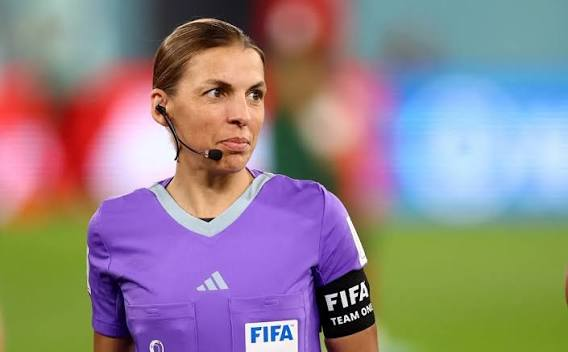
Mukansanga's World Cup achievement is sometimes described inaccurately as her being the first woman to referee a men's World Cup match.
She was not; that particular record belongs to Stéphanie Frappart, who became the first woman to referee a men's FIFA World Cup match when she took charge of Costa Rica versus Germany on December 1, 2022.
Mukansanga's achievement was different, but no less significant: she was the first African woman to officiate at the men's World Cup, serving as a fourth official in Qatar.
More Than a First
The temptation with stories like Mukansanga's is to turn them into a list of firsts.
First woman at AFCON.
First African woman at a men's World Cup.
FIFA international referee.
Olympic official.
Women's World Cup official.
Refereeing is one of football's most demanding positions because authority is built into the job. Players can disagree with a referee, coaches can protest decisions and supporters can question almost every call. Yet the referee is still expected to make decisions quickly and confidently and have those decisions accepted.
For Mukansanga, breaking into men's football therefore meant more than simply getting onto the pitch.
She had to establish authority.
She had to demonstrate that she could handle the demands of the job.
And she had to do it in environments where women had traditionally occupied very different roles within football.
Her story also complicates the idea that trailblazers simply appear when an institution decides to give them an opportunity.
Mukansanga had already spent years preparing before the major opportunities arrived.
By the time FIFA selected her for Qatar, she had been an international referee for a decade. She had worked at major women's tournaments, the Olympics and African competitions. Her AFCON appointment came after years of progression rather than out of nowhere.
And her career did not stop with the 2022 World Cup.
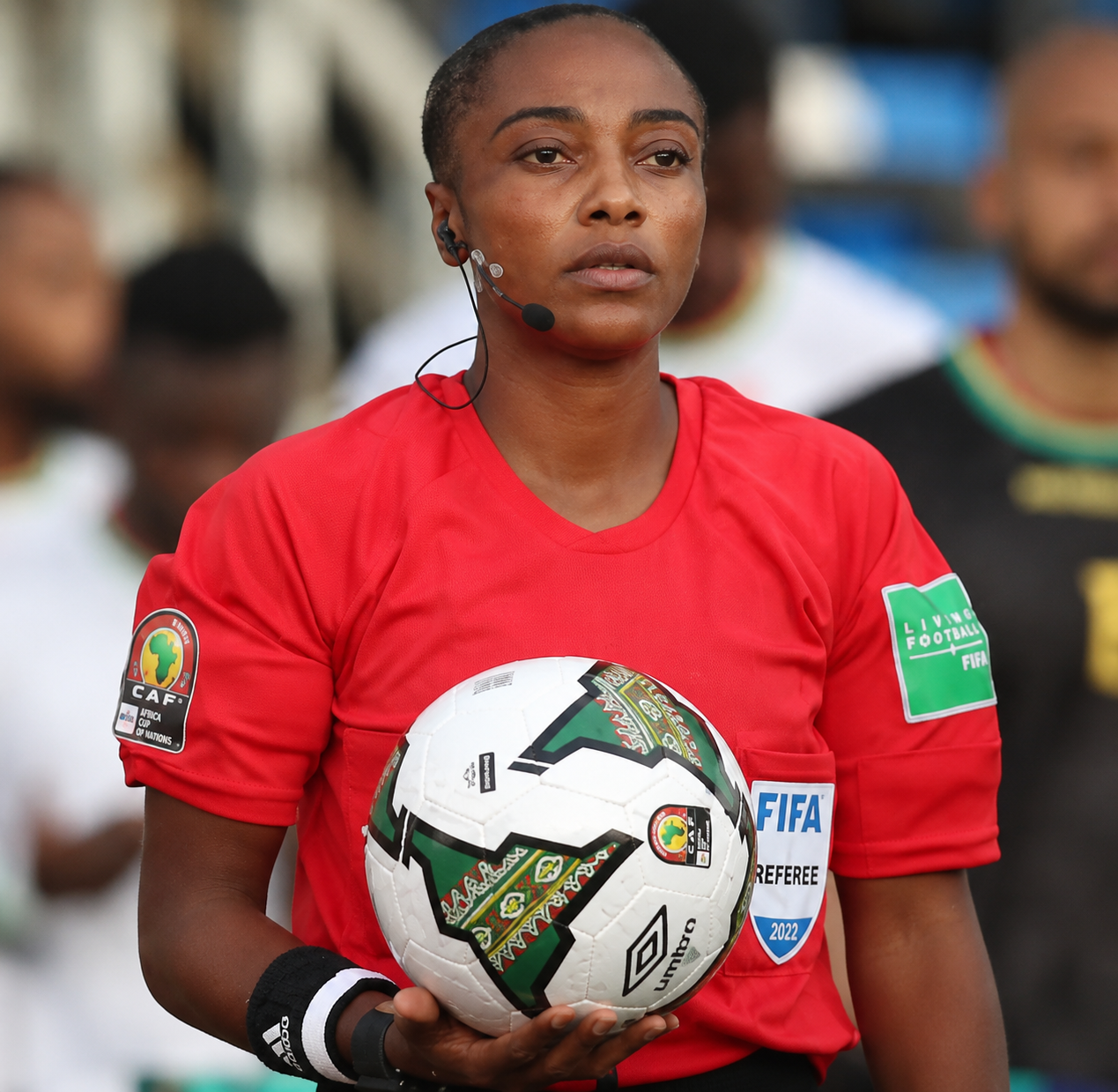
She continued officiating at major international competitions, including the 2023 FIFA Women's World Cup. FIFA records also show her working as a fourth official at the 2023 Women's World Cup Play-Off Tournament.
More recently, Mukansanga has increasingly moved into video officiating. In 2024, CAF appointed her as a VAR official for the Women's Africa Cup of Nations, where she was part of the officiating team for the tournament's final.
In 2026, she was selected among the officials for the FIFA U-20 Women's World Cup in Poland, where she is scheduled to work as a Video Assistant Referee.