Saba Saba Fury: Leaders Blast Police, Schools Shut Amid Protest Roadblocks in Kenya
Saba Saba Day 2026 saw Nairobi grappling with school disruptions due to protest fears and widespread condemnation of police actions. Political leaders, including Kalonzo Musyoka and James Orengo, criticized excessive police force, roadblocks, and violations of constitutional freedoms, underscoring the day's enduring significance as a symbol of democratic struggle.
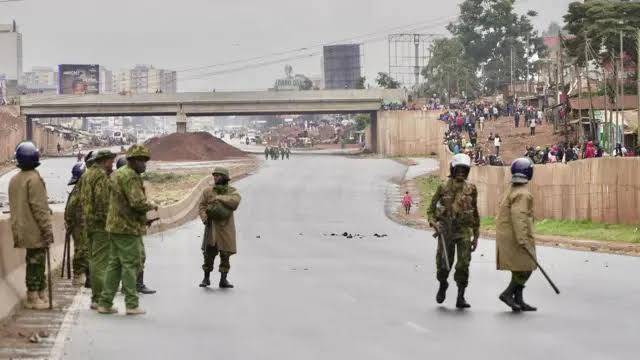
Saba Saba Day 2026 was marked by widespread disruptions across Nairobi, significantly impacting the education sector and drawing strong condemnation from political leaders regarding police conduct. Apprehensive parents, fearing potential unrest linked to the anticipated protests, either kept their children home or rushed to retrieve them from school, creating an atmosphere of uncertainty throughout the city.
Learning activities in numerous Nairobi schools experienced severe interruptions. For instance, at Kilimani Integrated Comprehensive School, normal operations were disrupted as only about half of its 2100 learners, ranging from grade one to grade nine, reported for classes. As the day progressed and security concerns persisted, many parents arrived to collect their children early. Mr. Geoffrey Chiveya, a school official, noted the unusually low attendance and early pickups, emphasizing the lack of official advance notification for parents regarding school attendance or early dismissal. This disruption highlighted the broader societal impact that anticipated public demonstrations can have, extending beyond business and transport to critically affect essential services like education.
The day was characterized by heightened security measures and sharp criticism of the National Police Service. Wiper Patriotic Front Party Leader Kalonzo Musyoka vehemently condemned the police for their actions during the 36th Saba Saba Day, accusing them of using excessive force against citizens they are constitutionally mandated to protect. He pointed to an excessive deployment of officers, numerous roadblocks, and the deliberate closure of major roads, which he argued unlawfully curtailed constitutional freedoms of movement, assembly, and peaceful protest. Musyoka further raised grave concerns about plainclothes and masked officers forcibly seizing young Kenyans into unmarked vehicles across the country, often concealing their identities in blatant disregard of the rule of law and existing court orders. He described such actions as intimidation, serving a regime that fears its own people, and alleged that police officers appeared to act alongside or provide protection to organized criminal gangs and militia groups during attacks on citizens, citing incidents in Kisii, at a hotel in Westlands, Nairobi, and along Thika Road.
Musyoka reminded the National Police Service of its motto, "Utumishi Kwa Wote — Service to All," asserting that their duty is to Kenya, its Constitution, and every Kenyan, not to an individual or a political administration. He condemned escalating attacks on opposition leaders, independent media, and dissenting voices, warning that the return of political intolerance under the current regime threatened to drag Kenya back to the "dark days of dictatorship" that Saba Saba historically sought to end. He demanded the immediate and unconditional release of all Kenyans arrested for peacefully exercising their constitutional right to demonstrate, citing Article 37 of the Constitution, and called for disciplinary action against security agencies for actions or inaction that violated Kenyans' constitutional rights. Looking ahead, Musyoka pledged comprehensive police reform under a prospective government, promising independent investigations into abductions and deaths in custody, an end to the use of unmarked vehicles and unidentified officers against civilians, and the establishment of a police service accountable to the Constitution.
Siaya Governor James Orengo echoed these criticisms, branding the government's deployment of roadblocks in Nairobi as "shameful conduct" that effectively emptied the city of activity. Speaking on Tuesday, July 7, 2026, he called for Saba Saba to be declared a public holiday to honor figures like Kenneth Matiba, Charles Rubia, and Raila Odinga, who championed Kenya's democratic space. Orengo, himself a participant in the historic July 7, 1990, rally at Kamukunji Grounds, which ultimately gave Saba Saba its name, recounted how protests following the arrest of Matiba and Rubia led to the repeal of Section 2A of the constitution the following year, ending one-party rule and reportedly claiming more than 20 lives. He further accused government officials of misplaced priorities, channeling millions of shillings into circumstances that ignored the struggles of ordinary citizens.
On Saba Saba Day, motorists entering Nairobi's Central Business District encountered widespread police roadblocks and heavy security deployment at key entry points, including Thika Road, Jogoo Road, Mombasa Road, Kiambu Road, and Waiyaki Way. The National Police Service maintained that these checkpoints were intended to prevent a repeat of past disruptions to business, while the Nairobi regional police commander claimed no group had formally notified police of planned demonstrations—a claim disputed by rights organizers. Rights groups, marking this year's anniversary, continued to press Parliament to address longstanding concerns such as extrajudicial killings, abductions, enforced disappearances, and excessive use of police force. These concerns were amplified by memories of the previous year's Saba Saba commemoration, which turned deadly with at least 11 reported fatalities as police clashed with protesters. Saba Saba, commemorating July 7, 1990, remains a potent symbol of civic action, regularly invoked in demonstrations concerning governance and constitutional rights.