Ripple Under Fire: SWIFT and Litecoin Launch Fresh Attacks on XRP
The crypto world is abuzz with multiple developments, as SWIFT's CIO challenges Ripple's resilience and neutral governance, while Ripple's CTO defends XRP against Litecoin's PoW claims, highlighting sustainability. Concurrently, Bitcoin faces a challenging market reversal, XRP experiences a significant payment volume surge amidst cautionary Bollinger Band signals, and Shiba Inu risks losing relevance as trading activity wanes.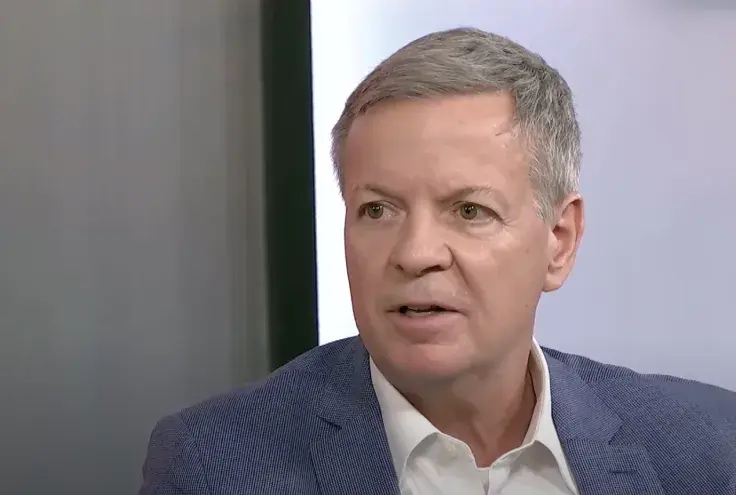
Tom Zschach, chief innovation officer at SWIFT, recently challenged Ripple's claim of resilience, asserting that “surviving lawsuits isn’t resilience” and instead highlighted the importance of neutral, shared governance. Zschach, also a former managing director at Barclays Capital, emphasized that financial institutions prefer not to operate on a competitor’s infrastructure. This stance reignited the ongoing debate between the traditional financial messaging giant and the enterprise blockchain firm.
Zschach explained that neutral governance, as practiced by SWIFT, means no single company or competitor controls the underlying infrastructure. SWIFT, a global messaging company, is jointly controlled by thousands of member banks responsible for setting its rules and governance standards. He implied that banks inherently trust such neutral infrastructure. Furthermore, Zschach insisted that true compliance extends beyond merely satisfying regulators; it fundamentally involves ensuring an entire industry can agree on shared standards and common rules. This contrasts with Ripple's position, where despite arguments for the XRP Ledger's decentralization, concerns persist regarding Ripple's outsized control over the network, leading banks to view SWIFT as neutral and Ripple as a competitor-tied system.
In his detailed LinkedIn post, Zschach elaborated on the role of public blockchains, stating they are not a complete solution on their own. He described a public chain as “a fast engine with no cockpit” if it lacks enforceability, privacy, and compliance mechanisms. Zschach expressed conviction that traditional finance would ultimately “absorb” the most beneficial aspects of public blockchains on its own terms. He distinguished between the utility of blockchain technology—such as speed of settlement, transaction transparency, and process programmability—and the adoption of entire networks or specific crypto companies. This selective approach allows institutions to leverage blockchain's advantages while avoiding structures they cannot control.
The crypto space also witnessed a renewed clash between the XRP and Litecoin communities, with Ripple's Chief Technology Officer, David Schwartz, stepping into the fray. The feud escalated after Litecoin influencer Jonny Litecoin argued that Litecoin, as the “silver to Bitcoin's gold,” was superior to XRP because its new coins enter circulation via a proof-of-work (PoW) system requiring computational resources. In contrast, he claimed XRP is created “for free” and “out of thin air” with just lines of code, questioning its value despite its market cap.
David Schwartz countered this argument by stating that Litecoin and XRP are essentially equivalent products in function, but Litecoin demands significantly more energy. This positioned XRP as a more sustainable alternative, aligning with Ripple's long-standing promotion of XRP's “green cred.” Ripple co-founder Chris Larsen had previously collaborated with Greenpeace to campaign against Bitcoin's (and, by extension, Litecoin's) energy-intensive proof-of-work consensus algorithm, framing PoW cryptocurrencies as wasteful and environmentally harmful. This incident follows a previous skirmish where the official Litecoin X account directly attacked XRP and mocked Ripple CEO Brad Garlinghouse, further fueling the “long-simmering feud.”
Beyond these institutional and community debates, the broader cryptocurrency market experienced significant volatility. Bitcoin, the leading cryptocurrency, underwent one of its most challenging reversal attempts of 2025. After failing to hold the $120,000 level, it dropped below $109,000, subsequently losing the 50-day Exponential Moving Average (EMA), which had previously served as reliable support. The focus shifted to the 200-day EMA near $104,000 as the last significant cushion. Analysts warned of a “free fall scenario” if this level fails, as bearish technical indicators, including a weak Relative Strength Index (RSI) and active selling volumes, suggest no immediate hope for bulls. Recovery attempts are deemed risky and speculative until a clear market bottom is established.
In contrast to Bitcoin's struggles, XRP showed a remarkable surge, experiencing its strongest network-driven move of the year on September 1st, 2025. Over 2.15 billion tokens changed hands, representing a 100% increase compared to average daily flows in August. This spike, which saw XRP briefly test the $2.70 zone before bouncing back above $2.80, indicated a significant return of settlement demand or large transfers. This sudden surge highlighted XRP's utility, with debates ongoing about whether institutional movements or real settlement usage was the primary driver. Analysts projected immediate price targets for XRP at $2.95 and $3.10, with a potential push to $3.30 if these are breached. However, failure to hold $2.70 could see a slide towards $2.50.
Despite the recent volume surge, Bollinger Bands signals for XRP issued a cautionary note to buyers. With XRP's price around $2.81, it appeared trapped in the lower half of its Bollinger Bands, suggesting a pause rather than a sustained continuation of its rally. The weekly timeframe revealed XRP's struggle between the $2.60 support and $3.46 resistance, with repeated attempts to reach the upper end resulting in instability. Daily movements showed XRP confined within a tight $2.70 to $2.90 range, failing to break above the mid-band. A breach of the $2.70 line could open the path to $2.50. While XRP had a strong run earlier in the year, expanding its bands wider than at any point since 2018, current monthly candles positioned closer to the channel's middle reflect a cooled market lacking immediate fuel for a new bullish phase.
Meanwhile, Shiba Inu (SHIB), a meme coin that previously thrived on retail hype, faced a precarious future. Trading near $0.0000123, SHIB was trapped in a narrowing triangle pattern, with each subsequent rebound weaker than the last. The most alarming sign was the declining trading activity, with volume consistently dropping since August, indicating dwindling participation. Technical resistance capped SHIB below $0.0000140, with the 200-day moving average at $0.0000139 holding strong. The support band at $0.0000120 was identified as particularly weak, and a failure there could send the price to $0.0000110 and then $0.0000100, effectively adding another zero and pushing the coin into a “danger zone” where it risks losing its overall relevance. For a project reliant on attention, fading into oblivion was deemed a greater risk than any specific price target.