Port Harcourt Tragedy: Building Collapse Blamed on Shocking Plan Deviation
A five-storey building under construction in Port Harcourt, Rivers State, collapsed, resulting in one fatality and multiple injuries. Officials attribute the disaster to the developer's alleged deviation from approved plans and the use of substandard materials, prompting calls for stricter enforcement of building regulations.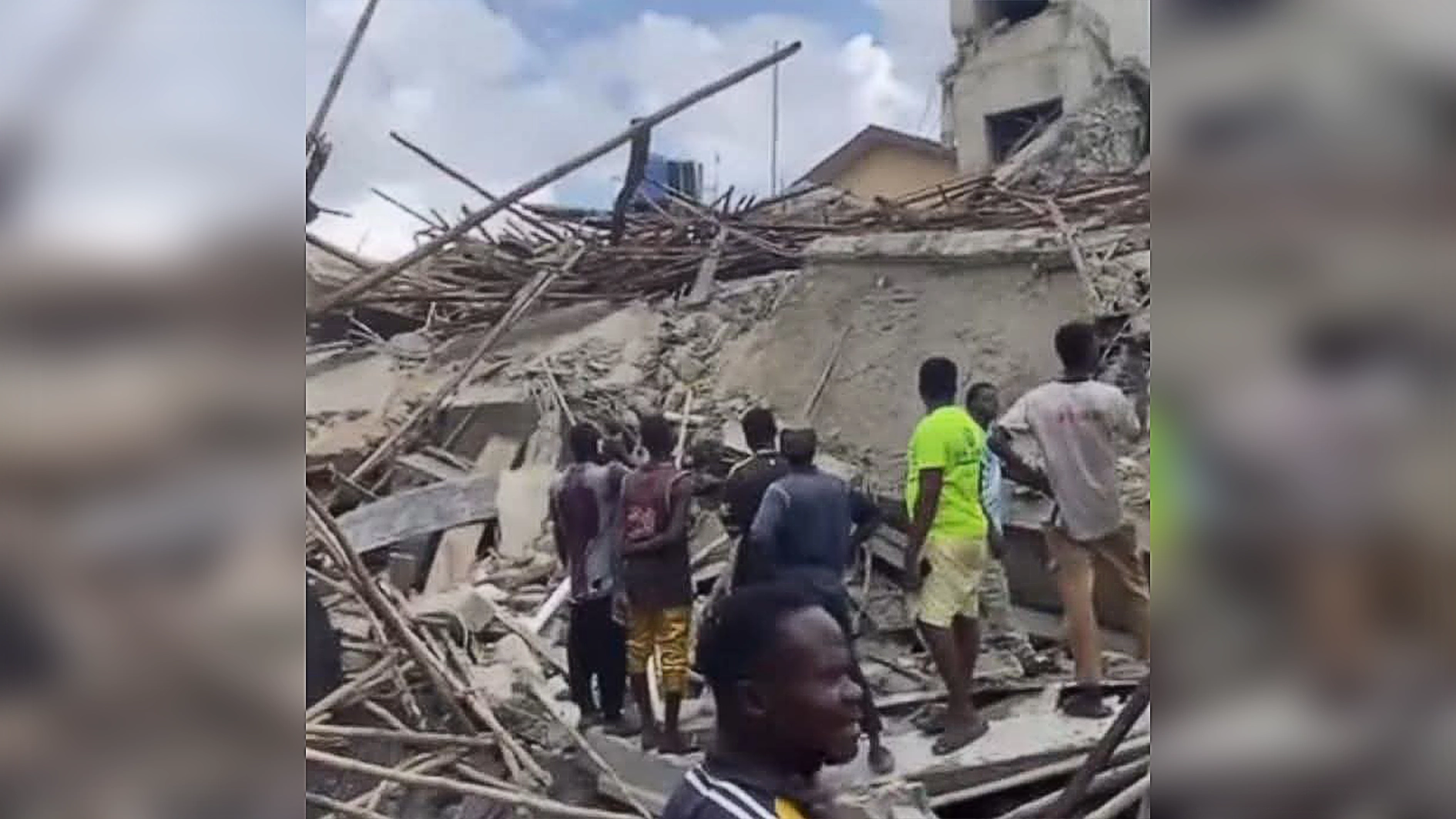
A tragic incident unfolded in Port Harcourt City Local Council, Rivers State, on Wednesday morning, as a five-storey building under construction along Dr Peter Odili Road, near the Eterna Filling Station, collapsed at approximately 10:30 a.m. The devastating event sent shockwaves through the community, trapping an unspecified number of construction workers beneath the rubble.
The collapse resulted in one confirmed fatality, while three other individuals were successfully rescued from the debris and are currently receiving urgent medical attention. The rescue operation was significantly bolstered by the deployment of heavy-duty equipment, including excavators, mobile cranes, wheel loaders, dump trucks, hydraulic breakers, and concrete cutters, provided by Julius Berger Nigeria Plc, which aided in the safe removal of the collapsed structure's components.
Preliminary investigations point to severe deviations from approved building plans and a blatant disregard for safety regulations as the primary causes of the disaster. Oluremi Omowaiye, the Executive Director of Project Implementation at the Federal Housing Authority (FHA), unequivocally stated that the FHA had only approved a three-storey building for the site. However, the developer allegedly proceeded to add extra floors, exceeding the authorized specifications. Omowaiye clarified that this approval had been granted prior to the assumption of office by the current FHA management.
Compounding these issues, it was revealed that state government officials had previously conducted an inspection and issued a directive for the project's supervising engineer to halt construction due to observed structural irregularities. Shockingly, this crucial directive was reportedly ignored, and work continued unabated, leading to the catastrophic failure. Furthermore, initial expert assessments suggest the extensive use of substandard materials, including poor-quality concrete, cement, and reinforcement rods, contributed significantly to the building's structural instability.
In response to the tragedy, Rivers State Governor Siminalayi Fubara ordered the immediate leveling of the collapsed structure. Concurrently, Nwokoma Nwankwo, the Chairman of the Nigerian Institution of Estate Surveyors and Valuers (NIESV), Rivers State Branch, condemned the incident and issued a pressing call for comprehensive reform. He emphasized the critical need for stricter enforcement of existing building regulations and a stronger commitment to professional standards to avert similar occurrences in the future.
Nwankwo advocated for a thorough forensic investigation into the collapse, stressing its importance not only for assigning accountability but also for gleaming vital lessons to prevent future disasters. His recommendations included stringent enforcement of planning and development control regulations, mandatory engagement of qualified professionals at every stage of a project, routine and unannounced inspections during critical construction phases, the exclusive use of certified building materials, meticulous supervision and documentation, the imposition of severe sanctions on non-compliant developers and professionals, and enhanced public awareness campaigns to encourage the reporting of unsafe construction practices. He concluded by asserting that building collapses are largely preventable when professional ethics, regulatory requirements, and safety protocols are rigorously adhered to, underscoring that "The safety of lives and property must always take precedence over cost-cutting measures and project timelines."