The ₦500,000 Minimum Wage Question: Can Nigeria Raise Salaries Without Raising Prices?
Nigeria's NLC is demanding a ₦500,000 minimum wage as the ₦70,000 wage loses purchasing power. But could a sharp wage increase also drive prices, business costs and unemployment higher?
Akpan was halfway through his lunch that afternoon when the news reached the staff room. Someone had dropped the headline into their WhatsApp group: the Nigeria Labour Congress is preparing to reopen negotiations with the Federal Government, arguing that the current ₦70,000 minimum wage was no longer enough and that anything below ₦500,000 could not adequately cater for workers.
Akpan read it twice. Then he looked around the room at his colleagues, and the conversation practically started itself.
“₦70,000 is not enough in the first place,” someone said.
Akpan agreed with him totally. How could he not? Food had become more expensive. Transport now took a bigger share of his salary than it used to, rent was not waiting for his salary to catch up, and neither were his children's school fees, electricity, cooking gas, or the other expenses that arrived every month with remarkable consistency.
For workers like Akpan, the argument for higher wages is hardly difficult to understand. The Nigeria Labour Congress has now said the current minimum wage is due for review, with NLC President Joe Ajaero arguing that anything below ₦500,000 cannot adequately cater for workers.
The Trade Union Congress has also backed calls for improved remuneration, while the Network of Abuja Left Groups has thrown its support behind the demand, but there is another conversation hiding underneath the headline.
If the government agrees to ₦500,000, what happens the morning after the increment?
Because a bigger salary is only an improvement if the things that salary is supposed to buy do not become proportionally more expensive.
₦70,000 Is Clearly Under Pressure, But Is ₦500,000 the Answer?
There is little reason to pretend that ₦70,000 still carries the purchasing power, Nigerians once associated with a minimum wage.
The cost of food, transportation, accommodation, electricity, medicines and other essentials has risen considerably, leaving workers with less real purchasing power even when the number printed on their payslips remains the same. This is precisely why organised labour is pushing for another review.
And to be fair, that argument is difficult to dismiss. A worker cannot be told that ₦70,000 is sufficient simply because that is what the law currently recognises as the minimum.
A minimum wage that cannot reasonably support basic living expenses eventually becomes little more than a legal number detached from economic reality.
But the question is whether the solution should be a jump from ₦70,000 to ₦500,000.
That is not a small adjustment. It is more than seven times the current figure, and the economic consequences would extend far beyond government payrolls.
If millions of workers suddenly received substantially more money, they would naturally spend more, and that is good in one sense.
Workers would have greater purchasing power, traders could receive more customers, transport operators could earn more, and small businesses could benefit from stronger consumer demand.
But Nigeria does not operate in an economy where supply can instantly expand to match every increase in demand, and that is where the argument becomes complicated.
When More Money Meets the Same Economy
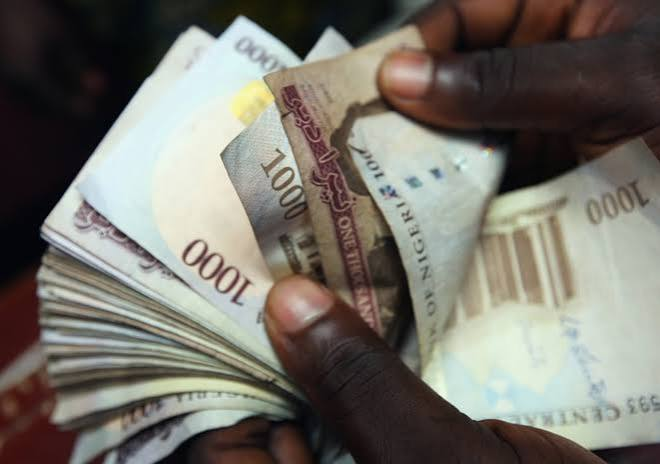
Imagine Akpan receives ₦500,000 instead of ₦70,000. His landlord knows his salary has increased. The woman selling food near his office knows her customers now have more disposable income. The bus driver knows workers are earning more. The school knows parents are under pressure to keep their children enrolled or change to the best schools. Even the mechanic fixing the office generator is operating in the same economy.
None of these people necessarily need to sit down and agree to raise their prices. The adjustment will probably just happen organically because everyone will try to “benefit from the increment” by skyrocketing prices and everyone will be facing the same higher costs and responding to the same changes in purchasing power.

This is where demand-pull inflation becomes relevant. If millions of workers suddenly have substantially more disposable income while the supply of housing, food, transportation, and other essential goods remains constrained, demand can rise faster than supply, putting upward pressure on prices.
Then there is cost-push inflation, particularly if private businesses are required or pressured to adopt a much higher minimum wage.
A small business employing ten people cannot simply multiply its wage bill several times and assume nothing else changes. Its rent remains, the cost of electricity, logistics and sourcing for raw materials remain. Even expenses resulting from taxes and other operating costs that keep the business running are not left out.
If labour costs rise sharply, some businesses will attempt to protect their margins by increasing the prices of the goods and services they sell; others may not be able to do that. They may reduce their workforce, freeze hiring, shorten operations or simply close. This is where the minimum wage debate becomes bigger than the salary of the worker receiving it.
The Wage Increase That Could Chase Its Own Tail
There is an economic phenomenon known as the wage-price spiral, and it is particularly important to consider in an economy already dealing with high living costs.
Workers demand higher wages because prices have risen. Businesses increase prices because their labour and operating costs have risen.
Workers will then discover that the higher salary that they wanted no longer stretches as far as expected to cater for their daily expenditure, because the cost of living has increased again.
They will return to the negotiating table, and the cycle begins again. This does not mean every wage increase automatically causes inflation, nor does it mean workers should accept stagnant wages indefinitely.
Wage adjustments can be necessary, particularly when inflation has substantially eroded real income. The issue is the size, timing, and economic foundation of the increase.
A jump to ₦500,000 could create a much larger shock than a more gradual adjustment to perhaps ₦100,000 or ₦150,000, followed by further reviews as productivity, prices and economic output change.
That approach would not suddenly make Nigerian workers wealthy. It would not solve the cost-of-living crisis. But it could improve purchasing power while reducing the intensity of the immediate shock across businesses and markets.
And there is another problem Nigeria cannot afford to ignore: unemployment.
If a government, state administration or private company cannot sustainably afford the new wage bill, somebody eventually absorbs the difference.
For businesses, that could mean higher prices or fewer employees. For governments already struggling with payroll obligations, it could mean delayed payments, reduced hiring or pressure on public finances.
A wage policy that increases the salary of one worker while pushing another worker into unemployment has to be examined very carefully.
Nigeria Needs Wages That Grow With the Economy
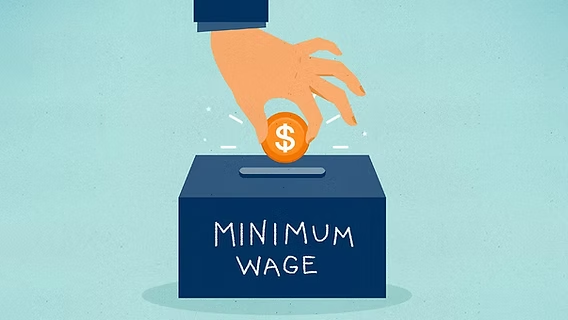
Perhaps the most uncomfortable part of the minimum wage debate is that salary increases cannot permanently outrun the economy that produces the goods and services those salaries are supposed to purchase.
Nigeria can increase the number on a payslip. The harder task is increasing the amount of food that can be produced, the number of affordable houses available, the reliability of electricity, the efficiency of transportation, the productivity of businesses, and the number of decent jobs available to workers.
That is where the real solution lies. A worker earning ₦500,000 in an economy where rent, food and transport have all adjusted upward may not necessarily be better off than a worker earning substantially less in a more productive and stable economy.
The same principle applies to businesses. If wages rise alongside productivity, output and investment, companies have a stronger basis for absorbing higher labour costs without simply passing everything to consumers.
This is why the argument should not be framed as ₦70,000 versus ₦500,000. It should be about what wage level Nigerian workers need to live with dignity, what employers can realistically sustain, and what the economy can produce to support that income.
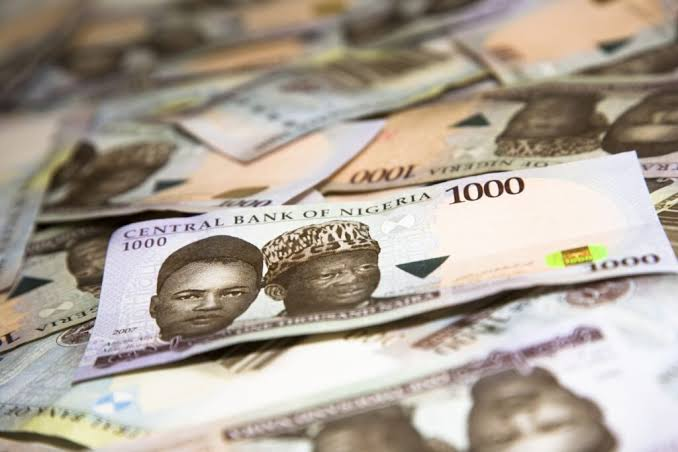
Akpan has the right to look at the ₦70,000 figure, ask whether it was enough and demand through the appropriate channels for a pay raise. He would also be right to ask what ₦500,000 would actually buy him after the landlord, market woman, transport operator, school and businesses around him have adjusted to the same new reality.
The NLC is right to demand that workers should not be trapped indefinitely on a wage that no longer reflects the cost of living and workers deserve to be fairly taken care of and are able to afford living in today's economy. But the government and labour must also recognise that a bigger wage is not the same thing as a bigger standard of living.
Nigeria needs a minimum wage that lifts workers without simply lifting prices alongside them. Perhaps the real question is not whether Nigerian workers deserve ₦500,000.
They deserve better wages, certainly. The question is whether Nigeria can build an economy in which ₦500,000 remains ₦500,000 after everyone else has finished adjusting their prices. That is the part of the minimum wage debate that deserves more attention.