WAFCON 2026 Bonus Row: Black Queens Demand Pay, Sports Ministry Denies Claims!
Ghana's Black Queens are embroiled in a public dispute with the Sports Ministry over unpaid bonuses and per diems, following their WAFCON campaign. This controversy has drawn the attention of MP Vincent Ekow Assafuah, who has linked it to broader systemic failures in athlete welfare, also citing issues at the 2026 Commonwealth Games, and is now demanding immediate accountability and payments.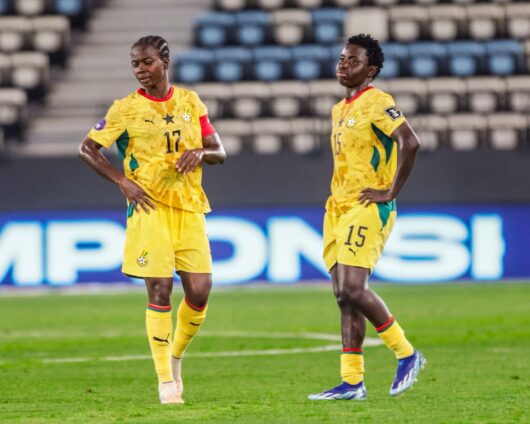
Ghana's senior women's national football team, the Black Queens, have initiated a significant public discourse by demanding the immediate payment of outstanding bonuses and per diems. This demand, initially made during their campaign at the Women's Africa Cup of Nations (WAFCON) in Morocco, was accompanied by accusations of governmental neglect and inadequate professional support. The team's exit from the WAFCON at the quarterfinal stage, following a 2-1 defeat to Malawi, ended their hopes for automatic qualification to the FIFA Women's World Cup in Brazil.
Ahead of their World Cup playoff against Côte d'Ivoire, the Black Queens issued a statement expressing profound frustration over what they termed a general lack of support, calling for improved treatment and better professional conditions for future national team assignments. They highlighted the perceived minimal official support during their WAFCON campaign, noting that the Sports Minister and President were only present at their first official training session. While stressing that their statement was not meant to create conflict, the players demanded “transparency, accountability, fairness and respect,” and urged authorities to engage with them for a swift resolution of their financial obligations.
In response to the Black Queens' initial complaints, the Ministry of Sports and Recreation issued a statement on Wednesday, August 12, denying any outstanding per diem obligations. The Ministry asserted that all approved allowances for players and eligible officials had been paid in advance, covering periods from July 26 to August 7, and a further payment made on August 11 for August 8 to 14. They also clarified that a winning bonus for the victory over Cape Verde was being processed but rejected claims of an outstanding WAFCON qualification bonus, explaining that the government's current sports financing framework does not provide for a separate bonus for qualifying through home-and-away rounds. The Ministry maintained that no winning bonuses were approved for the qualifying matches against Egypt and urged all parties to focus on supporting the team’s World Cup qualification bid.
However, the Black Queens swiftly rebutted the Ministry's denial, expressing disappointment that the Ministry did not engage them directly before responding publicly. In their statement on Thursday, August 13, the players revealed repeated, unacknowledged attempts to contact the Ministry, describing their public statement as a “last resort” for basic communication, respect, transparency, and accountability. They challenged the Ministry's per diem claims, pointing out that their official camping began on July 11, while the cited payments only covered from July 26, thus demanding clarification for the July 11-25 period.
The team also disputed the Ministry's stance on qualification bonuses for the WAFCON qualifiers against Egypt. They alleged that the Sports Minister promised an accountant would deliver qualification bonuses during a July 28 visit, but only $700 was subsequently delivered and later shared by the Minister on social media, insisting this was not the communicated qualification bonus. The players questioned why their current concerns were treated differently, especially since the same Ministry paid them a qualification bonus the previous year, and asked for details on when the first dedicated budget for the Black Queens was allocated. They emphasized that they sought “better treatment” not preferential treatment.
The issue has escalated into a wider debate on athlete welfare, with Vincent Ekow Assafuah, the Ranking Member of Parliament’s Committee on Youth and Sports, demanding accountability from the Ministry of Sports and Recreation. Assafuah described the situation as part of a “troubling pattern of administrative failure, financial uncertainty and disregard for the welfare of Ghanaian athletes.” He linked the Black Queens' complaints, which include concerns over outstanding bonuses for Egypt 2025, WAFCON qualification, and group-stage performances, as well as unpaid per diems and calls for better management and mental health assistance, to similar issues faced by Ghana's contingent at the 2026 Commonwealth Games in Glasgow.
At the Glasgow 2026 Commonwealth Games, Ghanaian athletes and officials reportedly experienced problems with airline tickets, some issued late or without luggage allowance, forcing changes to travel plans. Concerns were also raised about competition kits, with some arriving late or requiring private sponsorship. Athletes allegedly traveled without being informed of per diem or medal bonus amounts. Assafuah highlighted the lack of raincoats for outdoor events in Glasgow and questioned the deployment of officials, noting that a high percentage were accommodated separately from athletes, leading to inadequate supervision. He cited a particularly disturbing case of a para-athlete who was checked out of his hotel early without his per diem, taken to the airport hours before his flight.
Assafuah asserted that these complaints are no longer isolated incidents but point to a “potentially systemic failure.” He is demanding a comprehensive public account from the Ministry on ticketing, accommodation, equipment, and welfare arrangements for Team Ghana. He also called for the immediate payment of all outstanding per diems, bonuses, and financial entitlements owed to both the Glasgow athletes and the Black Queens. Furthermore, he seeks the disclosure of the approved budget for Ghana’s participation in the Commonwealth Games, an independent investigation into the reported incidents, a formal briefing to Parliament by the Sports Minister, and a clear athlete welfare protocol for all national assignments. Assafuah concluded by stating, “Our athletes are not an afterthought. They are citizens who sacrifice their bodies, careers and personal comfort to carry Ghana’s flag before the world. They deserve preparation, protection, transparency and respect.”