Political Firestorm: Obi Challenges Tinubu to Quit, Presidency Calls it 'Childish' Stunt
Nigeria's political arena is ablaze as NDC presidential candidate Peter Obi demands President Bola Tinubu's resignation, citing governance failures and economic hardship, drawing parallels to a recent British Prime Minister's exit. The Presidency swiftly dismissed Obi's call as childish and a distraction, defending Tinubu's fixed term, electoral successes, and progress in security and economic indicators, amidst escalating debates ahead of the 2027 elections.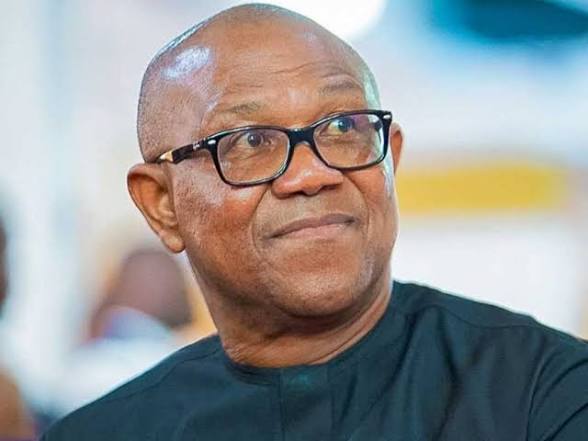
The political landscape in Nigeria is currently experiencing heightened tension following a resolute call by Peter Obi, the presidential candidate of the Nigeria Democratic Congress (NDC), for President Bola Tinubu to resign from office. Obi's demand is rooted in what he describes as pervasive governance failures, a deteriorating security situation, persistent economic hardship, and a general decline in living conditions across the nation. He pointed to what he perceives as a regression in critical sectors such as infrastructure, transportation, and power supply, asserting that Nigeria is currently in its "worst possible condition."
Obi's call for resignation was notably influenced by the recent announcement of British Prime Minister Keir Starmer's planned resignation, which he cited as a testament to political accountability and leadership responsibility in the face of public dissatisfaction. He drew a direct parallel, arguing that leaders must be held accountable when they fail to meet public expectations, particularly concerning economic stagnation and cost-of-living pressures. Furthermore, Obi reminded the public of President Tinubu's own history, recalling that prior to 2015, Tinubu had frequently called for then-President Goodluck Jonathan's resignation over similar issues of insecurity and economic challenges, including during the Chibok schoolgirls' abduction. Obi also alleged that promises made by Tinubu during his 2023 election campaign, such as improved electricity supply, stronger anti-corruption measures, and enhanced citizen welfare, have largely gone unfulfilled.
In a swift and stern rebuttal, the Presidency, through the Special Adviser to the President on Information and Strategy, Bayo Onanuga, vehemently dismissed Obi's demand as "childish, anti-democratic, and a distraction." Onanuga criticized Obi's comparison of Nigeria with the United Kingdom and his reliance on the British Prime Minister's voluntary resignation, clarifying that Nigeria operates under a presidential system where the President is elected for a fixed four-year term and cannot be pressured out of office through social media campaigns or political rhetoric. The Presidency maintained that such calls reflect a "selective and distorted view of Nigeria’s realities since 2023."
The Presidency also countered Obi’s assertions by highlighting recent electoral victories of the ruling All Progressives Congress (APC) in states like Ekiti, Nasarawa, Enugu, Ondo, and Rivers, which, according to Onanuga, demonstrate continued public support for the President and his party. He advised Obi to await the next presidential election in 2027 to test the popularity of the Tinubu administration. Regarding security, the Presidency rejected claims of failure, insisting that significant progress has been made under Tinubu's leadership, including the rescue of hundreds of abducted persons, the neutralization or arrest of thousands of terrorists, and increased investment in the security sector through advanced technologies and the appointment of a Special Adviser on Homeland Security. Onanuga, moreover, derided Obi's criticism, calling it "laughable" given Obi's perceived "colossal failure" in securing lives and property as governor of Anambra State.
Economically, the Presidency challenged Obi's criticisms, stating that the former Anambra State governor ignored key positive indicators since May 2023. They cited positive Gross Domestic Product (GDP) growth every quarter, foreign reserves surpassing $50 billion, increased oil production to approximately 1.8 million barrels per day, a projected federation revenue exceeding N30 trillion for the year, and unprecedented growth in the stock market. On infrastructure, the government highlighted ongoing major highway constructions, including the Lagos-Calabar Coastal Highway and the Sokoto-Badagry Superhighway, and pointed to power sector reforms like the signing of the Electricity Act, which decentralized generation and distribution.
While acknowledging the challenges Nigerians face with a high cost of living, the Presidency attributed this situation partly to global economic headwinds and geopolitical tensions, asserting that it is a "global problem." Onanuga reaffirmed President Tinubu’s unwavering focus on implementing reforms and fulfilling his mandate, ultimately concluding that Peter Obi’s call for resignation is "hollow" and merely a "political grandstand" rather than a legitimate push for accountability. This latest exchange underscores the ongoing political debates and scrutiny of governance, accountability, and Nigeria’s economic direction, intensifying the political climate leading up to the 2027 general elections.