Lucero Killing Haunts D.C.: Human Rights Hearing Revisits Patchogue Tragedy
A high-level human rights commission in Washington, D.C. heard testimony from Joselo Lucero regarding the 2008 hate crime killing of his brother, Marcelo Lucero, in Patchogue. Activists asserted that anti-immigrant sentiment, which led to Lucero's death, is on the rise nationwide amidst federal deportation campaigns. The hearing highlighted calls for government accountability and ongoing concerns about safety for Hispanic communities.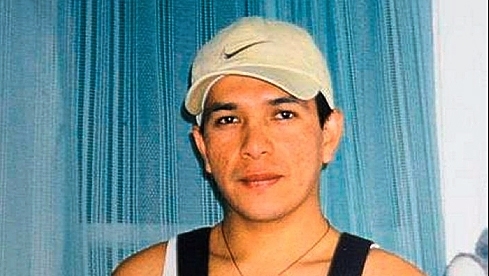
Joselo Lucero appeared before a high-level human rights commission in Washington, D.C., on Thursday, recounting the killing of his brother nearly 18 years ago in a notorious hate crime in Patchogue. Lucero expressed his shock to the Inter-American Commission on Human Rights, stating, "My brother was killed because he looks like me. ... He was killed because he was Hispanic." This 90-minute bilingual hearing provided a crucial opportunity to spotlight a case that has languished before the commission for years. It also served as a platform for Lucero and other human rights activists to assert that the conditions leading to Marcelo Lucero’s death are escalating nationwide amidst the federal government’s mass deportation campaign.
Kerry Kennedy, president of the Robert & Ethel Kennedy Human Rights Center in Washington, D.C., emphasized the need for accountability, telling the commission, "Latino residents in Suffolk County deserved better from their local officials. And today, immigrants across the nation deserve better from their government." Kennedy, daughter of the late Sen. Robert F. Kennedy, underlined that Marcelo's death was not an isolated incident but "inspired by anti-immigrant and anti-Latino propaganda." She recalled past comments from public officials, including one who dismissed the killing as a "one-day story" and others who used threatening language against Latino day laborers.
The quasi-judicial Inter-American Commission on Human Rights typically investigates human rights abuses in Latin America, focusing on issues like massacres, "disappearances" of abducted activists, and press freedom conflicts. While the United States and other countries do not consider the commission’s findings and recommendations legally binding, its conclusions can exert significant political pressure on governments.
In Patchogue, approximately 35 community members gathered at Lutheran Church of Our Savior for a "watch party," observing a livestream of the hearing and pledging their support for immigrants. Susan Steinmann, an 81-year-old retired teacher from Mastic Beach, reflected, "I don’t think that we should ever forget what happened to Marcelo Lucero. I was taught that America was a country that welcomes everybody, and that’s not what is happening today." Organizers displayed a large photograph of Marcelo Lucero, an Ecuadorian immigrant, and signs proclaiming "Hate has no home here" and "Remember and Honor Marcelo Lucero."
Marcelo Lucero, 37, was killed in November 2008 after being surrounded by a group of teenagers, one of whom stabbed him. The teenagers later confessed to police that their pastime involved "hunting down and beating up Latinos." Advocates, including Lourdes Rosado, president of the Manhattan-based LatinoJustice PRLDEF, echoed Kennedy's concerns, telling the commission that the current federal administration’s "inflammatory, anti-immigrant and anti-Latino agenda and statements only fuel more violence against our communities." Rosado called for the state to "step up, be accountable and to put an end to anti-Latino and anti-immigrant violence." President Donald Trump has justified his mass deportation campaign by claiming to target "the worst of the worst," though Newsday reported that less than 5% of immigrants held in Nassau jail through a partnership with U.S. Immigration and Customs Enforcement were convicted of violent crimes.
In response to the hearing, White House spokesperson Lauren Bis issued a statement asserting, "The Democrats are the ones who repeatedly vilify and demonize our ICE law enforcement officers. They have compared law enforcement to the gestapo, slave patrols, and the Secret Police." Bis added, "The violence and dehumanization of these men and women who are simply enforcing the law must stop." Government lawyers at the hearing argued that the U.S. justice system functioned effectively, noting that seven teenagers involved in the Lucero case were prosecuted and imprisoned, with one serving a 25-year sentence for the stabbing. They requested that the commission dismiss the Lucero case.
Joselo Lucero concluded his testimony by conveying his enduring trauma from the attack on his brother. He recalled the painful task of informing their mother in Ecuador: "You don’t know what it is like to call your mother and say, ‘Your son was killed last night because he was Hispanic.’" He further expressed his personal sense of insecurity, stating, "I’m a citizen of this country, but I don’t feel safe, in 2008 and now in 2026."