Opposition Faces Cracks: Atiku, Obi Skip Key Anti-Tinubu Strategy Meet
Nigerian opposition parties have initiated efforts to form a united front, holding their first summit to discuss strategies for the 2027 general elections. The coalition aims to unseat President Bola Tinubu's government by presenting a common presidential candidate, drawing lessons from past electoral outcomes and committing to structured negotiations for national interest.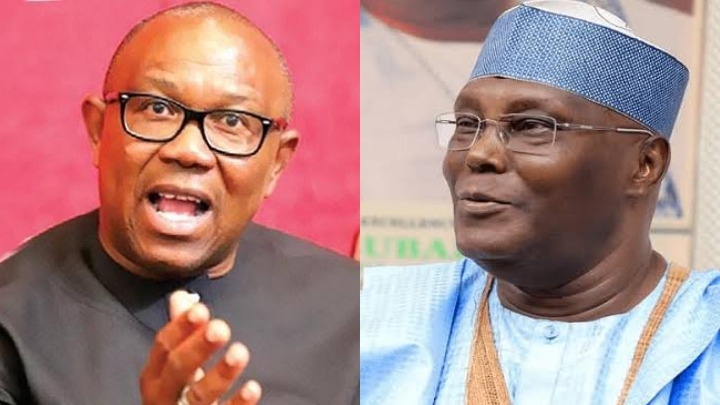
Nigerian opposition political parties have commenced strategic moves to forge a united front aimed at unseating President Bola Tinubu and the ruling All Progressives Congress (APC) in the forthcoming 2027 general elections. This initiative began with the first opposition political parties summit, convened by the political pressure group G-100, held recently at the Shehu Yar’Adua Centre in Abuja. The summit saw representatives from six parties agree to initiate negotiations towards the possibility of presenting a common presidential candidate.
While notable figures such as the presidential candidates of the African Democratic Congress (ADC), Atiku Abubakar; Nigeria Democratic Congress (NDC), Peter Obi; and Allied Peoples Movement (APM), alongside Oyo State Governor Seyi Makinde, were absent from the inaugural meeting, key attendees included the presidential candidates of the Peoples Redemption Party (PRP), Donald Duke, and the Social Democratic Party (SDP), Adewale Adebayo. Also present were former Niger State governor, Babangida Aliyu, and APM vice-presidential candidate, Lawal Daura, among others.
A communiqué issued at the conclusion of the summit, signed by representatives from ADC, APM, NDC, Peoples Democratic Party (PDP), PRP, and SDP, outlined crucial agreements. The parties committed to establishing five working groups tasked with producing key documents within a four-week timeframe. These vital documents include the National Covenant for Democratic Renewal, a Single-Term Transition Charter, a National Reform Programme, a Framework for Opposition Unity, and a Roadmap to a Common Presidential Candidate.
These documents are slated for submission to a Central Leadership Committee for careful consideration, preceding a second summit where they will be presented for potential adoption. Furthermore, the parties agreed to establish three standing coalition organs to facilitate their collective efforts. These include the Central Leadership Committee, which will provide political direction and coordinate the entire process; the Publicity and Communication Committee, responsible for joint messaging and media engagement; and the Legal Committee, which will offer advice on legal and constitutional matters and vet agreements arising from the negotiations. The communiqué emphasized a commitment to a structured process of negotiation for opposition cooperation ahead of the 2027 elections, stressing that challenges such as insecurity, rising cost of living, unemployment, and lack of opportunities necessitate political cooperation that transcends the narrow interests of any single party.
The coalition also directed a call to the United States government, urging the lawful disclosure of non-exempt official records concerning President Tinubu, which are currently subject to ongoing proceedings before the United States District Court for the District of Columbia. However, the parties clarified that this demand does not presuppose the contents of any undisclosed records or constitute a finding of wrongdoing.
During his welcome address, Salihu Lukman, the G-100 convener and former APC National Vice Chairman (North West), highlighted the critical need for opposition parties to put aside personal ambitions and first establish a framework for cooperation. Lukman clarified that the summit's objective was not to demand the dissolution of any party or the withdrawal of any candidate from the 2027 race. Instead, he emphasized building the foundational 'table' before negotiating the 'seats' around it. He drew parallels to past elections, recalling how opposition parties contested separately in 2003, 2007, and 2011, but only achieved victory against the then-ruling PDP in 2015 after agreeing on rules of engagement and presenting a common candidate. Lukman lamented that the failure to maintain such unity in 2023 ultimately cost the opposition victory, noting, "The winner took just under nine million votes. One opposition candidate took close to seven million. Another took just over six million. Thirteen million votes on one side of the argument, under nine million on the other. Nobody stole thirteen million votes. We divided them ourselves, in public, and we did it knowing exactly what the consequence would be."
Echoing the sentiment for unity, Hon. Fred Agbedi (PDP, Bayelsa), the Minority Leader of the House of Representatives, urged opposition leaders to collaborate to replicate the success of the 2015 election. Agbedi confirmed that the Minority Caucus had resolved to partner with the G-100, aiming to help opposition parties streamline their ambitions and pursue a collective victory. He cautioned that another fragmented opposition could once again squander millions of votes.
Individual party leaders also voiced their commitments. Former Cross River State governor and PRP presidential candidate, Donald Duke, expressed his readiness to withdraw his presidential ambition if it facilitates a consensus candidate jointly agreed upon by the participating parties, acknowledging that political leaders' egos often hinder opposition unity. Senator David Mark, ADC National Chairman, represented by Usani Uguru Usani, the party’s National Vice Chairman, South South, expressed confidence in the coalition process and warned against internal attacks among opposition parties. Similarly, Senator Moses Cleopas, NDC National Chairman, pledged his party’s full support for the initiative, describing it as essential to rescue the country from its "comatose" condition.
Dr. Hakeem Baba-Ahmed, the PRP National Chairman, addressed the presidential and vice-presidential candidates present, urging them to recognize the profound expectations of Nigerians. He described the challenges faced by the parties as an "existential threat" through litigation, but vowed that the opposition would relentlessly continue with the coalition process. "Our back is against the wall, but we’ll fight back. In 2027, we will together remove this government and put the Nigerian nation in a different trajectory," Baba-Ahmed asserted. He also raised questions about the absence of President Tinubu and Vice President Kashim Shettima from the country, querying who was in charge of governance and alleging a connection between Tinubu’s overseas trip and the possible release of documents concerning him by the Federal Bureau of Investigation (FBI).
Further pledges of commitment came from Yusuf Mamman Dantalle, APM national chairman, who deemed the summit historic and called for national interest to supersede individual ambitions. Prof. Sadiq Gombe, SDP national chairman, observed that Nigerian voters have demonstrated a willingness to support good governance, citing the combined performance of opposition presidential candidates in 2023. He affirmed the SDP’s commitment to the coalition and urged faithfulness to previous unity agreements. Representing the Tanimu Turaki-led faction of the PDP, Dr. Babangida Aliyu, its Board of Trustees Secretary and former Niger State governor, remarked that the initiative was long overdue, attributing many of Nigeria’s governance problems to the personal ambitions and pecuniary interests of political actors. He stated, "We are not here to pick or to nominate or to tell other parties to not run. Now we are going to lay the foundation that when the time comes, we should be able to say this is the way to go."
The opposition parties are set to reconvene for a second summit once the five working groups have finalized their assignments, with the crucial question of a common presidential candidate expected to be a central feature of subsequent negotiations.