OpenAI Is Teaching ChatGPT Your Job And You Are Helping Pay for It
OpenAI has deployed thousands of freelancers to teach ChatGPT 400+ specialized jobs, from pharmacists to pilots. Here is what Stagecraft really means for the future of work and what every professional should be doing right now.
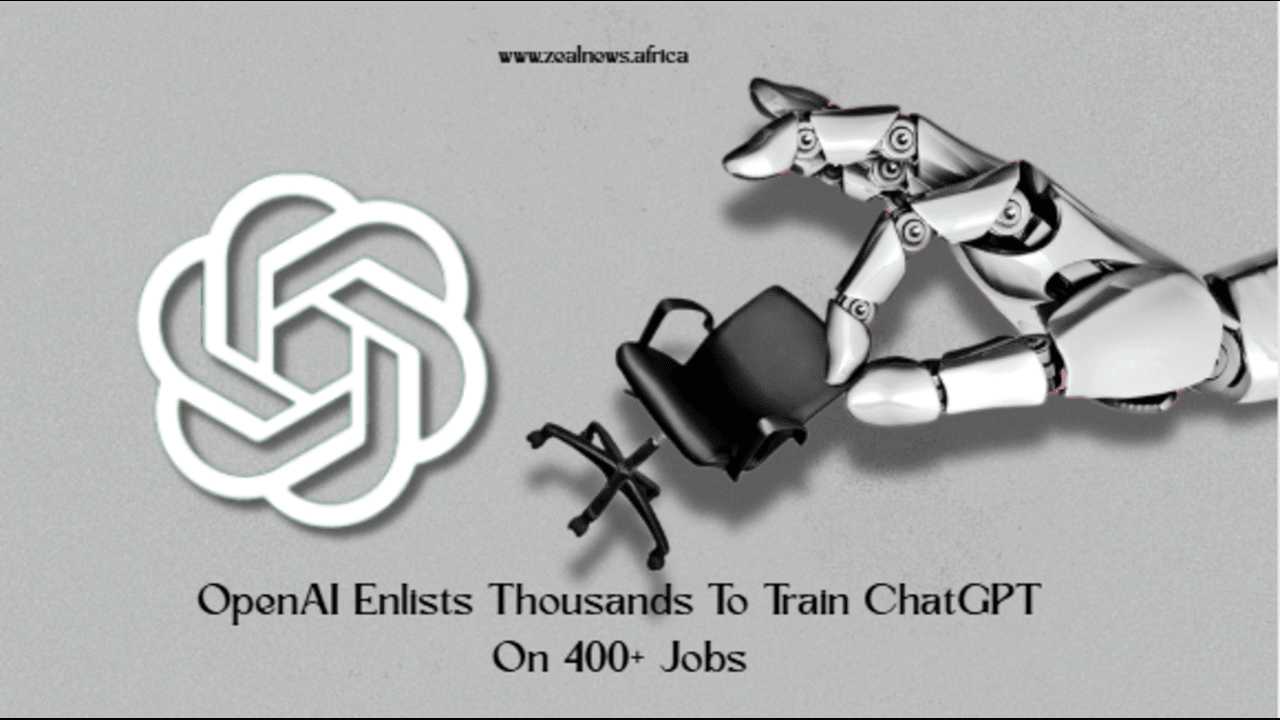
There is a project happening inside OpenAI right now that deserves far more attention than it has received. It is not a product launch nor is it a model update.
It is something far more consequential than that and it is a systematic, large-scale effort to teach ChatGPT how to do the work that most professionals have spent years, sometimes decades, learning to do.
And the people doing the teaching are the professionals themselves.
What Is Actually Happening
Inside a project known internally as Stagecraft, thousands of freelancers are building what amounts to a comprehensive occupational simulator for ChatGPT.
The project is done through data-labeling startup Handshake AI, the initiative has deployed between 3,000 and 4,000 contract workers to create detailed task simulations spanning over 400 distinct job titles, according to reports reviewed by Business Insider.
The work pays at least $50 an hour for general contributors and up to $500 hourly for domain experts.
A spreadsheet obtained by journalists lists everyone from commercial pilots and emergency medicine physicians to sculptors, pharmacists, and agricultural managers.
Read that again and fully understand the scope of what's happening. This is not OpenAI training ChatGPT to write better poetry or summarise documents faster.
This is OpenAI building occupational depth, teaching the model the specific decisions a triage nurse makes at 2am, the judgment calls a soil scientist applies in the field, the exact calculations a pharmacist runs before dispensing a compound medication.
The project acknowledges the uncomfortable reality that the AI may eventually replace the very workers training it. That sentence, buried in the Business Insider investigation, is the one that should stop you mid-scroll.
What This Means for Jobs
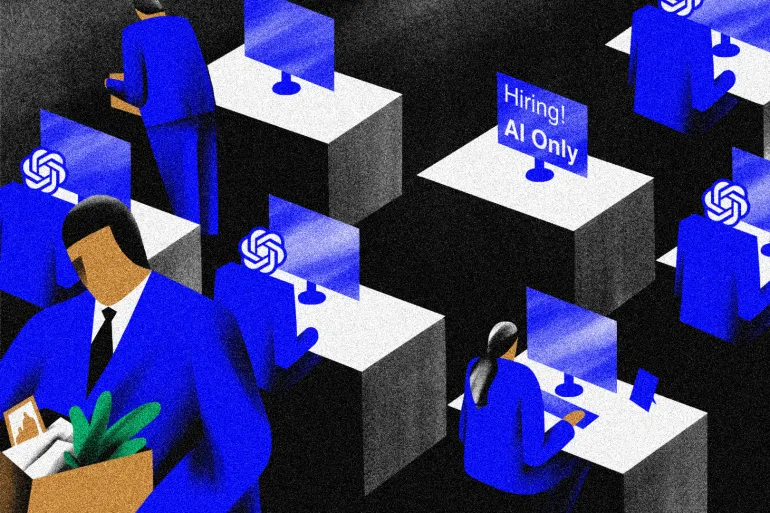
The familiar reassurance has always been that AI will only replace repetitive, low-skill tasks, that creative work, professional judgement, and human expertise are safe. Stagecraft is a direct challenge to that comfort.
Data-labeling platforms worldwide have pivoted from basic image tagging and sentiment classification toward highly specialised tasks requiring postgraduate degrees and professional licensure.
The companies building foundation models have realised that the next leap in AI performance will not come purely from scaling compute, but from feeding models expert-caliber training data rooted in real professional workflows. Startup Fortune
When the model understands not just the terminology of emergency medicine but the actual decision-making process of a physician in a specific clinical scenario, the argument that "AI cannot replace professional judgement" becomes significantly weaker.
The same logic applies to the pharmacist, the agricultural manager, the pilot and any consultant in any field whatsoever.
If you are a hospital network evaluating AI tools, a model that understands the specific triage decisions an emergency physician faces is far more valuable than one that simply knows medical terminology.
That is precisely what Stagecraft is building and it is being built by the professionals whose roles it will eventually challenge.
The Future of AI and Where This Is Heading
This development sits inside a broader trajectory that is accelerating faster than most institutions are prepared to admit.
OpenAI's annualised revenue surpassed $25 billion in early 2026, up from approximately $21.4 billion the prior year.

The company is simultaneously planning to nearly double its workforce to 8,000 employees by the end of 2026, not because the work is slowing down, but because the scale of deployment is expanding into every professional sector imaginable.
The next phase of AI is not about replacing data entry clerks. It is about entering the rooms where doctors, lawyers, engineers, and specialists have historically operated with relative job security because their expertise was considered too complex and too contextual for machines to replicate.
Stagecraft is the evidence that OpenAI has decided that complexity is just a training problem and that it has found the people to solve it.
What the Average Job Earner Should Actually Do

The honest answer is not "learn to code" or "just use AI tools," advice that has become so repeated it has lost all practical meaning.
The more useful framing is this: the professionals who will remain irreplaceable are not the ones who refuse to engage with AI, nor the ones who outsource their thinking to it entirely.
They are the ones who understand how to combine their domain expertise with AI capability, who can evaluate the output, catch the errors, ask the better question by excellent prompting, and apply the judgment that the model cannot yet simulate.
Right now, OpenAI is paying up to $500 an hour for that domain expertise. That price will not stay that high forever.
The window for professionals to understand this technology, on their own terms, before the technology understands them, is open. It will not stay open indefinitely.
You are not being replaced tomorrow, but the project building the replacement is already underway.