Only Four African Countries Qualified for Toshiba's New Startup Initiative. Here's Why
Only four African countries qualified for Toshiba’s new GridDB Startup Program. Discover why Nigeria, Kenya, Egypt, and South Africa made the list and what the other 50 countries need to close the infrastructure gap.

Toshiba just drew a map of Africa's digital readiness and most countries in the continent didn't make the cut.
On June 24, 2026, the Japanese tech giant launched the GridDB Startup Program, a strategic initiative designed to help startups build and scale real-time industrial solutions on GridDB Cloud, its distributed time-series database for Big Data and IoT systems.
Of Africa's 54 countries, only four qualified: Egypt, Kenya, Nigeria, and South Africa. This selection wasn’t random and rather held a mirror up to the continent's infrastructure gaps, cloud maturity and startup ecosystem credibility.

Why GridDB Cloud Availability Determines Who Gets In
The GridDB Startup Program is not open to all comers. Participation is limited to the 26 countries and regions where GridDB Cloud is currently available on Microsoft Azure Marketplace.
In Africa, that list includes exactly four countries: Egypt, Kenya, Nigeria and South Africa.
It is important that this constraint is in place as GridDB Cloud does not operate as a standalone product. It runs on Azure infrastructure, meaning a country without a reliable Azure Marketplace presence is effectively invisible to the program.
Toshiba's distributed time-series database for IoT systems and big data depends on cloud proximity, low latency and stable connectivity. If a country lacks that foundational infrastructure, no amount of startup energy qualifies it.
This is the first filter, an important and structural one.
One Country from Each Region: The Unspoken Logic of the Selection
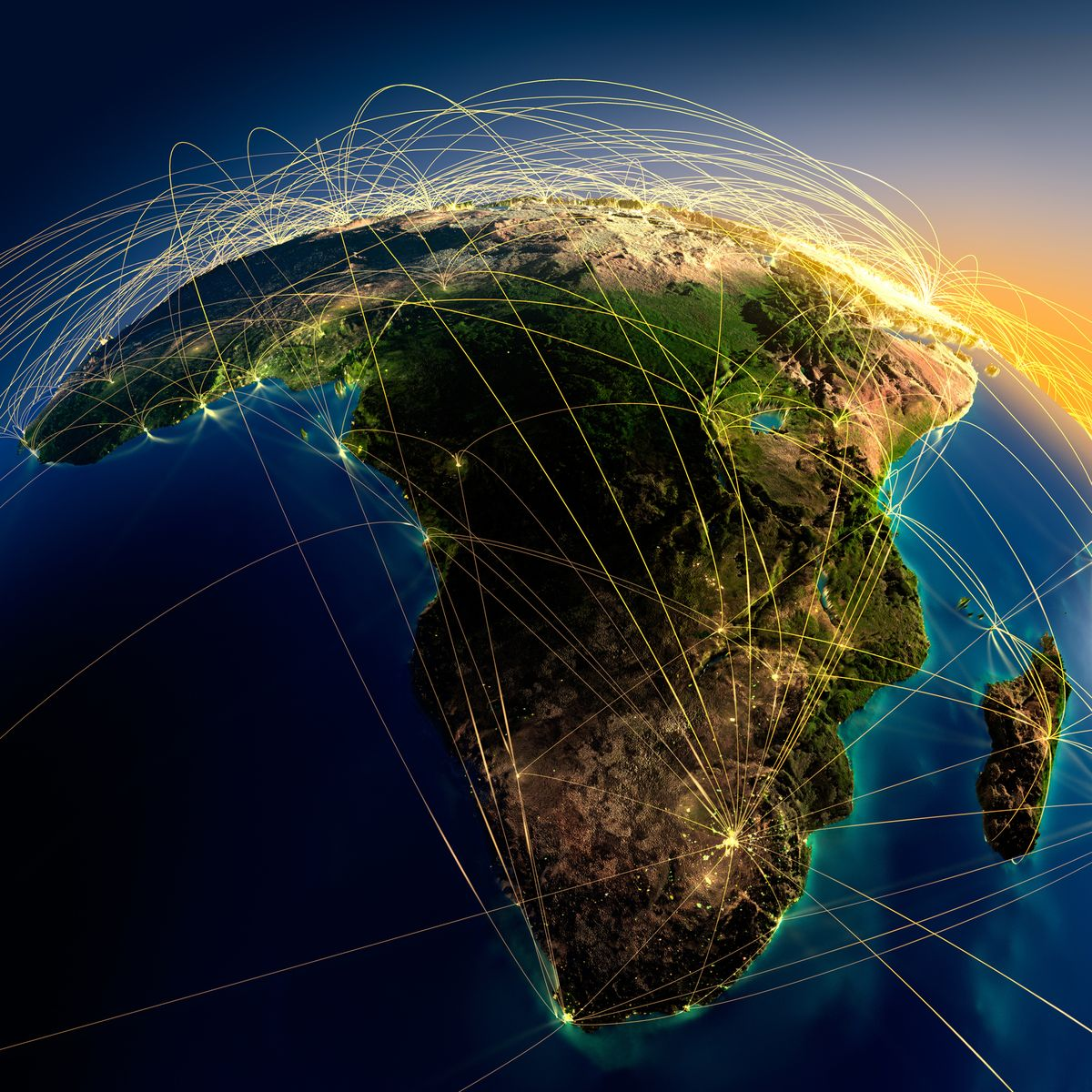
A quick look at the four countries on a map and it is easy to spot the pattern of selection. Egypt represents North Africa, Nigeria represents West Africa, Kenya represents East Africa and South Africa anchors the continent's south.
Though Toshiba did not frame it this way explicitly, it is clear the geographic distribution functions as a deliberate hedge. By seeding one strong market per region, the GridDB initiative maximises continental footprint while limiting infrastructure risk to proven ecosystems.
Each of these markets also represents the dominant tech hub of its region. Africa has 282 operational data centers and nearly half are concentrated in just these four countries: South Africa leads with 61, followed by Nigeria (25), Kenya (19) and Egypt, behind Morocco, with 13 data centres.
For a database platform built around real-time processing and petabyte-scale scalability, data center density is the backbone.
Nigeria, Kenya, South Africa,and Egypt continued to capture the majority of venture funding across the continent in 2026, reflecting market scale, talent density and institutional familiarity.
That investor confidence translates into a startup ecosystem actually capable of deploying what Toshiba is offering.
What Makes Each of These Four Markets Specifically Qualified
Nigeria brings scale. With over 200 million people and fintech infrastructure processing $2 trillion in payment volume annually, Nigerian startups working on real-time analytics and industrial IoT now have access to a time-series database built for exactly that load.
Kenya brings depth of innovation. The country raised $1 billion in 2025, a 52% jump, with a global startup ecosystem ranking that grew 33.5% yearly. Its focus on agritech, climate tech and smart infrastructure maps directly onto GridDB's core use cases: IoT sensor data from farms, real-time energy monitoring, and smart city development.
Egypt brings government muscle. Egypt raised $595 million in 2025 which is a 51% growth backed by direct state co-investment, tax benefits and tech parks.
The February 2026 Startup Charter, a policy framework involving 15 national entities, is aimed at attracting $5 billion in venture capital by 2031. For a Toshiba initiative requiring regulatory stability, Egypt's top-down infrastructure strategy makes it a low-risk, high-return entry point.
South Africa brings sophistication. It leads equity funding with average deal sizes of $9.2 million and hosts the continent's most established developer talent pipeline.

South African African startups building on GridDB Cloud for IoT and big data analytics in mining, manufacturing and finance are already operating in environments where time-series data management has commercial urgency.
The Infrastructure Gap Every Other African Country Must Close
Africa accounts for only 0.6% of global data center and computing capacity despite holding 19% of the world's population.
Countries like Ghana, Rwanda, Ethiopia and Morocco have growing ecosystems but their cloud infrastructure remains insufficient to support the Azure Marketplace integration that GridDB Cloud requires.
Morocco is on Oracle's expansion roadmap. Rwanda is policy-forward but lacks scale. Ghana has startup momentum but no Azure availability zone.
Hyperscale providers like AWS, Microsoft and Google are expanding in Africa, but currency instability and infrastructure deficits slow the pace. That instability is the reason cloud providers deprioritise a market in the first place, creating a compounding exclusion.
For countries wanting access to programs like the GridDB Startup Program in future expansion rounds, build or attract data center capacity, establish Azure Marketplace presence, stabilise regulatory frameworks and create conditions where cloud-native startups can survive long enough to scale.
What the GridDB Startup Program Signals Beyond the Four Countries
The program offers participants complimentary access to GridDB Cloud, dedicated technical support, joint marketing opportunities and a potential connection with Toshiba Corporate Venture Capital.
For early-stage African startups building in health data, smart infrastructure or industrial IoT systems, that is meaningful infrastructure subsidy at no upfront cost.
More importantly, Toshiba's entry signals a shift in how global tech companies engage Africa. The GridDB initiative frames African startups as collaborators in building future technology and just consumers of it.
The four countries that made the list are the product of years of deliberate investment in infrastructure, ecosystem development and policy coherence. The other 50 have a clear blueprint.