NPP Turmoil Deepens: Kennedy Agyapong Embroiled in 'Ken Must Go' Protests and Explosive Corruption Allegations
Ghana's Newsfile program on June 27 extensively debated critical national issues, including a significant drug seizure and the controversial 'Ken Must Go' campaign within the New Patriotic Party. Panelists rigorously discussed the NPP's decision to refer Kennedy Agyapong to its disciplinary committee, weighing internal party rules against calls for public accountability on alleged corruption in projects like Agenda 111. The conversation highlighted deep internal tensions and diverse perspectives on maintaining party unity while addressing serious national concerns.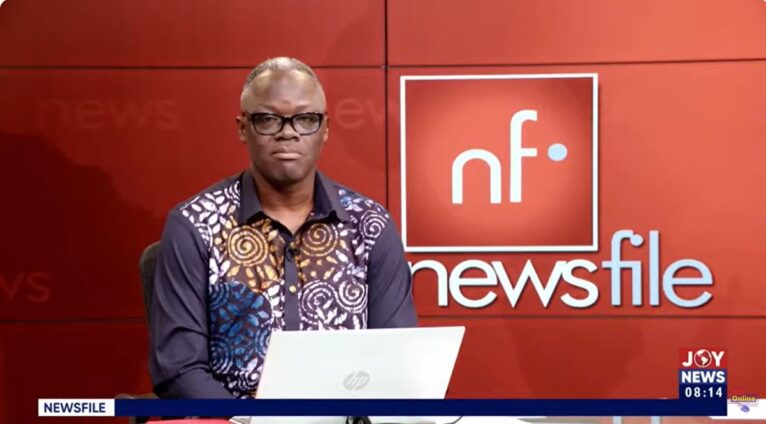
Ghana's leading current affairs program, Newsfile, hosted by veteran broadcaster Samson Lardy Anyenini, dedicated its Saturday, June 27, broadcast to a comprehensive discussion of critical legal, political, and governance issues affecting the nation. Aired live from 8:00 a.m. to 12:00 noon on JoyNews, Joy FM 99.7 FM, and Luv FM 99.5 FM, the program assembled a distinguished panel of experts to meticulously dissect recent developments dominating public discourse. The wide-ranging agenda included the ECOWAS Court's decision to dismiss former Chief Justice Gertrude Torkornoo's application and the High Court's jailing of Larry Dogbe, Managing Editor of the Herald newspaper, prompting panelists to assess whether justice was appropriately served in these instances.
A significant portion of the discussion focused on the implications of the alarming $208 million methamphetamine seizure linked to Ghana. This incident sparked serious concerns about the country's increasing vulnerability to transnational drug trafficking. Panelists critically assessed whether this development signified a broader narcotics challenge for Ghana and deliberated on the capacity and resources available to the Narcotics Control Commission (NACOC) to effectively confront this escalating threat.
Central to the day's debate was the contentious "Ken Must Go" campaign, which targeted NPP stalwart Kennedy Agyapong. The panel examined the calls for his dismissal from the New Patriotic Party, questioning whether these demands were justified or primarily driven by political motivations amid growing internal tensions within the party. The discussion featured prominent personalities including Alexander Twum-Barimah, Deputy Director-General of NACOC; physician and political activist Dr Arthur Kobina Kennedy; constitutional rights and policy strategy adviser at Democracy Hub, Oliver-Barker Vormawor; and the Member of Parliament for Suame, John Darko.
Alexander Twum-Barimah, Deputy Director-General of NACOC, offered his perspective on the referral of Kennedy Agyapong to the NPP's disciplinary committee. While acknowledging that every political party has rules and that enforcing them through disciplinary processes is standard practice, Mr. Twum-Barimah insisted that the NPP must also address the substantive issues raised by Mr. Agyapong. He argued that merely focusing on disciplinary action without examining the validity of the former presidential aspirant's claims, such as allegations of incomplete projects initiated by the previous administration, would be an incomplete approach. "If someone violates the party's rules, taking the person to the disciplinary committee is not wrong. We did the same to two NDC members, so there is nothing new about it," he stated, urging the party not to lose sight of the factual basis of the concerns raised.
Oliver Barker-Vormawor, a convener for Democracy Hub and a lawyer, strongly encouraged Kennedy Agyapong to publicly disclose any information he possesses regarding alleged corruption in the implementation of the government's ambitious Agenda 111 hospital project. Mr. Barker-Vormawor asserted that allegations of corruption involving public funds are not mere internal party matters but issues of profound national importance that demand public scrutiny and potential state investigation. He emphasized that accountability must take precedence over political considerations, stating, "That data is supposed to come out. It can never become a proper argument to say, 'Don't disclose this because we also know things about you.'" He criticized attempts to suppress public discussion of wrongdoing for the sake of party unity, preferring that such issues be fought out publicly to the extent that the state becomes interested in prosecution. For him, the core issue is not who speaks, but whether public resources were abused and if corruption occurred.
John Darko, the Member of Parliament for Suame, appealed for calm and unity within the NPP following the referral of Kennedy Agyapong to the party's National Disciplinary Committee. He stressed that this process is an integral part of the party's internal democratic structures and should not be misconstrued as a pre-judgment or an attempt to persecute Mr. Agyapong. Mr. Darko suggested that the committee's engagement could serve as an avenue for Mr. Agyapong to present evidence to support his claims, particularly concerning the Agenda 111 project. If evidence is provided, the committee could assist in pursuing those allegations; conversely, if evidence is lacking, the party would take an appropriate decision. He cautioned party members, especially younger activists, against publicly attacking colleagues, emphasizing the need for measured discourse to foster party unity ahead of future elections. While acknowledging Mr. Agyapong's commitment to the NPP, Mr. Darko disagreed with some of his assertions regarding the progress of the Agenda 111 programme, specifically citing substantial work completed on facilities like the Afari Military Hospital, including staff housing, roads, and landscaping. He expressed confidence in the disciplinary process as a means to strengthen the party and urged for inclusivity, stating, "We should do everything possible to bring everybody on board."
The discussion on Newsfile highlighted the NPP's internal tensions, particularly regarding the balance between enforcing party discipline and addressing serious allegations of corruption and governance failures. The referral of Kennedy Agyapong to the disciplinary committee, following petitions over comments deemed detrimental to party unity and cohesion, remains a focal point, with the committee given two weeks to investigate and submit recommendations. The broader national conversation continues to underscore the critical need for accountability, transparency, and a robust political environment capable of addressing both internal party dynamics and significant national challenges.