Nigerian Startup Battles Fraud with Innovative Paytag System

Digital payment systems in Nigeria, while lauded for their speed and accessibility, have inadvertently paved the way for a surge in digital fraud and banking privacy concerns. The imperative for instant transfers and seamless cross-platform payments has exposed sensitive personal information, making users vulnerable. Fintech platforms, where often a phone number doubles as an account number, heighten this risk. Chika Okere, founder of Nigerian fintech Flex, posits that the fundamental weakness in Nigeria's payment ecosystem is not the transfer infrastructure itself, but rather the extensive personal data inextricably linked to every transaction.
Okere elaborates that fraud rarely originates from a single, catastrophic breach but rather from the gradual accumulation of fragmented information: a name here, a phone number there, an account number revealed during a transfer, or a leaked Bank Verification Number (BVN). Over time, these seemingly disparate pieces of information coalesce, enabling fraudsters to impersonate individuals, manipulate banking systems, or execute sophisticated social engineering attacks. "What hackers target is information that makes sense," he states. "Nobody has all your information at once. They collect it gradually."
This understanding propelled Flex to develop "paytags" – unique identifiers designed to facilitate money transfers and receipts without necessitating the disclosure of users' underlying account numbers. While the concept of usernames and tags in payment systems is globally recognized and similar attempts have been made in Nigeria, the escalating prevalence of fraud within the country's financial landscape has necessitated a more robust solution. Consequently, banks are reinforcing verification protocols, regulators are imposing stricter compliance requirements, and fintechs are embedding additional identity checks into their onboarding processes. Concurrently, consumers are increasingly aware of the vulnerability of their personal information when it circulates across various platforms.
Flex's introduction of paytags aims to establish a crucial intermediary layer between identity and transactions. Okere's own experience, where a parking attendant used his private middle name after a transaction, underscored the critical need for this innovation. His query – why should sending money in Nigeria necessitate exposing personal information at all? – became the driving force behind Flex. The proposed solution is not to overhaul the existing banking system but to mask it. By leveraging a paytag, which functions as a pseudonym or unique identifier, users erect a firewall between their financial assets and their personal identity. This closed-loop logic handles the complex settlement processes in the background, ensuring sensitive user details remain invisible. The vision is to enable transactions, such as sending money from an OPay wallet to a Zenith Bank account, where only the paytag is visible to both parties, moving closer to models exemplified by Zelle or Cash App where identity, rather than the bank vault, serves as the transaction point.
This approach mirrors privacy-enhancing developments seen across other digital domains. Social media platforms have largely phased out public exposure of personal contact information, ride-hailing applications now utilize masking systems for direct numbers, and e-commerce platforms have integrated intermediary communication layers between buyers and sellers. Payments, it appears, are now reaching a similar inflection point where users are demanding an end to the constant exposure of raw banking details during routine transactions.
A critical question, however, remains: can paytags truly deter determined fraudsters in an environment where personal information is already broadly accessible through social media, data leaks, telecom databases, and lax data protection practices? Flex contends that while not a complete panacea, it exponentially complicates the fraudster's task. In a verified tag system, a user is not merely an anonymous number but a Know Your Customer (KYC)-verified identity linked to essential credentials like BVN and National Identification Number (NIN). Money transacting within such a closed ecosystem becomes considerably more challenging to move out untraceably. Fraud, Okere argues, heavily relies on connecting multiple pieces of information. Account numbers represent one of the strongest connectors, directly linking individuals to financial systems. By removing this layer from everyday exposure, the process of assembling comprehensive identity profiles becomes substantially harder. While the full efficacy of this argument at scale is yet to be definitively proven, it unequivocally signals that the future of payments extends beyond mere money movement; identity is becoming an intrinsic component of the infrastructure itself.
Flex operates as a self-contained, closed-loop payment environment, facilitating internal money movement between verified users while meticulously avoiding the repeated exposure of sensitive financial details. The company firmly believes that by minimizing exposure points, fortifying verification processes, and restricting how funds traverse disparate systems, a significant reduction in fraud risks can be achieved. This strategy aligns with a discernible global trend where wallet ecosystems are gaining prominence, and companies increasingly encourage users to transact, store value, and interact within contained financial environments, rather than perpetually navigating fragmented traditional banking rails.
Flex's long-term ambition transcends its proprietary application. It envisions a future where banks and other fintechs seamlessly integrate into its paytag network, enabling customers across diverse financial institutions to conduct transactions without revealing their account numbers. The founder likens Flex not to a conventional fintech app, but to a closed-loop financial ecosystem. His analogy is simple: if four individuals in a room exchange money, the funds technically never leave that room. Similarly, he argues, money circulating within Flex's ecosystem can move faster and at a lower cost because the complexities associated with external settlements are drastically reduced. This closed-loop architecture is foundational to Flex's plan to offer free peer-to-peer transfers, providing a much-needed reprieve to Nigerians from the pervasive transfer charges and Value Added Tax (VAT) deductions associated with digital payments. The startup asserts that users within its ecosystem can send money without transaction fees because funds are circulated internally, obviating the need for constant movement across external banking rails. This model mirrors successful wallet ecosystems such as Cash App, Venmo, PayPal, and even Starbucks' loyalty system. However, Flex is undertaking this endeavor within one of the world's most fragmented and fraud-prone financial environments.
Intriguingly, Nigerian consumers may be more receptive to these innovations than anticipated. The success of fintech in Nigeria has historically been fueled not solely by innovation, but significantly by frustration. Consumers migrated to digital banking due to the sluggishness of traditional banks, embraced fintechs for easier transfers, and adopted Point-of-Sale (POS) networks when cash became unreliable. Privacy is now emerging as the next wellspring of frustration. This isn't due to a sudden, abstract surge in privacy consciousness among Nigerians, but because digital fraud has become a deeply personal issue. Almost every individual now knows someone who has been a victim of hacking, scamming, social engineering, or financial lockout. This stark reality profoundly alters public perception regarding exposure. It also explains why conversations once considered niche, such as masked identities, payment aliases, or wallet-based ecosystems, are beginning to resonate as practical necessities rather than mere experimental concepts.
However, adoption remains the most formidable hurdle for any payment innovation. Nigerians are deeply ingrained with the custom of using account numbers. Furthermore, widespread implementation across the ecosystem would necessitate substantial alignment around standards among banks and fintechs. Yet, the overarching implication of this evolving discourse is that the future of payments may paradoxically involve concealing more information rather than exposing it. Flex initially launched as a proof-of-concept, targeting 1,500 users, but organically attracted approximately 20,000 users within its first month. The startup currently boasts a user base between 26,000 and 30,000. The company deliberately moderated its growth to finalize licensing partnerships pertaining to microfinance banking, mobile money operations, and payment service solutions. Its next ambitious target is to reach 2.5 million users by the close of 2027. For now, Flex is in its nascent stages, with partnerships still evolving, infrastructure under development, and many of its claims awaiting validation at a national scale.
You may also like...
Is JAMB Right to Lower Cut-off Marks for Admission Into Nigerian Universities?

JAMB has reduced the national minimum cut-off mark for university admissions to 150 and polytechnics to 100, a decision ...
8 Places on Earth Where Rain Is Almost Nonexistent and Why They Stay Dry

Some places on Earth go years without meaningful rainfall, creating landscapes that feel almost otherworldly. Here are 7...
Apple's Flagship Product Just Changed for the First Time Since 2007
Apple posted $57 billion in iPhone revenue and has already repositioned the phone as supporting infrastructure for its a...
The Names That Outlived Their Owners: 5 African Countries Named After People Who Have Passed Away
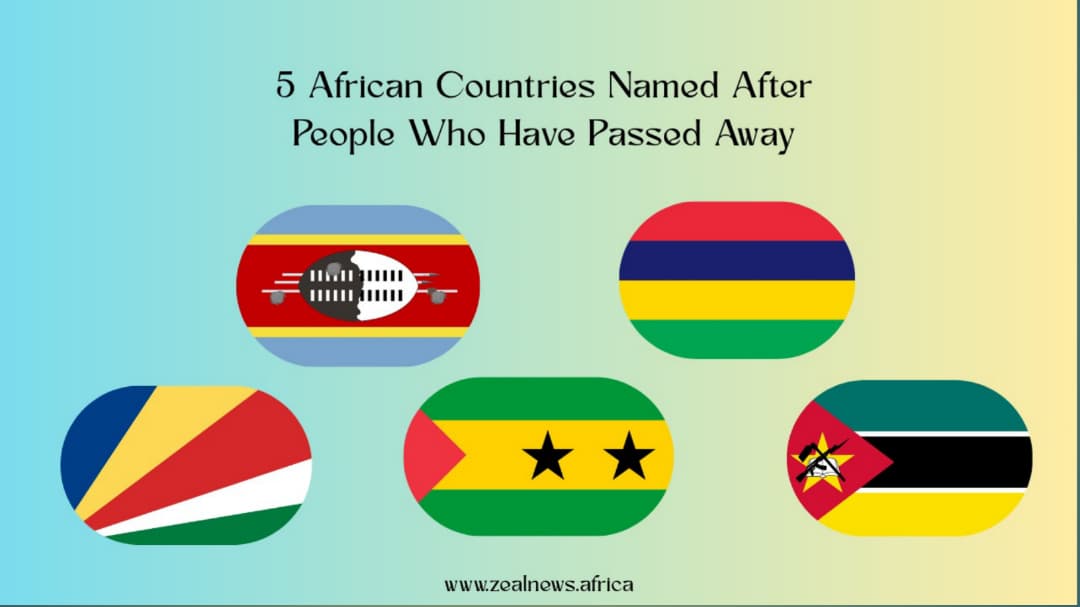
A country’s name can hold centuries of history. These five African nations were named after influential figures whose le...
An AI Data Center Secretly Drained 29 Million Gallons of Water Over 15 Months. How Did This Happen?
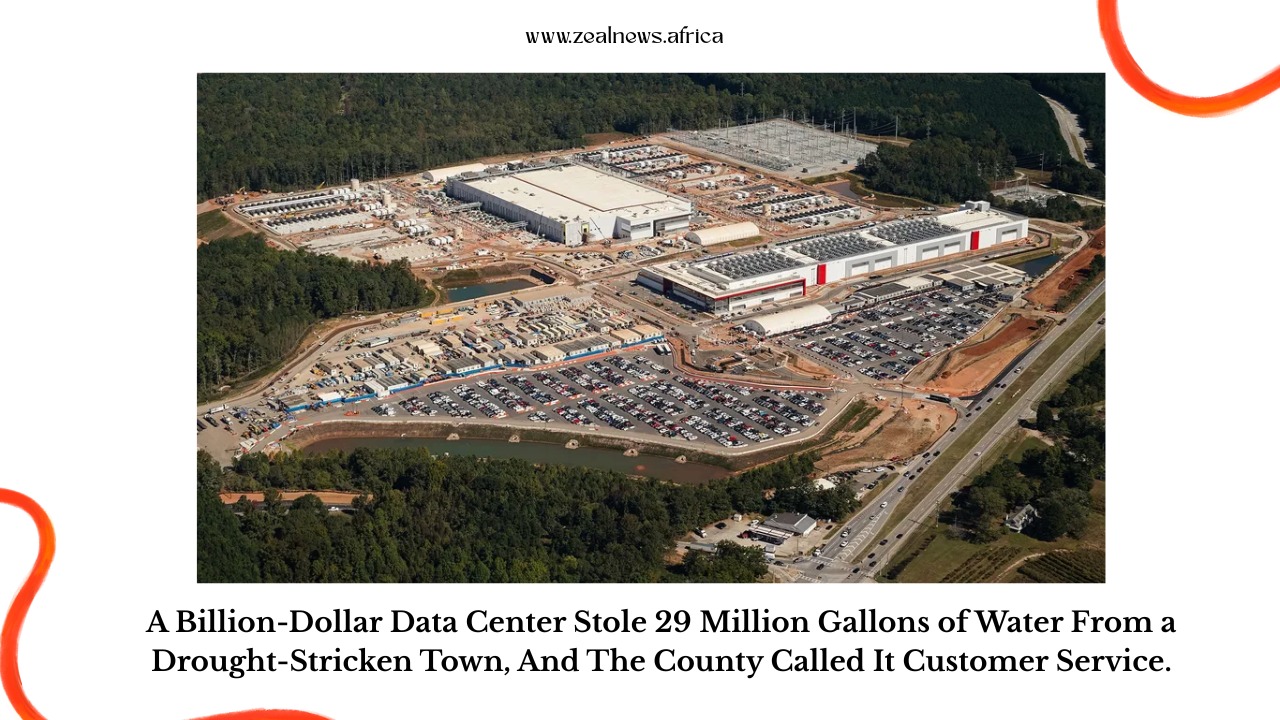
A Blackstone-owned data center used 29 million gallons of water nobody was tracking, in a state under drought emergency,...
Oklahoma City Thunder Sweep Lakers to Reach Western Conference Finals
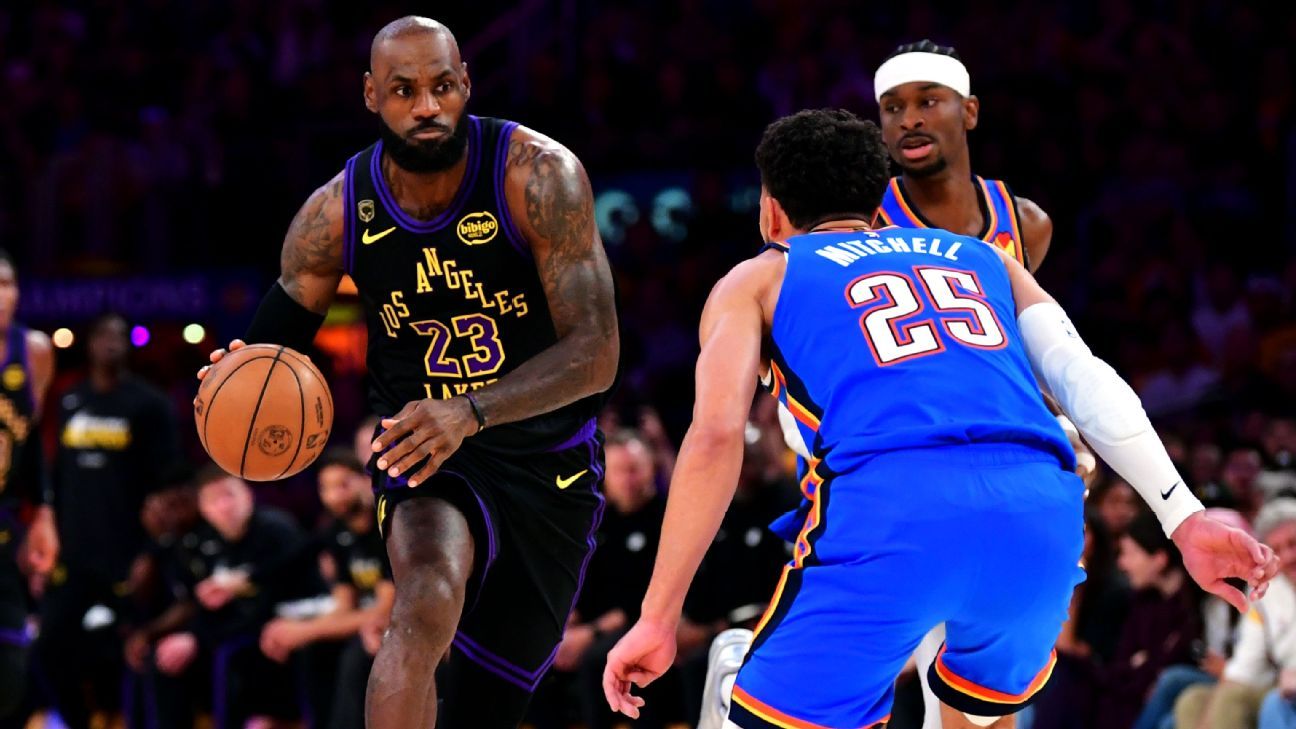
The Oklahoma City Thunder swept the Los Angeles Lakers 115-110 in Game 4, advancing to the Western Conference finals wit...
Amazon Greenlights ‘Fourth Wing’ Series as Michael B. Jordan Leads Major Prime Video Reveal

Amazon's Prime Video has officially greenlit the highly anticipated "Fourth Wing" TV series, based on Rebecca Yarros' be...
BBNaija Star Lilo Aderogba Earns Two Master’s Degrees in the US

Six years after her Big Brother Naija debut, Lilo Aderogba celebrates a remarkable academic achievement, earning both an...