Nigeria's Glory: Commonwealth Games Triumph and Hosting Ambitions in Glasgow!
Team Nigeria made a spectacular entrance at the 23rd Commonwealth Games in Glasgow, setting ambitious medal targets across 10 sports. Concurrently, Nigeria achieved a significant diplomatic victory in Glasgow, successfully advocating for Africa to be considered as the host for the 2034 Commonwealth Games. This historic move, championed by Mallam Shehu Dikko, underscores Africa's growing influence and Nigeria's commitment to modernizing the global sporting event.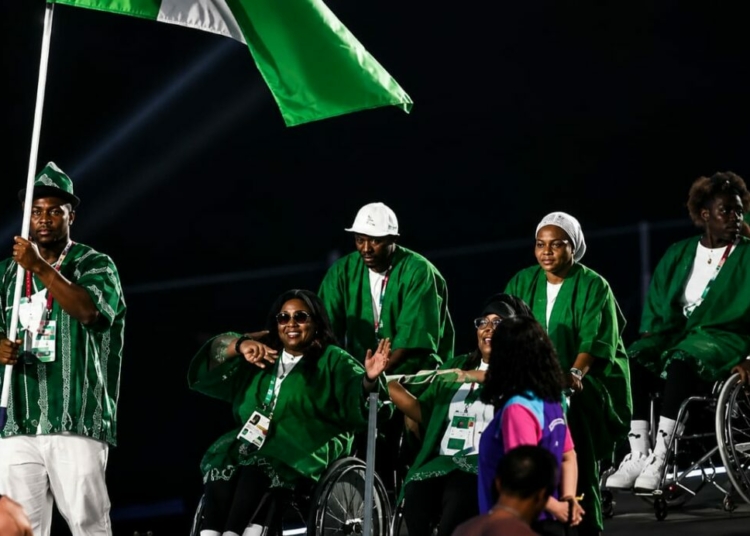
The 23rd Commonwealth Games commenced with a spectacular Opening Ceremony at Glasgow’s OVO Hydro Arena on Thursday night, witnessing a memorable entrance by Team Nigeria. Adorned in elegant green-and-white national colours, the Nigerian contingent garnered warm applause from thousands of spectators as they proudly marched alongside athletes from 74 Commonwealth Games Associations. Their striking appearance emerged as a highlight of the colourful Parade of Nations. Marking a historic first for the Commonwealth Games, both Para and non-Para athletes entered the arena together, emphasizing the movement's dedication to inclusion and unity.
The ceremony itself was a vibrant celebration of Scotland’s rich cultural heritage, delivered through a captivating blend of music, dance, digital storytelling, and cutting-edge technology. Spectators were also treated to a dynamic showcase of Glasgow’s industrial legacy and its esteemed status as a UNESCO City of Music. The evening’s spectacle was further enhanced by a dramatic entrance from His Majesty King Charles III and Queen Camilla, who appeared through the iconic Doctor Who TARDIS before the King formally declared the Games open. In his address, King Charles welcomed athletes and officials, urging them to embrace the spirit of friendship, excellence, and unity through sport.
Team Nigeria has arrived in Glasgow with a robust 74-member athlete contingent, prepared to compete across 10 diverse sports: athletics, boxing, weightlifting, para powerlifting, para athletics, judo, swimming, track cycling, 3×3 basketball, and 3×3 wheelchair basketball. The National Sports Commission (NSC) has set an ambitious target for the team, aiming to secure between 16 and 20 gold medals, driven by confidence in the quality and extensive experience of the country’s athletes. The squad is a powerful mix of established international stars and promising emerging talents, all poised to lead Nigeria’s medal challenge. Key athletes include world record holder Tobi Amusan, sprint sensations Kanyinsola Ajayi and Favour Ashe, Samuel Ogazi, shot putter Chukwuebuka Enekwechi, long jumper Prestina Ochonogor, triple jumper Ruth Usoro, weightlifters Rafiatu Lawal and Onome Didih, alongside para powerlifting champions Folashade Oluwafemiayo, Esther Nworgu, and Roland Ezuruike.
Historically, Nigeria stands as one of the Commonwealth Games’ most successful nations since its debut in 1950, having accumulated a total of 271 medals, comprising 82 gold, 84 silver, and 105 bronze. As attention now shifts from the ceremonial to the competitive, Team Nigeria is set to begin its medal quest on Friday, with initial podium opportunities anticipated in 3×3 basketball, boxing, and para powerlifting. Following a colourful opening ceremony that underscored the diversity and unity inherent in the Commonwealth, Team Nigeria is determined to translate the excitement of the parade into tangible medal-winning performances throughout the Games in Glasgow.
Beyond the ongoing athletic pursuits, Africa has made a significant stride towards securing the hosting rights for the 2034 Commonwealth Games. This landmark development occurred during the 12th Commonwealth Sports Ministers’ Meeting, also held in Glasgow, Scotland. Nigeria played a pivotal role in this achievement, with Mallam Shehu Dikko, Chairman of Nigeria’s National Sports Commission (NSC), successfully rallying Commonwealth nations to support the continent’s bid. Dikko passionately argued that the legacy of the Commonwealth Games would remain incomplete without Africa hosting the multi-sport event for the first time in its 100-year history. He urged a deliberate and collective commitment from member countries to reserve consideration of the 2034 edition specifically for Africa.
The proposal received unanimous backing from Commonwealth sports ministers, leading to an amendment in the official communiqué that reflected this collective position—that Africa should indeed be considered for the 2034 hosting rights. Mallam Dikko hailed this move as a historic milestone, stressing that Africa’s inclusion as a host would usher in a significant new chapter in the evolution of the Commonwealth Games. In addition to the hosting conversation, the NSC Chairman also advocated for crucial reforms aimed at modernising the Games and enhancing their global appeal. His suggestions included incorporating additional sports, such as football, and implementing multi-city hosting models to mitigate costs, improve accessibility, and make the competition more attractive to prospective hosts.
During the ministerial meeting, Dikko also delivered Nigeria’s national statement, detailing the ongoing reforms within the country’s sports sector under President Bola Ahmed Tinubu’s Renewed Hope Agenda and the NSC’s RHINSE framework. He highlighted concerted efforts focused on bolstering sports governance, developing essential infrastructure, discovering and nurturing new talent, and expanding the sports economy to forge a more sustainable future for Nigerian athletics. The positive outcome from Glasgow represents a substantial diplomatic victory for Nigeria and a major boost to Africa’s long-standing ambition of hosting the Commonwealth Games. This success simultaneously opens wider discussions on the future direction and enduring relevance of this global sporting event.