Nigeria Isn’t Yoruba’s Only Home: 5 Other Countries Where It Is Spoken
You probably didn’t know Yoruba is spoken beyond Nigeria. Discover five countries where the language, people and culture have deep and surprising roots.
When we hear Yoruba, we would usually think of Nigeria. But then, the Yoruba-speaking world does not end at being Nigerian.
Nigeria has the world's largest Yoruba population and remains the main centre of Yoruba language and culture. But Yoruba and closely related varieties are also spoken across parts of West Africa, while Yoruba people and cultural traditions were carried much farther through migration and the transatlantic slave trade.
Here are five countries where that story can be seen.
1. Benin 🇧🇯
Yoruba is spoken across parts of Benin, particularly in the south and southeast. Many Yoruba-speaking communities there use varieties known as Nago or Nagot.
Nago belongs to the wider Ede language continuum, which extends across western Nigeria, Benin and into Togo.SIL's sociolinguistic surveys of the region found high levels of comprehension between some Nago varieties and Yoruba.
Kétou, near the Nigerian border, has particularly strong Yoruba connections. Local traditions trace the town's origins to a descendant of Oduduwa who ruled the Yoruba kingdom ofIle-Ife. The town developed its own political history and identity, but Yoruba cultural practices remain prominent and its influence even carried across the Atlantic, giving its name toCandomblé Ketu, the largest branch of the Afro-Brazilian religion.
Further south, Porto-Novo has long had a significant Yoruba population alongside Goun and other communities. Yoruba traders, artisans and religious specialists settled in the city over generations, and the city's history includes links to the old Oyo trading network.
So the Yoruba presence in Benin is not simply a story of Nigerians moving across the border in recent times. Many of these communities have much older roots in the region.
2. Togo 🇹🇬
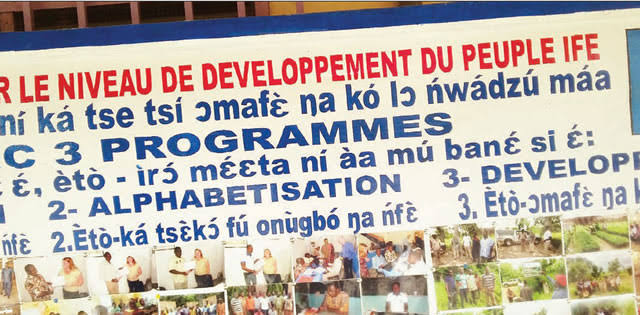
Credit: Punch Newspaper
Yoruba-related speech can also be found in Togo, particularly in the northeast.
TheNago communities of northeastern Togo form part of the same broader Ede language continuum found across Benin and western Nigeria. Linguistic research found high comprehension between Northern Nago and Yoruba.
Togo also has theIfè language, another Ede variety, spoken by roughly 271,000 people across Togo, Benin and Ghana.
The borders between today's Nigeria, Benin and Togo therefore cut across an older linguistic landscape that existed long before those modern boundaries.
Culture
Read Between the Lines of African Society
Your Gateway to Africa's Untold Cultural Narratives.
3. Ghana 🇬🇭
Ghana's Yoruba presence developed differently.
Yoruba is not one of Ghana's principal indigenous languages. The Yoruba-speaking population there largely grew through migration and settlement, with people establishing communities in Ghana over generations.
Yoruba is consequently spoken within parts of Ghana's Nigerian and wider West African communities, alongside the country's many local languages.
It is a smaller presence than in Benin, but Yoruba identity and language did not disappear simply because people moved outside the traditional Yoruba-speaking region.
4. Côte d'Ivoire 🇨🇮

There are also Yoruba communities in Côte d'Ivoire.
Here, the connection is mainly linked to migration and settlement, rather than Côte d'Ivoire being part of the historical Yoruba-speaking region.
The community is smaller and less visible than Yoruba populations in Nigeria or Benin, but Yoruba language and cultural identity have travelled with people who settled in the country.
5. Sierra Leone 🇸🇱
Sierra Leone has a particularly important Yoruba history because of theLiberated Africans who arrived there during the nineteenth century.
After British naval forces intercepted slave ships, tens of thousands of Africans were freed and taken to Freetown. A large proportion were Yoruba speakers.
Historian Richard Peter Anderson, in his bookAbolition in Sierra Leone, estimates that about 33,000 — roughly one in three Liberated Africans — spoke dialects that would soon be classified as Yoruba. People from Oyo, Egba, Ijesha and Ijebu communities were among the most numerous.
In Sierra Leone, many of these Yoruba-speaking people became known as the Aku. They built communities around Freetown, including at Fourah Bay, and developed a distinct Aku identity shaped by Yoruba language, Islam, Christianity and traditional religious practices.
Yoruba influence also enteredKrio, Sierra Leone's widely spoken creole language — even its name is thought to derive from the Yoruba phrase a kiri yo. Yoruba words and cultural practices became part of life in the settlements formed by Liberated Africans.
And then Yoruba crossed the Atlantic
Culture
Read Between the Lines of African Society
Your Gateway to Africa's Untold Cultural Narratives.
The movement did not end in West Africa.
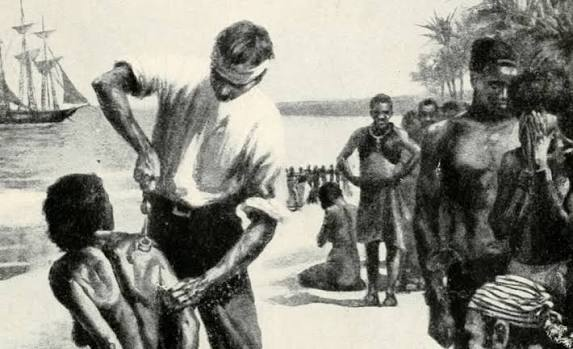
Yoruba-speaking people were among those forcibly taken across the Atlantic during the slave trade. In Cuba, their descendants preserved religious traditions that became part of the island's Afro-Cuban culture.
One of the most visible legacies is Santería, also known as Regla de Ocha or Lucumí. Yoruba religious ideas, deities and ritual practices survived in Cuba, where they mixed with Catholic traditions.
Lucumí also preserves a Yoruba-derived ritual vocabulary. It is not simply modern Yoruba spoken with a Cuban accent; it developed from Yoruba and related African languages carried to Cuba and is now used mainly in religious settings.
Yoruba traditions also survived in Brazil, where Candomblé developed among enslaved Yoruba, Fon and Bantu communities, and where the Yoruba-derived orixá tradition remains a major part of Afro-Brazilian religious life today.
From Nago communities in Benin and Togo to the Aku of Sierra Leone and the Yoruba-derived traditions of Cuba and Brazil, the language and culture travelled far beyond the borders of modern Nigeria.
Nigeria is Yoruba's largest home. It was never its only one.