New IGP Tunji Disu Sworn In, Launches Controversial State Police Committee

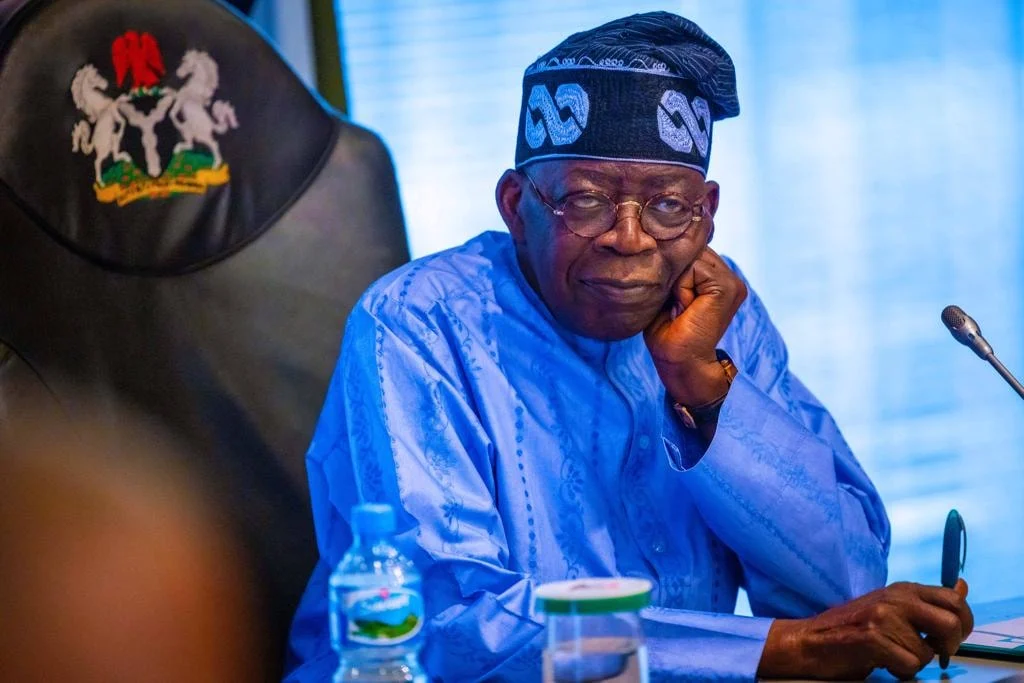
President Bola Ahmed Tinubu officially swore in Olatunji Disu as the substantive Inspector-General of Police (IGP) on Wednesday at the Council Chambers of the Presidential Villa, Abuja. This significant event, marking a major leadership shift in Nigeria’s policing landscape, saw Disu take his oath of office at 2:53 pm, following his unanimous endorsement by the Nigeria Police Council on Monday, March 2. Disu is now the 23rd Inspector-General of Police for the Federal Republic of Nigeria.
Disu's elevation to the top policing role followed his appointment as acting IGP on February 24, a move necessitated by the resignation of his predecessor, Kayode Egbetokun, on February 23. While Egbetokun officially cited "family issues," sources indicated that his resignation was influenced by his known opposition to the government's plan for state policing. Born on April 13, 1966, in Lagos State, Olatunji Disu embarked on his policing career on May 18, 1992, as a Cadet Assistant Superintendent of Police. Upon his decoration as acting IGP, President Tinubu had charged him to improve the police force, to which Disu pledged an end to impunity, corruption, and human rights abuses.
The swearing-in ceremony was a high-profile event, preceding the Federal Executive Council (FEC) meeting, which commenced at 03:01 pm. Notable dignitaries present included Vice President Kashim Shettima, Secretary to the Government of the Federation Senator George Akume, National Security Adviser Nuhu Ribadu, Chief of Staff Femi Gbajabiamila, Minister of Police Affairs Senator Ibrahim Gaidam, FCT Minister Nyesom Wike, and Head of Service Mrs. Esther Walson-Jack, alongside other cabinet members. Governors Babajide Sanwo-Olu of Lagos, Abdullahi Sule of Nasarawa, and Peter Mbah of Enugu had previously commended Disu’s exemplary service, particularly during his tenure as Commander of the Rapid Response Squad in Lagos and Assistant Commissioner of Police in Rivers State.
Immediately after Disu's swearing-in, President Tinubu also administered oaths of office to newly appointed commissioners for the Revenue Mobilisation Allocation and Fiscal Commission (RMAFC) and the Federal Civil Service Commission (FCSC). The RMAFC commissioners sworn in were Abubakar Wamakko (Sokoto), Senator Marafa Abba (Taraba), Ahmed Waziri (Adamawa), Hadizatu Mustapha (Borno), Helen Bob (Bayelsa), and Oladele Gboyega (Osun). For the FCSC, Professor Ngbea Gabriel (Benue) and Omoregie Idahagbon (Edo) took their oaths.
Addressing State House correspondents after his official swearing-in, IGP Olatunji Disu immediately articulated his priorities and vision for the Nigeria Police Force. A central theme of his address was his readiness to work for the realization of State Police, unequivocally declaring that "State Police has come to stay, and the police should be able to do their own part in making it succeed." He reassured his officers that their jobs were not in danger, framing the reform as a partnership rather than a threat to the federal force.
Further solidifying his commitment to the State Police initiative, IGP Disu inaugurated an eight-member committee on Wednesday morning to oversee its implementation. This committee has been given a critical one-month deadline to submit its report. Disu described the assignment as both significant and timely, aimed at strengthening Nigeria's internal security by aligning policing with realities on the ground. The committee's mandate includes reviewing existing police models, assessing community security needs, proposing an operational framework for state police structures, addressing recruitment, training standards, resource allocation, and developing robust accountability and oversight mechanisms. He stressed that their work would help shape a framework that strengthens, rather than fragments, the national security system, urging professionalism, objectivity, and an appreciation for Nigeria's diversity.
Beyond the structural reforms, Disu also vowed to professionally tackle the issue of protests, particularly those linked to the situation in the Middle East. He emphasized a proactive approach through "intelligence policing," stating the police are aware of various groups and sects in Nigeria and their potential external influences. He assured that necessary actions, including increased patrols and dialogue, were being taken to prevent citizens from taking laws into their own hands. The IGP reiterated that officers must understand they "are working for the people of the Federal Republic of Nigeria and the citizens of the country are our bosses," stressing the importance of professional conduct and discipline.
On officer welfare, Disu highlighted its critical importance, noting the difficult and dangerous nature of policing, citing a past instance where 140 policemen were lost in a year in the FCT alone. He expressed confidence in President Tinubu's commitment to providing the necessary support for police welfare. The IGP also reassured existing Nigeria Police Force personnel of their continued relevance and indispensable role within the nation's security architecture, emphasizing that the mission is one of strategy and partnership, not competition or duplication. He underscored the high public expectations for the committee's work, which will significantly influence the future direction of policing in the country. President Tinubu himself has consistently advocated for constitutional amendments to establish state police, urging the Senate to act on this reform to better combat insecurity, reclaim forests, and restore public confidence.
You may also like...
Maguire's Legal Woes: Star Defender Receives Suspended Sentence for Greece Incident

Manchester United's Harry Maguire received a 15-month suspended sentence from Greece's Supreme Court for a 2020 Mykonos ...
Transatlantic Clash: Liverpool and Wrexham Set for Yankee Stadium Showdown in July
Wrexham AFC is embarking on its third U.S. preseason tour in July, featuring a high-profile match against Liverpool at Y...
Netflix Flexes $2.8 Billion War Chest After Warner Bros. Deal Walkout

Netflix has exited the bidding war for Warner Bros., citing price as the primary reason and securing a $2.8 billion brea...
Tom Hanks Unleashes Epic 20-Part WWII Series, Release Date Revealed!
Tom Hanks is returning to World War II with a massive 20-episode documentary series for The History Channel, titled <i>W...
Harry Styles Unveils Heartache: The Unseen Struggle With Liam Payne Grief

In a candid interview, Harry Styles opened up about his enduring grief over the death of former One Direction bandmate L...
Football Queen Asisat Oshoala Scores Big as New Amstel Malta Brand Ambassador!

Amstel Malta has named Nigerian football star Asisat Oshoala as its new Brand Ambassador during International Women's Mo...
Congolese-Canadian Tennis Sensation Victoria Mboko Climbs to WTA No. 10!
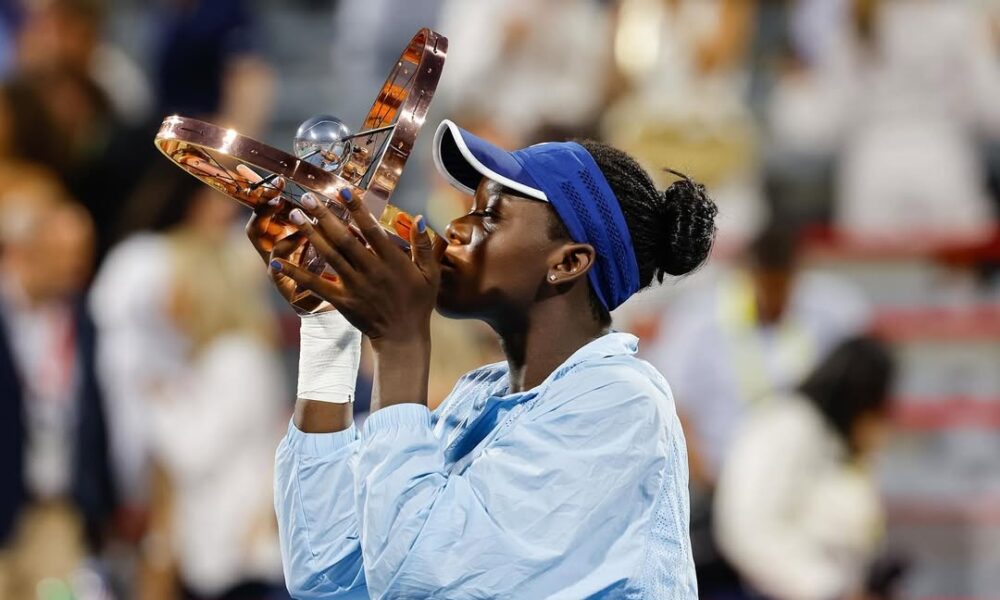
Congolese-Canadian tennis sensation Victoria Mboko has achieved a historic Top 10 ranking in February 2026, just twelve ...
Zimbabwe's Massive Health Deal Sparks Debate: U.S.$367M Agreement Excludes Critical Mineral Talks!

A US official has denied that a US$367-million health MoU with Zimbabwe was about critical minerals, stating it focused ...