Nepal Floods: Devastating Human Toll and Global Environmental Warnings Unfold
A devastating flash flood in Nepal, suspected to be caused by a glacial lake outburst or glacier collapse, has claimed hundreds of lives, including 12 family members of a UK restaurant owner. Experts warn that similar climate change-driven events threaten the Alps, highlighting the urgent need for global climate protection to prevent further glacial instability.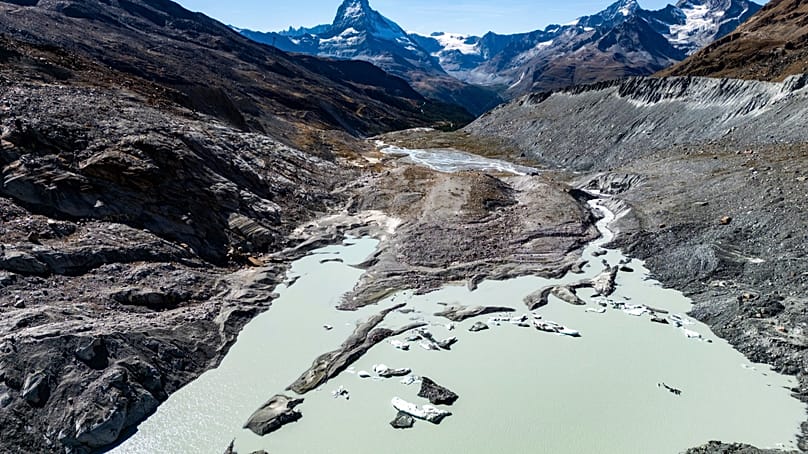
A catastrophic flash flood, suspected to have been triggered by a glacial lake outburst or a glacier collapse in the Himalayas, recently devastated central Nepal and surged through southwest Tibet, claiming hundreds of lives and leaving thousands more missing. The torrent of water, mud, and debris traveled nearly 170 kilometers, causing widespread destruction over several days.
The human toll of this disaster is starkly illustrated by the profound grief of Neha Shrestha and her husband, Jigmi Tamang, who own the Nepalese restaurant Ziva Kitchen and Bar in Southport. They are mourning the loss of 12 family members from Jigmi's village, Syabrubesi, which was entirely obliterated. Neha recounted receiving a devastating phone call confirming the tragedy, describing how a 60-hectare section of glacier in northern central Nepal broke away from a cliff, unleashing millions of tons of ice and debris over 1,000 meters into the valley, igniting the floods. She described the scene as being "exactly like the movie 2012," with everything swept away in a matter of minutes, leaving behind only mud and no possibility of recovering bodies. Plans for a cherished family reunion during Chinese New Year have been tragically canceled, leaving the couple heartbroken and lost for words.
Glaciologist Olaf Eisen, a professor at the Alfred Wegener Institute for Polar and Marine Research and the University of Bremen, warns that similar catastrophic events, driven by human-made climate change, could increasingly threaten Europe's Alps. Europe is experiencing some of the fastest warming rates globally, leading to rapid glacial retreat and thawing permafrost, which severely destabilize high mountain regions. The most vulnerable areas in the Alps are situated at approximately 2,500 to 3,000 meters, including parts of France, Italy, Austria, and Switzerland. Eisen emphasizes that when combined with extreme weather phenomena like heatwaves or heavy rainfall, the likelihood of such natural disasters in these regions significantly increases.
As an example, Eisen cited a rock and glacier collapse in the Swiss village of Blatten in May 2025, which, despite prior evacuation, resulted in one fatality. However, he clarified that the Nepal disaster was of a vastly greater magnitude, estimating its avalanche volume to be 10 to 20 times larger than the Blatten incident. Another tragic event occurred in 2022 on Italy's Marmolada glacier in the Dolomites, where a massive block of ice detached, killing 11 mountaineers.
While glacier collapses can be part of normal, cyclical geological processes, they are increasingly being exacerbated by human-induced climate change. Switzerland, for instance, has lost approximately 1,000 glaciers since 1850, with about 1,000 square kilometers of ice cover disappearing. The Weisshorn East glacier is under continuous surveillance, having displayed repeated movements and three small collapses recently. Although local residents are not currently deemed to be in danger, hiking trails and cycling routes in the vicinity have been closed as a precautionary measure.
The critical situation is particularly evident in historically perennially frozen regions, which contain permafrost – ice that has remained frozen for at least two consecutive years. As temperatures rise, this permafrost thaws, causing glaciers to melt at their base and consequently lose their stable adherence to the ground. In some instances, a pocket of water has been observed forming beneath a glacier even while its snout remains frozen. During periods of intense heat or heavy rainfall, this water pocket can exert immense pressure, causing the still-frozen front of the glacier to suddenly give way and release the entire ice mass instantaneously.
Eisen strongly advocates that "Climate protection is glacier protection. Every tenth of a degree less counts. If average temperatures were to fall again, glaciers could adapt and grow." He also notes that mechanical protection methods, while employed in specific ski areas, are temporary, energy-intensive, and labor-intensive, underscoring the critical importance of global climate action over localized, short-term solutions to safeguard the world's glaciers.