NATO Under Threat: UK Leader Starmer Predicts Russian Attack Within Four Years
UK Prime Minister Keir Starmer has issued a grave warning, stating that Western intelligence suggests Russia could attack a NATO country within four years. In response, Starmer pledged to publish a delayed defence investment plan and significantly boost UK defence spending, aligning with similar concerns voiced by other European leaders and Britain's military chief.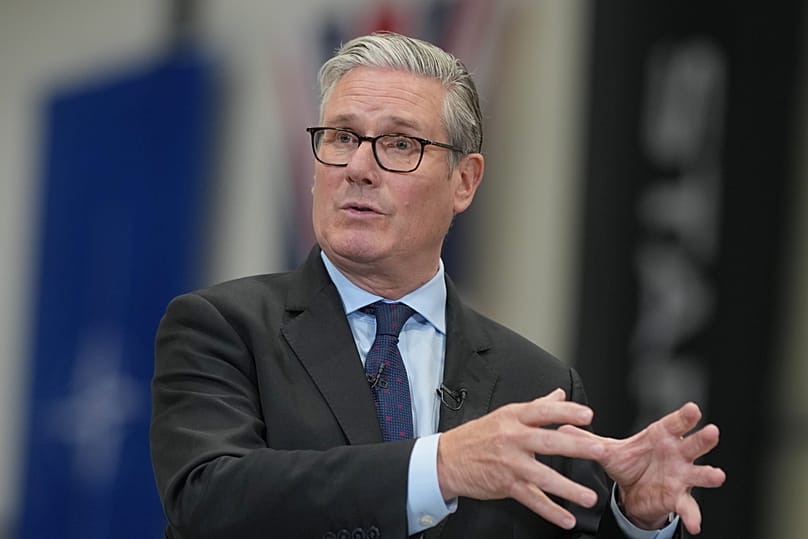
Western intelligence assessments suggest that Russia could launch an attack on a NATO country as early as 2030, a stark warning echoed by UK Prime Minister Keir Starmer on Friday. Speaking during a visit to a drone manufacturer in southwest England, Starmer emphasized the urgency of the situation, stating, "It is our intelligence assessment and the assessment of other countries in NATO that there could be an attack by Russia on NATO as soon as 2030." This timeframe aligns with warnings from other European leaders and NATO chief Mark Rutte, who in December cautioned that Russia might be ready to use military force against NATO within five years.
In response to these escalating threats, Prime Minister Starmer pledged that his government would publish a long-delayed defence investment plan before next month's NATO summit. This crucial 10-year defence investment plan, which follows a review of the UK's defence capabilities, was initially slated for release late last year but has faced delays reportedly due to disagreements between the finance ministry and other government departments over its cost. Starmer, however, assured reporters that the plan would be "fully funded" and released ahead of the NATO summit in Turkey, commencing on 7 July.
Further underscoring the gravity of the situation, Starmer committed to increasing defence spending. He pledged to raise defence expenditure to 2.5% of GDP starting next year, with a further increase to 3% in the subsequent parliament. This commitment reflects a strategic pivot towards strengthening national security and collective defence capabilities in the face of perceived Russian aggression, particularly following Russia's invasion of Ukraine over four years ago.
Adding to the warnings, Britain's military chief, Air Chief Marshal Richard Knighton, earlier on Friday stressed the necessity for the country to bolster its defences. Knighton, reflecting on his extensive career, stated to the BBC, "In my 35-year career, this is the most dangerous period that I have known." He highlighted the critical importance of enhancing the capability and readiness of the armed forces alongside allies to deter potential adversaries from undertaking aggressive actions. The broader context of international security also includes repeated calls from US President Donald Trump for NATO countries to increase their defence spending, reducing reliance on Washington for security.