National Security Crisis: Opposition Demands Radical Reforms to Architecture
The Minority Caucus in Nigeria's House of Representatives has called for an immediate overhaul of national security, condemning the murder of a retired Major General and demanding action on abducted schoolchildren. They also criticized the government for prioritizing 2027 elections and condemned a court judgment to de-register opposition parties, vowing to resist attempts to sabotage democracy.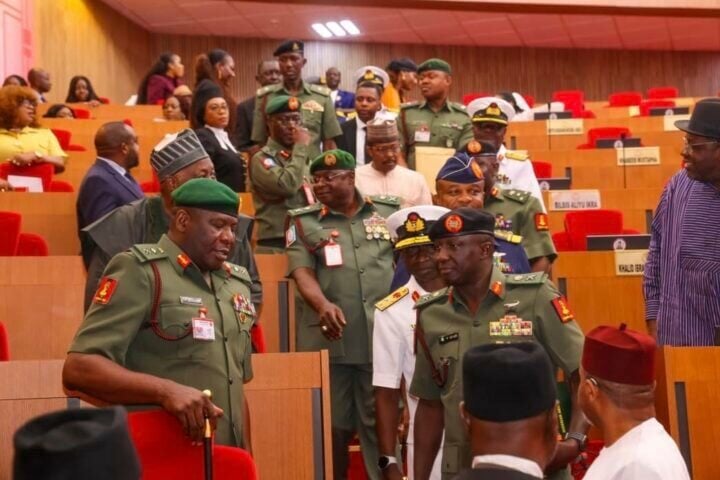
The Minority Caucus in Nigeria's House of Representatives has issued a strong call for an immediate and comprehensive overhaul of the nation's security architecture, emphasizing the critical need for increased funding in security intelligence over political propaganda. Led by Hon. Fred Agbedi, the caucus insisted that President Bola Tinubu must suspend all political activities related to the 2027 elections and declare a robust 6-month National Security and Economic Recovery Plan. Speaking to journalists in Abuja, the caucus asserted that Nigeria is currently in a state of crisis, being "bleeding, confused, and deliberately pushed to the brink" by a government they accuse of prioritizing 2027 electioneering campaigns above the fundamental lives and welfare of its citizens.
The caucus expressed profound condemnation for the "horrendous murder" of retired Major General Rabe Abubakar, who was killed while in terrorist captivity in Katsina, and raised serious questions about the subsequent release of his wife under "questionable circumstances." They demanded a full and transparent investigation into his abduction and murder, stressing that the nation deserves to understand how terrorists are now able to kill generals with such impunity. The lawmakers highlighted this incident as a "grave indictment of a failed state" and a "national embarrassment," noting that if a General who once commanded troops cannot be safe, then no citizen, including respected traditional rulers, is secure. The caucus also pointed out that General Rabe's murder followed the slaying of two other Generals and commanding officers in battle without any repercussions.
In addition to the national security concerns, the Minority Caucus urged the government to launch a special military operation within 72 hours to rescue the schoolchildren and teachers abducted in Oyo state who remain in captivity. This specific demand underscores the urgency with which the caucus views the deteriorating security situation across the country.
Beyond security, the caucus also strongly condemned the judgment by the Federal High Court, presided over by Justice Peter Lifu, which ordered the Independent National Electoral Commission (INEC) to de-register five opposition political parties. The lawmakers called on INEC to resist being used to "sabotage democracy," stating unequivocally that they will not accept a 2027 election that is "rigged before it begins." They characterized this judgment, delivered only months before general elections and contradicting a subsisting Appeal Court decision, as a "deliberate ploy to engender judicial chaos" and "rascality taken too far." The caucus views this as a calculated attempt to "muscle legitimate opposition out of the race for the 2027 Presidency."
The Minority Caucus called upon the Chief Justice of Nigeria to intervene in the conflicting judgments regarding party registration to safeguard the judiciary's integrity. They declared that ignoring mass killings while pursuing a second term, attempting to eliminate opposition parties through "judicial ambush," and normalizing child abduction constitutes "a declaration of war against Nigerians." The caucus vowed not to be silent or intimidated, promising to utilize every legislative instrument to hold the government accountable. They concluded by assuring Nigerians not to despair, asserting that the 2027 elections will be decided by the people, not "Aso Rock or by compromised courts," and that the opposition will stand firm and rescue Nigeria.