Namibia President Confronts Crippling Foot-and-Mouth Outbreak, Urges National Unity
Namibia's President Netumbo Nandi-Ndaitwah addressed the nation regarding a severe foot-and-mouth disease outbreak in the Karasburg Veterinary District, threatening the country's vital livestock industry and livelihoods. The government has activated a comprehensive containment plan, including surveillance, border controls, and engagement with international trading partners. President Nandi-Ndaitwah urged national cooperation to safeguard the industry and mitigate financial distress for affected stakeholders.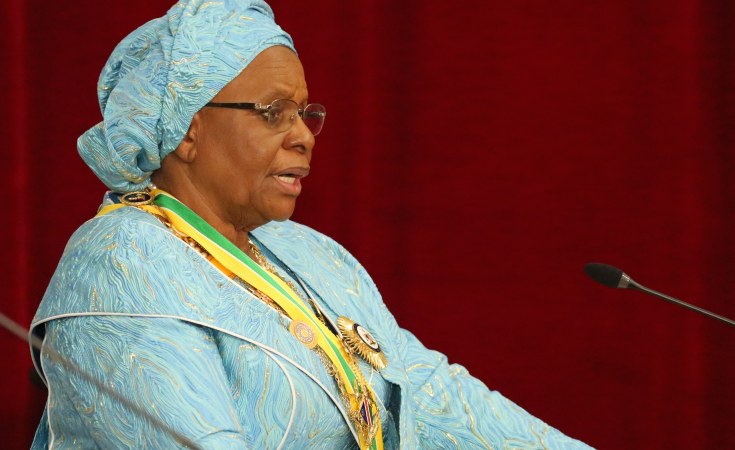
In a high-level address, Her Excellency Dr. Netumbo Nandi-Ndaitwah, President of the Republic of Namibia, spoke to the nation regarding a significant outbreak of foot-and-mouth disease (FMD) in the Karasburg Veterinary District of the //Kharas Region. This outbreak has introduced considerable uncertainty and distress, directly impacting farmers, workers, and businesses across the nation's vital livestock industry, putting numerous livelihoods at risk. President Nandi-Ndaitwah underscored the government's proactive measures to contain the disease and issued a call for every Namibian to actively support these crucial efforts. The President emphasized that the livestock and meat industry serves as a foundational pillar of the Namibian economy, sustaining families and communities through its extensive value chain, from farmers and farmworkers to transporters, processors, and exporters. Protecting this essential value chain is presented as a collective national responsibility.
The immediate objective is unequivocally clear: to contain the outbreak, prevent its further spread, and safeguard unaffected herds, thereby enabling the swift and safe resumption of normal production and trade. The FMD outbreak was officially confirmed on September 23, 2026, following laboratory testing of samples collected during routine veterinary surveillance. Namibia possesses prior experience in responding to foot-and-mouth disease outbreaks, particularly in the zone north of the Veterinary Cordon Fence. The President stressed the importance of leveraging this experience to ensure the current response effectively meets the demands of this specific outbreak. Despite her and the Minister of Agriculture, Fisheries, Water and Land Reform's attendance at the United Nations General Assembly in New York when the disease was detected, Namibia's robust response mechanisms were activated without delay. The President extended gratitude to the Acting Minister, Dr. Charles Mubita, the Ministry's leadership, veterinary officials, and all personnel for their prompt actions and continued dedication under challenging circumstances.
As confirmed cases escalated, President Nandi-Ndaitwah directed the Joint Cabinet Committee to convene urgently on October 3, 2026. The full Cabinet subsequently met the following day to comprehensively assess the situation and determine the necessary interventions under the Animal Health Act. As of October 5, 2026, surveillance teams had meticulously inspected 29,313 animals across 68 farms, identifying 127 confirmed positive cases on 15 farms. To bolster the response, twenty surveillance teams have been constituted, and ten roadblocks have been strategically established across the //Kharas Region. Cabinet has directed the immediate implementation of pertinent provisions of the Animal Health Act and a significant strengthening of disease-control and biosecurity measures. Responsible institutions are mandated to act with urgency and ensure coordinated efforts to contain the outbreak effectively. The Critical Containment Response Plan, approved by Cabinet on October 4, 2026, includes establishing a containment buffer zone within the Karasburg Veterinary District to prevent the disease from spreading to unaffected regions. Furthermore, the plan provides for essential repairs to the Namibia-Botswana border fence and the erection of new veterinary cordon fencing in high-risk areas along the border with South Africa, aimed at strengthening animal movement control.
President Nandi-Ndaitwah acknowledged the immense strain that movement restrictions and disruptions to trade are imposing on farmers, workers, and businesses. She recognized that for many families, this uncertainty directly impacts their future income and ability to sustain their livelihoods, assuring that these concerns remain central to the government's response. The President affirmed that the measures being implemented, though challenging, are absolutely necessary to prevent wider losses and safeguard the industry's eventual recovery. The government is also acutely aware of the financial pressures on farmers and businesses servicing loans with financial institutions. It will continue to assess these effects and engage relevant stakeholders to ensure that this animal health crisis does not lead to prolonged financial distress for otherwise viable farmers and businesses. Through the Directorate of Veterinary Services, dedicated teams are diligently conducting surveillance, testing, farm inspections, and livestock movement tracing. Their findings will critically inform future decisions, allowing for the adjustment of restrictions where conditions permit, and the maintenance or strengthening of controls where risks persist. The President reiterated that Veterinary Public Notices issued by the Directorate of Veterinary Services remain the official and authoritative source of animal health guidance, urging all stakeholders to fully comply with these notices and cooperate with implementing officials.
The Namibian government is also actively engaging the European Union concerning consignments of Namibian meat products produced before September 23, 2026. Under existing European Union legislation, consignments certified by Namibia's Veterinary Competent Authority prior to the confirmation of the outbreak are likely to be permitted entry. Similar engagements are underway with other trading partners to minimize disruptions to trade while the disease situation is being addressed. The government is committed to providing verified information to its partners and upholding international veterinary requirements, stressing that maintaining confidence in Namibia's veterinary systems is crucial for protecting the nation's reputation as a reliable producer and exporter. Beyond the immediate crisis, Namibia will continue to pursue opportunities to diversify and strengthen its export markets.
The President concluded by emphasizing that this response demands a collective effort from all citizens. While the government is committed to leading and coordinating the response, its ultimate success is contingent upon the cooperation of everyone involved across the livestock and meat value chain. Every livestock owner, trader, transporter, auctioneer, and industry stakeholder has a critical role to play. Livestock owners are urged to remain vigilant, cooperate fully with surveillance teams, and ensure that animal identification and movement records are accurate, complete, and up to date. Traders, transporters, and auctioneers must strictly observe movement controls and comply with all veterinary instructions. The President underscored that collective discipline will be instrumental in protecting unaffected herds and the livelihoods that depend on them. The Namibia Livestock Identification and Traceability System (NLITS) is central to this effort, enabling officials to track livestock movements, identify potentially exposed animals, and make timely disease-control decisions. Therefore, maintaining reliable records constitutes a practical and vital contribution to the protection of the entire industry. The President assured that Namibia's veterinary services and laboratories will be provided with the necessary resources to respond effectively. The government will continue to strengthen surveillance, laboratory capacity, traceability, and long-term biosecurity measures to enhance preparedness for potential future outbreaks. Gratitude was extended to stakeholders and partners who have already offered support. Businesses supplying livestock products, critical materials, and emergency supplies were called upon to act responsibly, ensuring that the outbreak does not become an opportunity to exploit distress through inflated prices. The Ministries of Agriculture, Fisheries, Water and Land Reform, supported by the Ministry of Information and Communication Technology, will continue to provide regular updates. The media, industry stakeholders, and the public are asked to rely on verified information and avoid circulating unconfirmed reports that could cause confusion or undermine the response. President Nandi-Ndaitwah ended her address by urging all Namibians to face this difficult period with resolve and a shared sense of responsibility, highlighting that every measure taken and every act of cooperation must serve the common purpose of containing the disease and protecting livelihoods. The government pledges to continue leading this effort, calling on all Namibians to do their part, support affected communities, and work together to safeguard this essential industry.