MTN Ghana's Mobile Money Lawsuit Is Bigger Than MTN. It Raises Questions About Who Really Owns Africa's Biggest Innovations.
MTN Ghana's mobile money lawsuit is raising bigger questions about intellectual property, innovation ownership and trust within Africa's rapidly growing fintech ecosystem.

For nearly two decades, millions of Ghanaians have tapped their phones to send money, pay bills and run businesses without ever stopping to ask a simple question: who owns the technology behind it all?
Mobile money has become so embedded in everyday life across Africa that we rarely think about what happens before a transaction is completed. We celebrate the platforms that scale, the telecom giants that expand, and the billions of dollars processed every year. We celebrate the products. We rarely pay attention to the people or companies that may have helped build them.
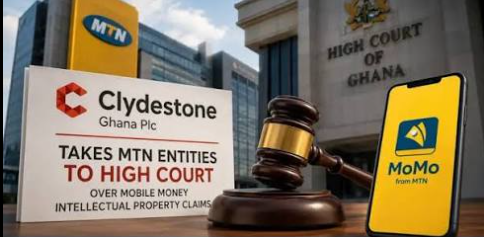
That is why the lawsuit filed by Ghanaian technology company Clydestone Ghana Plc against MTN Ghana, MTN Group and MobileMoney Fintech Limited feels bigger than a corporate dispute over intellectual property.
At first glance, it is easy to see this as yet another legal battle between two companies. But underneath the headlines lies a much bigger conversation about innovation, ownership and whether African technology companies are doing enough to protect and reward the ideas that built some of the continent's biggest success stories.
If Clydestone's allegations are proven in court, this case may force Africa's tech ecosystem to confront uncomfortable questions it has quietly avoided for years.
Mobile Money Is No Longer Just MTN's Success Story

For most Ghanaians, MTN Mobile Money is more than a fintech product. It is infrastructure.
Small businesses depend on it. Market women rely on it. Students receive money through it. Entrepreneurs build businesses around it. Entire communities have become financially connected because of mobile money's existence.
That is precisely why this lawsuit matters.
When a product becomes this deeply integrated into a country's economic fabric, any legal dispute surrounding its ownership becomes more than a corporate issue. It becomes a public interest conversation.
Millions of people may never feel the direct consequences of the lawsuit in their day-to-day transactions, but the implications could shape how Africa builds and protects future innovations.
The headline most people are seeing is that MTN has been sued.
The bigger story is that one of Africa's most successful fintech products is now forcing us to ask whether African innovators are adequately recognised and compensated when their ideas evolve into billion-dollar businesses.
Innovation is rarely a one-person or one-company story. Behind every successful product are developers, software architects, consultants and smaller companies whose contributions often disappear once the product reaches scale.
The mobile money ecosystem may be celebrating its success, but success also comes with questions about who deserves credit when that success is achieved.
This Lawsuit Is Really About Intellectual Property in Africa
Africa's startup ecosystem loves talking about funding rounds, unicorn valuations and market expansion. Intellectual property rarely receives the same level of attention.
Perhaps that is because intellectual property is difficult to celebrate until it becomes the subject of a lawsuit.
For years, Africa's technology ecosystem has been focused on building products and attracting investment. Ownership conversations have largely remained in the background. Yet intellectual property is arguably one of the most valuable assets any technology company possesses.
Software systems, proprietary technologies and operational frameworks are increasingly becoming the foundation upon which billion-dollar businesses are built.
If smaller technology companies cannot confidently collaborate with larger organisations knowing their intellectual property will be protected, innovation itself becomes riskier.

The implications extend beyond Ghana and MTN.
Every African startup founder building payment infrastructure, artificial intelligence products or financial technology solutions should be paying attention to this case. Whether Clydestone ultimately wins or loses may matter less than the conversations this lawsuit forces the industry to have.
Who owns ideas developed during collaborations? What protections exist for smaller technology companies? How should intellectual property agreements evolve as businesses scale over decades?
African innovation cannot merely be about building products. It must also be about building institutions and legal frameworks capable of protecting those products and the people behind them.
The Bigger Risk Isn't The Lawsuit. It's Losing Trust in Innovation.

Perhaps the most overlooked implication of this case is trust.
Technology ecosystems thrive when founders, developers, and businesses trust that collaboration will be fairly rewarded.
If smaller companies begin to believe that partnering with larger corporations creates more risks than opportunities, innovation inevitably suffers. Companies become less willing to share ideas, collaborate on infrastructure, or contribute proprietary technologies to ambitious projects.
The continent's technology sector cannot afford that outcome.
There is also another layer many people are overlooking. Mobile money's success story has often been presented as proof that Africa can build world-class financial infrastructure. That narrative remains true. However, world-class innovation must also be accompanied by world-class governance and accountability.

This lawsuit is not merely asking whether MTN used technology without authorisation. It is indirectly asking whether Africa's fintech industry is mature enough to properly recognise ownership, negotiate partnerships and resolve disputes involving innovations worth billions of dollars.
For Ghanaians, this case is not about choosing sides between MTN and Clydestone. It is about understanding that innovation is not complete when a product succeeds commercially. Innovation is complete when the ecosystem that produced it is fair, transparent, and sustainable for everyone involved.
The courts will ultimately decide the legal merits of Clydestone's claims. Until then, MTN remains innocent of any wrongdoing under the law.
But perhaps the most important thing this lawsuit leaves behind is a question that extends far beyond Ghana's borders.
Africa has spent decades asking whether it can build world-class technology.
Perhaps it is now time to ask whether it knows how to protect the people and ideas that make that technology possible.