Morocco Stuns Netherlands in World Cup Thriller: Penalties Decide Last-16 Berth Amidst Celebrations and Blame Game
Morocco achieved a historic upset in the FIFA World Cup Round of 32, defeating the Netherlands 3-2 on penalties after a thrilling 1-1 draw. The dramatic victory, sealed by Ismael Saibari, sparked both widespread celebrations and criticism of Dutch coach Ronald Koeman's tactics, while leading to unrest in The Hague.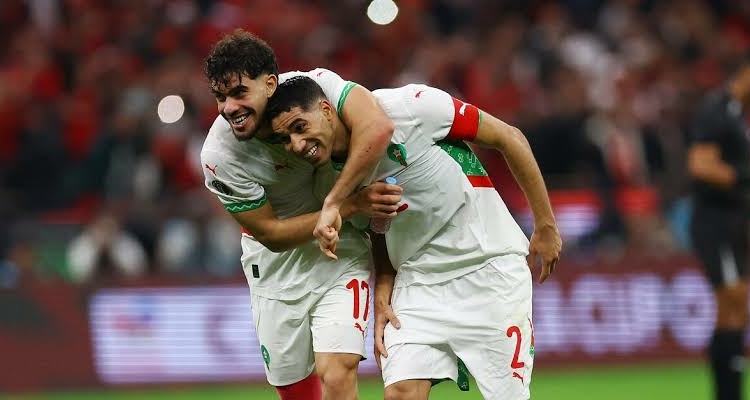
Morocco delivered one of the most significant upsets of the FIFA World Cup Round of 32, triumphing over the Netherlands 3-2 on penalties following a dramatic 1-1 draw after extra time. This victory secured Morocco a coveted spot in the last 16 and reinforced their growing reputation as a formidable force in the tournament. The match itself was a pulsating encounter that saw the North African side display remarkable resilience, recovering from a late deficit before holding their nerve in the crucial shootout to eliminate the Dutch.
The opening half was a tactical and cagey affair, with both teams prioritizing discipline and defense, resulting in few clear-cut chances and a goalless score at the interval. The deadlock was finally broken in the 72nd minute when Cody Gakpo put the Netherlands ahead with a clinical finish, seemingly setting them on course for victory. However, Morocco refused to surrender. Deep into stoppage time, Ilias Diop struck a dramatic equalizer, sparking wild celebrations and forcing the match into an additional 30 minutes of extra time. With neither side able to find a decisive goal during extra time, the tie proceeded to a tense penalty shootout.
The penalty shootout proved to be historic, entering the World Cup record books for producing four penalties that missed the target—the most ever in a FIFA World Cup shootout. Despite the unusual number of off-target spot-kicks from both sides, Morocco maintained their composure. Although Neil El Aynaoui missed Morocco's first penalty and Achraf Hakimi later hit the post, the Netherlands faltered at crucial moments, with Justin Kluivert, Quinten Timber, and Crysencio Summerville all failing to convert. Ismael Saibari, who plays for Dutch club PSV Eindhoven, calmly converted the decisive kick to seal Morocco’s memorable 3-2 shootout victory and their advancement to face co-hosts Canada in the last 16.
The Netherlands' early exit from the tournament, particularly their tactical approach, drew scathing criticism from former player Zlatan Ibrahimovic. Speaking on FOX Sports, Ibrahimovic, who played under Ronald Koeman at Ajax, accused the Dutch head coach of abandoning the team’s traditional footballing identity. He stated, “I think this loss is on Koeman because I didn’t recognise this Dutch team. He lost with an identity that is not the Dutch identity and that makes me angry. Lose with your identity. That’s who you are.” Ibrahimovic highlighted the grim statistics for the Oranje, noting they ended the match with less than 30 percent possession and managed only two shots on target across 120 minutes—numbers he deemed uncharacteristic of Dutch football's attacking philosophy and total football heritage. Koeman’s defensive setup, which appeared to prioritize containment over creativity, ultimately backfired, intensifying scrutiny on his future as head coach.
Morocco’s dramatic victory sparked widespread celebrations, which unfortunately escalated into unrest in The Hague. The Schilderswijk district, known for its large Moroccan-Dutch community, became the focal point of jubilant celebrations. AFP reporters observed supporters adorned in Moroccan flags singing, dancing, cheering, and setting off fireworks, with car horns blaring. Hundreds gathered at a busy junction, celebrating with motorists, some climbing onto vehicles or leaning out of car windows. However, after approximately an hour, tensions rose, and riot police intervened to disperse the crowds using water cannon and baton charges. Around a dozen individuals were arrested, with several pinned to the ground and handcuffed. Despite the confrontations, no significant property damage was reported, and authorities eventually brought the situation under control. Many celebrants declined to speak to journalists or wore face coverings, seemingly fearing identification. The match carried added significance due to the close historical ties between the Netherlands and Morocco and the substantial Moroccan diaspora, making Morocco’s victory a powerful expression of national pride and cultural identity for many. Similar celebrations, though less confrontational, were reported in other European cities with large Moroccan communities.