More Than Faster Payments: Rwanda's eKash Is Another Lesson in Building Digital Infrastructure
Rwanda's launch of eKash is more than a payments story. The national instant payment system reflects the country's broader strategy of building digital infrastructure, reducing financial friction, and strengthening one of Africa's fastest-growing digital economies.
The technologies that change economies are rarely the ones people talk about the most. They are usually the invisible ones. Roads are only noticed when they are bad. Electricity only becomes a conversation when it goes out. Payment systems are much the same.
On July 14, 2026, Rwanda officially launched eKash as its national instant payment system, allowing people to send money instantly between bank accounts and mobile wallets for a flat fee of just RWF 20 (about $0.01), regardless of the amount being transferred.
Users can send up to RWF 10 million (approximately $6,800) in a single transaction without downloading another app or creating a new account.
At first glance, it sounds like another fintech story. It isn't. The bigger story is that Rwanda has spent years quietly building something much larger than digital products. It has been building digital infrastructure. eKash is simply the latest piece of that puzzle.
Perhaps that's why Rwanda continues to punch above its weight in conversations about Africa's digital economy. The country understands that innovation is not only about building startups but also about building the systems that make it easier for millions of people to live, work, transact, and build businesses.
It is also about building systems that make it easier for millions of people to live, work, transact, and build businesses.
Rwanda Has Been Building More Than a Digital Economy

Rwanda's economic story is often told through its growth figures. The country remains one of Africa's fastest-growing economies. Rwanda's real GDP grew 9.4% in 2025, up from 8.9% in 2024, ranking it among Sub-Saharan Africa's fastest-growing economies while positioning itself as one of the continent's most ambitious digital societies.
That transformation did not happen accidentally. Long before eKash, Rwanda was investing in digital public infrastructure. Government services became accessible through Irembo, its e-government platform.
Digital health initiatives expanded access to healthcare services. Drone technology was introduced to deliver blood and medical supplies to rural communities.
Smart city initiatives, digital policing systems, and cashless payment strategies have steadily become part of the country's long-term development plans.
Vision 2050, Rwanda's national development blueprint, places digital transformation at the centre of its economic ambitions. Seen from that perspective, eKash feels less like a standalone announcement and more like another chapter in a much longer story.
Payment systems are economic roads. Businesses travel on them. Consumers depend on them. Entire industries become more efficient because of them, and the best ones are often invisible.
Why eKash Is Bigger Than Moving Money
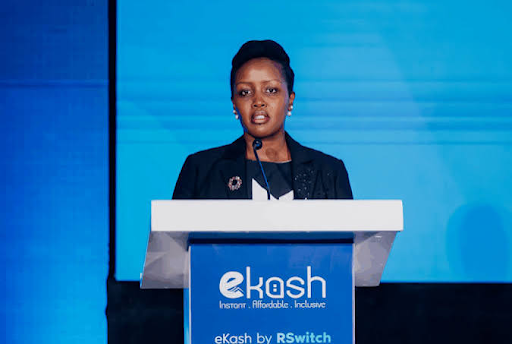
Much of the conversation around eKash has focused on convenience and affordability, both of which deserve attention.
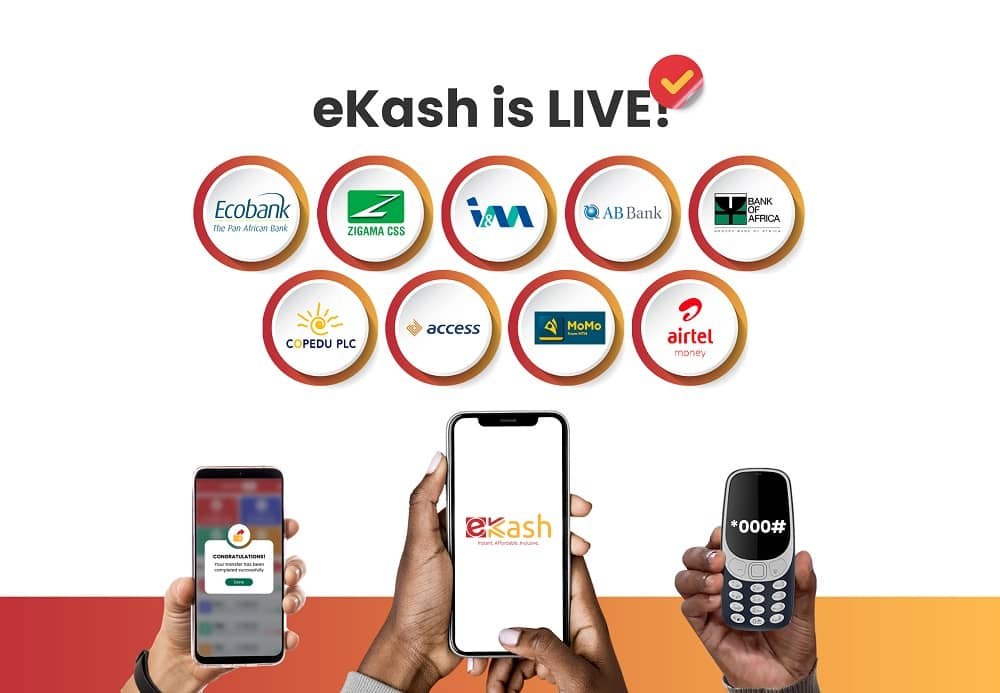
Transfers that once cost consumers as much as RWF 5,000 now cost just RWF 20. Within its first days live, eKash had already processed over 47 million transactions worth more than RWF 203 billion across 21 million registered users and 22 connected institutions.
Banks and mobile money providers can communicate seamlessly through a single interoperable network. Customers can continue using the banking applications, USSD codes, and mobile wallets they already know.
That matters more than it initially appears. For small businesses, lower transaction costs mean higher margins. For students, freelancers, market traders, and consumers, they mean cheaper and easier access to digital payments. Transaction fees that appear insignificant on paper can become meaningful barriers when repeatedly paid across millions of small-value transactions every day.
Reducing that friction is, in itself, economic policy. Globally, countries are increasingly recognising this reality. India's Unified Payments Interface (UPI) has transformed the country's digital payment landscape, processing 23.2 billion transactions worth roughly $312 billion in May 2026 alone and accounting for nearly half of all real-time payment volume worldwide.
Brazil's Pix has become one of the world's fastest-growing instant payment systems since its launch in 2020, significantly accelerating digital transactions across the country.
The lesson behind both systems is remarkably similar. The countries increasingly winning digitally are not necessarily the ones producing the most fintech startups. They are the ones building the infrastructure that allows innovation to flourish.

Africa's payment future may ultimately depend less on how many financial applications are created and more on how efficiently money moves through national economies.
The Rest of Africa Should Be Paying Attention

There is another lesson hiding inside Rwanda's latest announcement. African conversations around technology have become increasingly dominated by funding rounds, unicorn valuations, and startup ecosystems. Those conversations matter, but they often overlook something more fundamental.
No startup scales efficiently if moving money remains expensive. No meaningful financial inclusion exists if payment systems remain fragmented. No digital economy becomes truly accessible if consumers must navigate disconnected financial networks.
Infrastructure remains the foundation upon which innovation is built. That is perhaps what eKash quietly represents. Rwanda is not simply asking how people should move money but whether moving money should be difficult in the first place. Increasingly, the answer appears to be no.
The National Bank of Rwanda's decision to mandate interoperable retail payment transactions through eKash is ultimately about something larger than payments themselves. It is about reducing the everyday costs of participating in an economy.
There are lessons here for governments across the continent. Financial inclusion should not end with opening more bank accounts or licensing more fintech companies.
It should extend to building the invisible infrastructure that makes economic participation easier, cheaper, and faster for everyone.
Sometimes, the biggest technology stories are not the loudest ones. They are the quiet decisions that remove barriers millions of people encounter every day.
Rwanda's latest innovation is not simply that money now moves faster. It is that the country continues to treat digital infrastructure as economic infrastructure, and perhaps that is the real story behind eKash.