Middle East on the Brink: US-Israeli War on Iran Sparks African Alarm, Global Chaos
The Middle East is engulfed in its sixth day of high-intensity warfare, with US-Israeli strikes and Iranian retaliation causing widespread destruction and significant casualties. International bodies like the UN, ECOWAS, and AU are urgently calling for a ceasefire amidst fears of a global economic catastrophe and severe disruptions to energy markets and supply chains, particularly impacting Africa.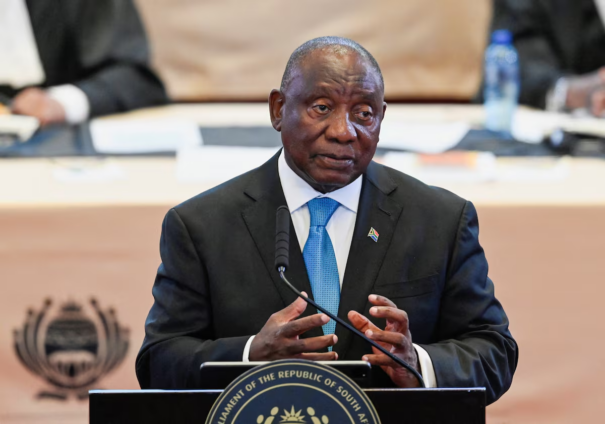
The Middle East has plunged into a state of high-intensity warfare, now in its sixth day, showing no signs of de-escalation. What began as a series of coordinated United States and Israeli aerial strikes on Iran has rapidly escalated into a regional conflagration, impacting global supply chains, energy markets, and international peace. This unprecedented violence has led to significant destruction, a rising civilian death toll, and complex military and diplomatic maneuvers across the region.
Military operations have been extensive and devastating. After six days of US-Israeli strikes, significant destruction has been reported across the Iranian capital, Tehran, with explosions seen and security headquarters targeted. Iran has retaliated fiercely, launching missile and drone attacks towards Israel and several US-allied states in the Gulf, including Saudi Arabia, Kuwait, Qatar, Bahrain, and the UAE. The UAE successfully intercepted six Iranian missiles and 131 drones, though some debris fell within its borders. NATO air defense systems also intercepted an Iranian missile heading towards Turkish airspace, marking the first instance of NATO forces neutralizing an Iranian projectile aimed at a member country. A significant maritime escalation occurred when a United States submarine torpedoed and sank the Iranian warship Iris Dena in international waters off the coast of Sri Lanka. This attack, confirmed by US Defence Secretary Pete Hegseth, tragically resulted in over 80 deaths, with Sri Lankan officials reporting 180 people believed to have been aboard. Iran's Foreign Minister Abbas Araghchi condemned the act as an "atrocity at sea," warning of future regret.
The human cost of the conflict continues to mount. US officials have identified the six American service members killed in a drone attack in Kuwait, marking the first US combat fatalities of the conflict. Iranian state media reported that at least 168 children were killed during the initial joint US-Israeli strikes, while a US-based human rights group stated that over 1,100 civilians have been killed in Iran since the onset of hostilities. In Lebanon, Israeli bombardments have claimed at least 77 lives, including three paramedics, leading Israel to resume strikes on Hezbollah infrastructure in Beirut. Conditions on the ground are increasingly desperate, with families in southern Lebanon enduring gruelling evacuations and Tehran residents fleeing to the countryside or sheltering at home amidst constant bombardment. The death of Iran’s Supreme Leader, Ayatollah Ali Khamenei, in Saturday’s strikes has added a layer of political instability, with Iranian clerics working to choose a successor and Israel issuing stern warnings that any new leader would be an "unequivocal target for elimination."
On the diplomatic front, the United Nations Security Council convened an emergency meeting late Saturday to address the dramatic military escalation, but remained deadlocked over "Operation Epic Fury." UN Secretary-General António Guterres condemned the escalation and urged an immediate cessation of hostilities. While US Ambassador Mike Waltz defended the operation as a lawful effort to dismantle Iran's nuclear and missile infrastructure, Iranian Ambassador Amir Saeid Iravani labeled the strikes "war crimes and a crime against humanity." Russia and other nations also called for an immediate path toward a political settlement. Tehran has also engaged the International Atomic Energy Agency (IAEA), requesting an extraordinary meeting to challenge the justifications for the strikes. Domestically, in the US, a bipartisan resolution aimed at limiting President Trump's ability to wage war in Iran failed in the Senate. Despite this, the White House clarified its strategic goals: to destroy Iran’s ballistic missile program, "annihilate" its naval presence, dismantle terrorist proxies, and prevent it from pursuing a nuclear weapon, explicitly stating that regime change was not a primary objective.
The conflict's repercussions are global, particularly impacting the African continent. South Africa's President Cyril Ramaphosa highlighted that the escalating conflict is already straining supply chains and causing higher energy prices across Africa. The Economic Community of West African States (ECOWAS) and the African Union (AU) issued urgent warnings of a looming global economic catastrophe, demanding an immediate ceasefire. They expressed deep concern over the potential closure of the Strait of Hormuz, which risks disrupting 30 to 40 percent of the world’s oil transit and triggering a surge in energy prices and the cost of living in import-dependent African economies. Diplomatic reactions from African nations have varied, with South Africa condemning the initial strikes while Morocco denounced Iranian missile attacks. The humanitarian toll extends to the African diaspora, with thousands of expatriates in the Gulf states facing harrowing conditions and urgent directives to shelter in place amid intercepted missiles and falling debris.
Travel across the Middle East has been severely disrupted, creating a major consular challenge for nations like the UK. Thousands of British nationals were left stranded, with airspace severely restricted across Saudi Arabia, Iran, Iraq, Qatar, Bahrain, Kuwait, Syria, the UAE, and Israel. A UK government-chartered flight to evacuate citizens from Muscat, Oman, was delayed due to operational issues. The UK Foreign Office advised against all but essential travel to several Gulf states and is deploying the Royal Navy destroyer HMS Dragon to the Mediterranean to bolster defenses around its military base in Akrotiri, Cyprus, which had been hit by an Iranian drone. Beyond the immediate conflict, Iranian drones targeted Amazon data centers in Bahrain and two facilities in the United Arab Emirates, indicating a broader impact on global private sector infrastructure. An explosion near an anchored tanker off the coast of Kuwait also caused a significant oil spill, raising environmental concerns.
As the crisis continues, international bodies, including the AU, ECOWAS, and the UN, are prioritizing restraint, urgent de-escalation, and sustained dialogue, urging all actors to uphold international law. The unified African front underscores a global shift, with emerging economies demanding a return to peace to safeguard their economic survival. The world watches to see if the international community can enforce a ceasefire before the conflict expands further.