Medicine and Materials Science Have a Measurement Problem, Quantum Sensors Might Fix It
MIT researchers have developed a quantum sensing technique that uses entanglement to measure multiple physical properties at once, overcoming a long-standing limitation in medicine and materials science where classical and quantum sensors could only capture one parameter at a time.
Science has always been a game of precision, and right now, that game has a problem.
In medicine and materials science, some of the most important things researchers need to understand are things like the magnetic activity of a cancer cell, the temperature gradient inside a material, the strain on a nanostructure, and they cannot always be measured at the same time with any reliable accuracy.
Classical sensors, the kind that have powered scientific measurement for decades, work well for everyday purposes but they hit hard limits when pushed into the microscopic world.
A thermometer expands or contracts to register temperature. A magnetometer's needle deflects to show magnetic fields.
These are useful but they are fundamentally limited by thermal noise and the constraints of classical physics.
They cannot get close to the kind of resolution that biological research or advanced materials characterization demands.
This is the gap quantum sensors are being designed to fill.
What Makes Quantum Sensors Different
Quantum sensors work at the level of individual quantum states.
Instead of bulk materials responding to stimuli, they use quantum particles like atoms, electrons, photons, that are extraordinarily sensitive to their surroundings.
A single nitrogen-vacancy (NV) center in diamond, for instance, can detect temperature changes smaller than a thousandth of a degree and magnetic fields at the femtotesla scale.
The NV center is a kind of atomic defect in a diamond's crystal lattice, where a carbon atom is replaced by a nitrogen atom and a neighboring site is left empty.
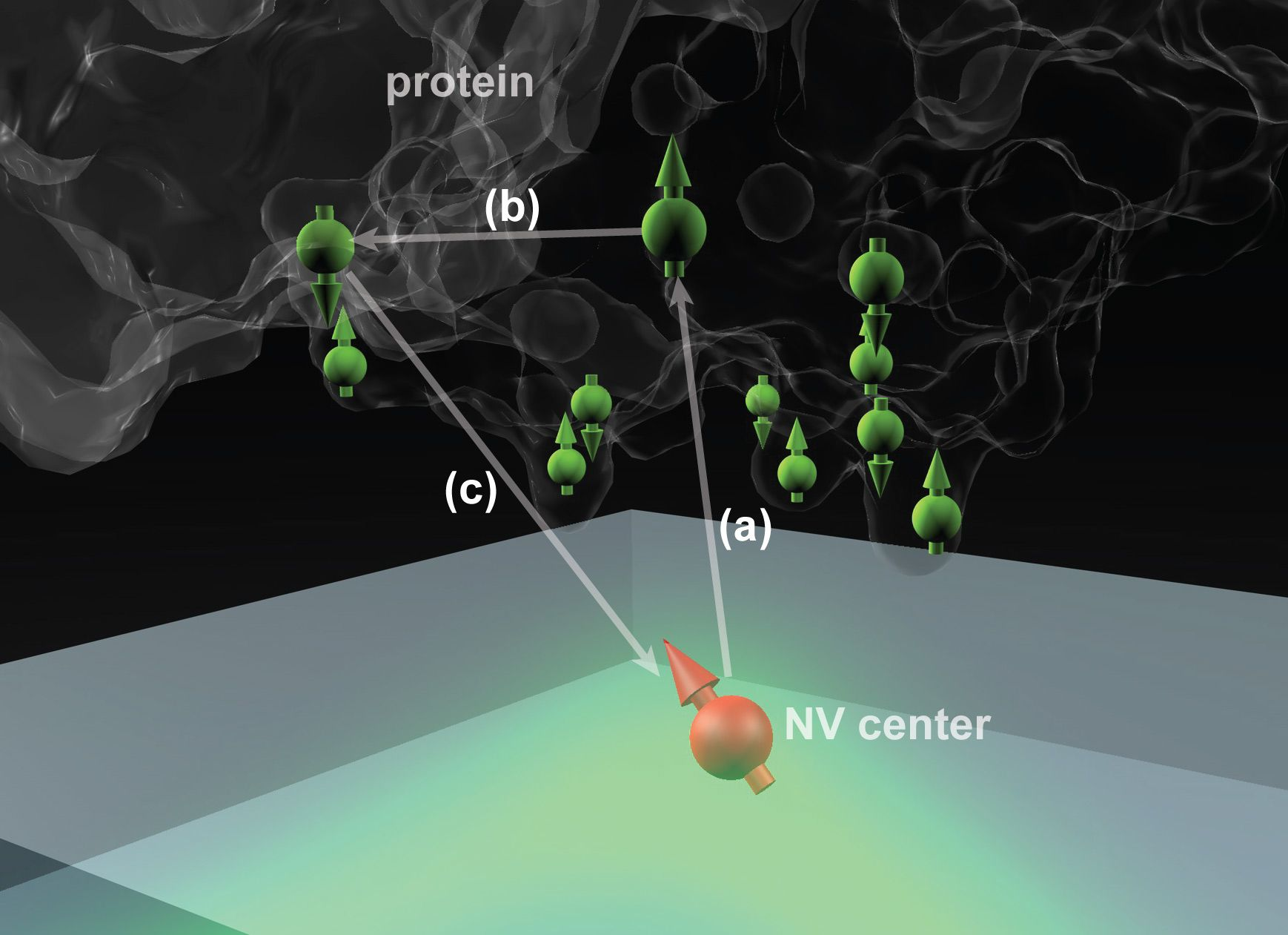
This defect hosts an electronic spin whose behavior is measurable through laser fluorescence and because it is so sensitive to its environment, it becomes a natural sensor for magnetic fields, temperature, electric fields, and more.
This is why NV-center sensors have become one of the most promising platforms in quantum sensing.
They can operate at room temperature, unlike many quantum systems that require extreme cooling, which makes them far more practical for biological settings.
The Single-Quantity Bottleneck
Most solid-state quantum sensors, including NV-center systems, have historically been able to measure only one physical quantity at a time.
It is either magnetic field or temperature, strain or electric field, and not both simultaneously.
When you try to measure two at once, the signals interfere with each other, making the results unreliable.
The workaround has been to measure each quantity one after another in separate experimental runs, but this takes more time, reduces sensitivity and makes the overall measurement more vulnerable to errors, especially in dynamic environments like living cells where conditions shift rapidly.
MIT's Breakthrough: Measuring Multiple Properties at Once
Researchers at the Massachusetts Institute of Technology have now demonstrated a way around this bottleneck.

In a paper published in April 2026, a team led by graduate student Takuya Isogawa and colleagues from MIT's Department of Nuclear Science and Engineering showed that quantum entanglement can be used to measure multiple physical quantities simultaneously in a solid-state sensor.
Entanglement is the quantum property where two particles become correlated into a single quantum state which means what happens to one is instantly reflected in the other.
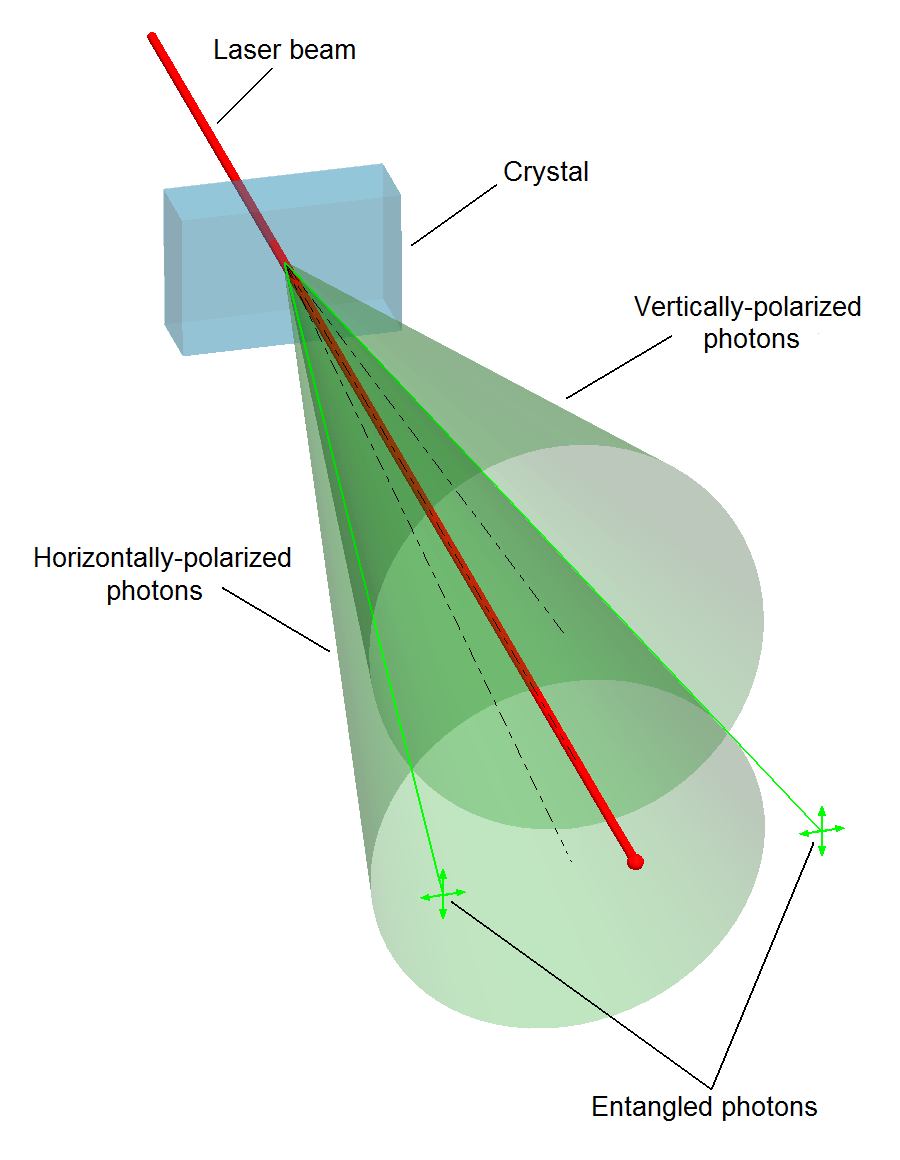
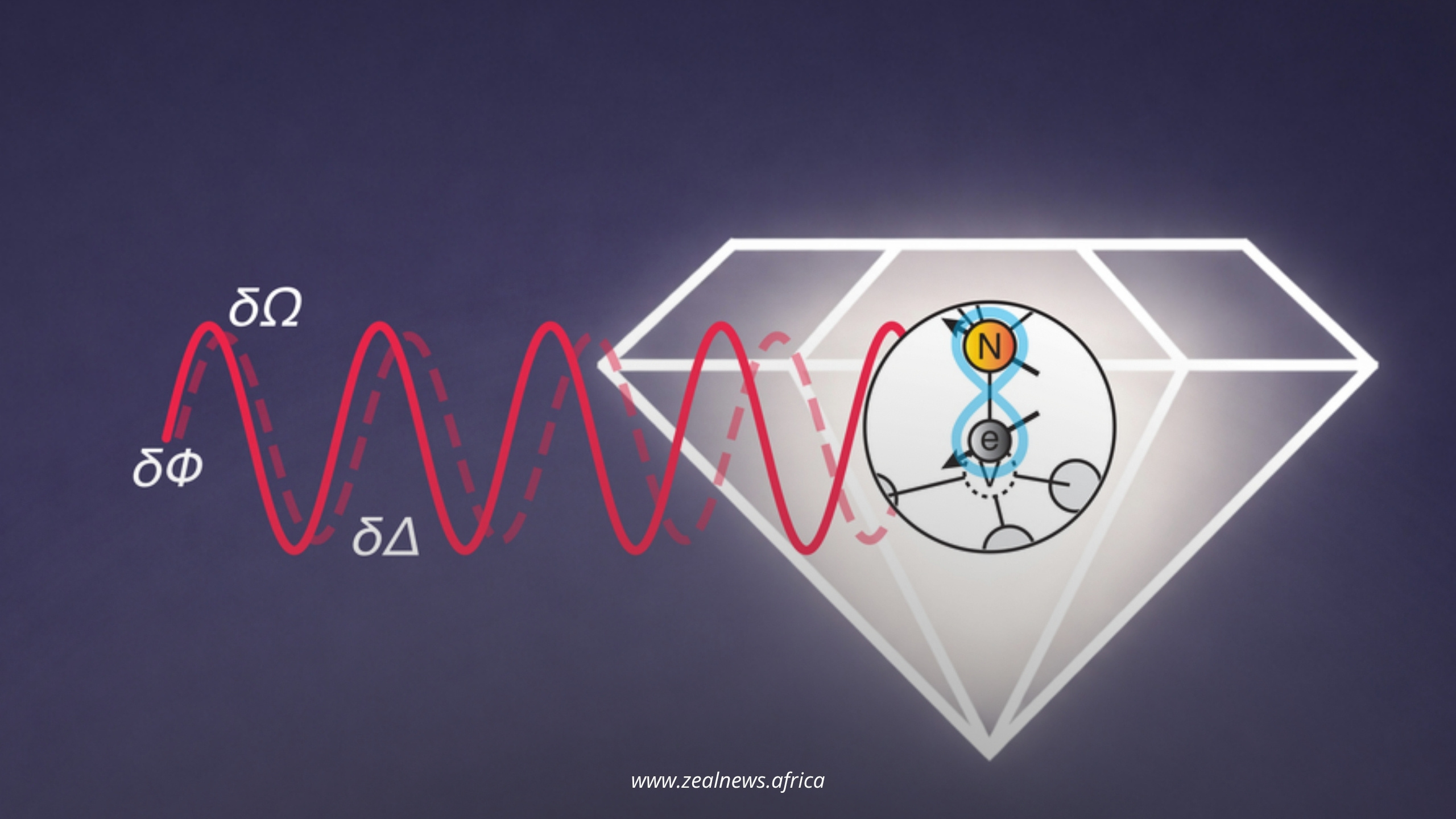
The researchers used a 5-square-millimeter diamond with NV centers, combining the NV center's electronic spin with the spin of the nitrogen atom itself, treating each as a qubit which is the quantum equivalent of a computing bit.
A single qubit gives you one binary outcome.
However, with two entangled qubits, you get four possible outcomes, which means you can extract three independent parameters from a single measurement.
Using a technique called the Bell state measurement, the team simultaneously measured the amplitude, frequency and phase of a microwave magnetic field in one go which is something that had never been achieved in a realistic, room-temperature solid-state sensor before.
They also showed that their approach outperformed both sequential single-parameter measurement and traditional classical sensors.
Why This Matters for Medicine and Materials Science
In biological settings, this capability could be transformative.
Cancer cells exist in microenvironments defined by steep gradients in oxygen concentration, pH and magnetic activity, and conventional sensors frequently cannot resolve the fine spatial or temporal detail needed to capture what is happening.
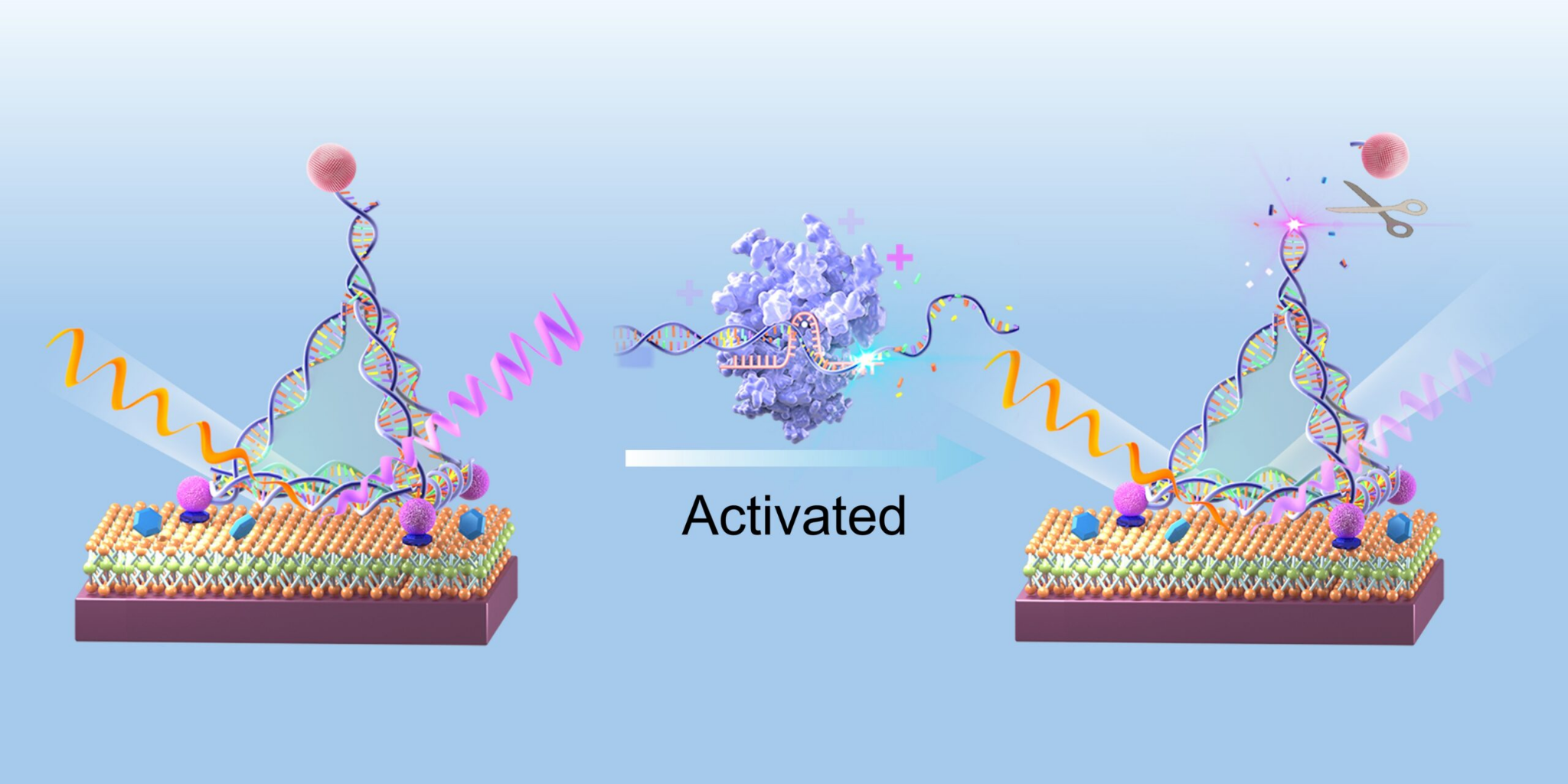
A quantum sensor that simultaneously tracks magnetic field, temperature, and pressure at the nanoscale could change how researchers map the internal activity of cancer cells or monitor metabolic processes in real time.
In materials science, the same advantage applies.
Many materials are not uniform with their properties shifting at different locations, and understanding those shifts requires both high spatial resolution and the ability to measure multiple quantities without losing accuracy.
The MIT team specifically noted that their system has major advantages in such heterogeneous environments, where classical sensors and even sequential quantum measurements fall short.
Co-lead author Guoqing Wang had earlier proposed the room-temperature technique for Bell state measurement that made the experiment possible, and the work was supported by the US National Science Foundation, the National Research Foundation of Korea, and the Research Grants Council of Hong Kong.
The Road Ahead
The MIT team is clear that this is a first step, not a finish line.
In their current experiment, the sensor did not achieve the maximum possible precision for each parameter simultaneously. There is still an accuracy trade-off to be resolved.
Future work will focus on pushing the precision limits of multiparameter estimation and testing the approach on heterogeneous materials where the real-world stakes are highest.
But what has been demonstrated is the principle: entanglement-assisted quantum sensing at room temperature, measuring multiple quantities in a single shot, in a sensor system already widely used in labs around the world.
That is not a small thing.
In fields where measurement constraints have been a ceiling on what science can discover, this is the kind of breakthrough that lowers that ceiling and opens the room above it.