Marry Mubaiwa Unveils Grueling Truth of Chiwenga Marriage, Denies Murder Attempt as Long-Running Case Takes New Turn
Mubaiwa’s experience is not isolated in Zimbabwe, which has a history of a "remand graveyard" where cases, including those of former ministers, languish for years without trial. Examples include Prisca Mupfumira and Ignatius Chombo, whose cases were also removed from remand due to prosecutorial delays. This institutional problem often sees arrests first, followed by indefinite investigations and repeated postponements, where the accusation itself acts as a form of social conviction. While Mubaiwa has immediate relief from indefinite remand, pursuing litigation for malicious prosecution would be complex, requiring proof of malice and favorable termination, which is difficult given her status is not an acquittal. She might consider seeking constitutional relief for violation of her right to a speedy trial, potentially a permanent stay of prosecution. Strategically, preserving records and awaiting the State’s next move might be prudent. The overarching injustice is the lack of resolution after seven years, leaving both Mubaiwa and Chiwenga without a definitive judgment, and the public without knowing the truth of the allegations. The State's prolonged inaction has exhausted all involved, demonstrating a profound failure of the justice system to deliver timely verdicts.</div>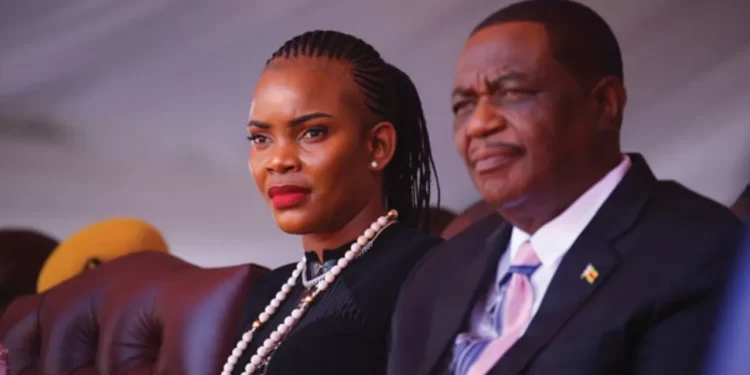
Marry Mubaiwa, former wife of Zimbabwe's Vice-President Constantino Chiwenga, was removed from remand on Tuesday, October 27, 2026, after enduring seven years under an attempted murder charge. Her release from remand follows a protracted legal battle that began with her arrest in late 2019. Mubaiwa has now publicly shared her side of the story regarding her marriage to Chiwenga and the subsequent events, making serious allegations against him while denying the charges.
In her interview with journalist Simba Chikanza, Mubaiwa alleged that Chiwenga regularly used pethidine, a restricted pain medication, and arranged for a military nurse to administer injections to her for years. She claimed this practice severely impacted her physical and mental health, even contributing to the amputation of her hand and foot. Mubaiwa stated that she only received a break from these injections during her pregnancies. She accused Chiwenga of destroying her health and mental well-being, despite her care for him. These grave allegations, however, have not been independently verified.
Mubaiwa also spoke about the painful breakdown of her marriage and her children. The couple married customarily in 2011 and had three children, in addition to Mubaiwa's two children from a prior marriage. She expressed anguish over not seeing or speaking to her children with Chiwenga for seven years, stating her desire to reunite with them and reclaim her property, including her house and cars. She emphasized her financial independence and established life before meeting Chiwenga, asserting that she no longer loved him.
Regarding the attempted murder allegations, Mubaiwa staunchly denied attempting to kill Chiwenga by disconnecting his medical equipment at a South African facility in 2019. She maintained, “Wherever he is, Chiwenga knows I never tried to kill him,” and criticized the prolonged duration of the case, suggesting Chiwenga should be held accountable for his accusation. Her removal from remand, while a significant development, does not equate to an acquittal. It signifies the magistrate's refusal to keep her under remand given the State's repeated requests for postponements.
The legal outcome has been described as peculiarly unsatisfactory, as seven years have passed without a judgment on whether the accusation was proved or disproved. The State's inability to conclude the trial within this timeframe highlights a systemic failure. The historical context reveals Chiwenga's severe illness in 2019, his public emaciation, and subsequent treatment in China for idiopathic oesophageal stricture. Reports of marital conflict and suspicion emerged around this period, culminating in divorce, property disputes, and several criminal cases against Mubaiwa. While serious illness and bitter separation don't prove guilt or innocence, they underscore the necessity of a proper trial.
The prosecution had alleged that Mubaiwa removed Chiwenga’s intravenous line and central venous catheter in the South African hospital, causing bleeding and attempting to lead him from the ward. Security officers reportedly found Chiwenga near the ward door without tubes and saw blood. Chiwenga's doctor, John Mangwiro, also claimed Mubaiwa pulled out a line. However, the defense, led by Beatrice Mtetwa, challenged this evidence, questioning the absence of the alleged attempted murder in contemporaneous hospital statements, inconsistencies in witness accounts, and the lack of forensic evidence. Mtetwa argued the accusation was an afterthought following the relationship's collapse, a suggestion disputed by witnesses. The trial reached an advanced stage, with Chiwenga expected to testify, but collapsed after the presiding magistrate was elevated, requiring the trial to restart and witnesses to be relocated.
The court's refusal to grant further remand to the State, rather than ordering it to proceed, effectively stopped the indefinite delays. The magistrate cited Mubaiwa’s mental, physical, and financial prejudice, emphasizing an accused person's constitutional right to a fair trial within a reasonable time. The State had nearly seven years to present its case, and the continued explanation of “still engaging witnesses” became untenable. It is crucial to note that removal from remand is not an acquittal; it ends routine court appearances but leaves the charge open for potential revival by summons, subject to fair-trial objections.
Mubaiwa’s experience is not isolated in Zimbabwe, which has a history of a