Lungu Family Triumphs: SA Court Orders Private Burial, Ending Zambia's State Funeral Bid
The South African Supreme Court of Appeal has ruled against the Zambian government's bid to repatriate former President Edgar Chagwa Lungu's remains, upholding the family's right to bury him in South Africa. This landmark decision prioritizes family autonomy and the deceased's expressed wishes over national customs, marking the end of a contentious legal battle.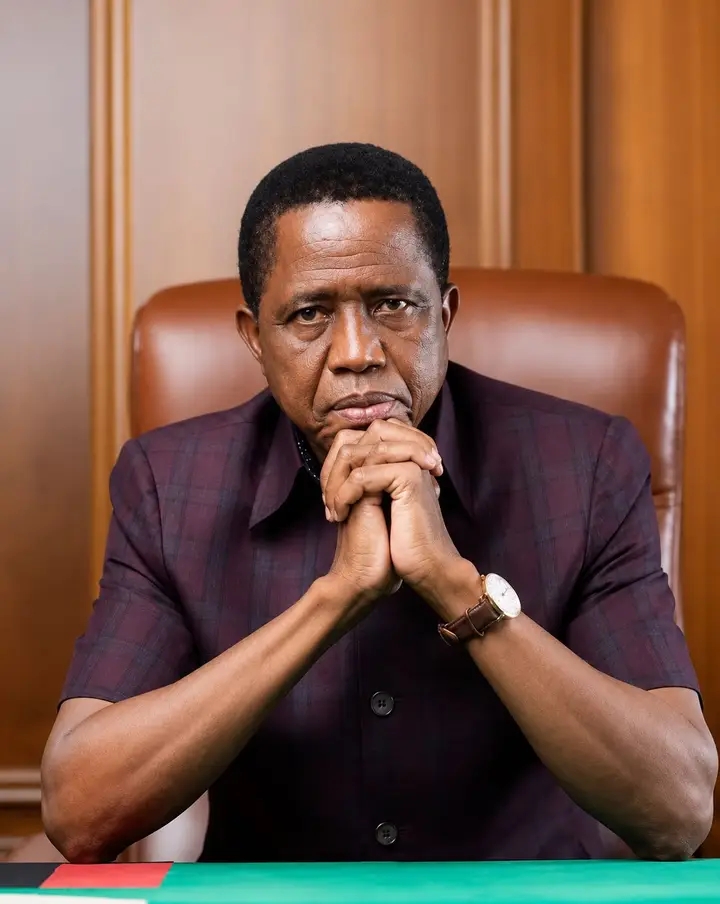
A landmark ruling by the South African Supreme Court of Appeal (SCA) has overturned a previous High Court decision, granting the family of former Zambian President Dr. Edgar Chagwa Lungu the right to determine his final resting place, which will be in South Africa. The judgment, delivered by Judge of Appeal R M Keightley, brings to an end a months-long legal and diplomatic dispute concerning the burial of Zambia’s Sixth Republican President, who passed away on June 5, 2025, after a diagnosis of terminal esophageal cancer.
The SCA's majority judgment unequivocally stated that the Zambian government failed to establish any legal right—whether under common law, contract, custom, or statute—to override the wishes of the late President's family regarding his burial arrangements. The court emphasized that decisions surrounding burial fall within the fundamental principles of human dignity, family autonomy, and privacy, especially when the dispute is between a family and a state seeking to exert public power over a deceased person's remains. This decision notably rejected the Zambian government's reliance on the Benefits of Former Presidents Act, noting that President Lungu's benefits had been withdrawn prior to his death and that the Act primarily provides for reimbursement of funeral expenses, not control over burial decisions.
Crucially, the court gave significant weight to evidence presented by former First Lady Esther Lungu and other family members, indicating that the late President had repeatedly expressed a desire for President Hakainde Hichilema and the Zambian government to play no role in his funeral or burial. Lungu reportedly felt mistreated by the government after leaving office, citing incidents such as the withdrawal of his presidential benefits, the closure of his office, restrictions on travel, and even being removed from a flight to South Korea. The court also noted that he was denied permission to travel to South Africa for medical treatment in 2023, eventually traveling in January 2025 where his advanced and inoperable cancer was diagnosed.
Furthermore, the SCA dismissed the Zambian government's argument that an agreement existed with the family for a state funeral and burial in Lusaka. The court found that the documents presented were merely proposals exchanged during ongoing discussions and did not constitute a binding contract. The government also failed to provide independent expert evidence to prove that Zambian law, custom, or protocol granted it authority over the burial of a former President, a requirement the court deemed necessary for foreign law to be proven as fact.
In response to the judgment, Zambian Attorney General Mulilo D. Kabesha, SC, issued a press statement on June 23, 2026, acknowledging the decision. While expressing disagreement with the ruling, the Attorney General confirmed that the government would not pursue further legal action or appeal to the Constitutional Court of South Africa. Kabesha stated that the matter would now be treated as a private affair for the Lungu family to proceed with their desired burial in South Africa. The government's initial position, he explained, was guided by established national customs and precedents for presidential burials, citing the internment of former Presidents Levy Mwanawasa, Frederick Chiluba, Michael Sata, Kenneth Kaunda, and Rupiah Banda at Embassy Park with full military honours, often overriding family wishes in the national interest.
The financial implications of the judgment are substantial for the Zambian government. The appeal was upheld with costs, including those for two counsel, transforming what might have been a routine state litigation expense into a "significantly heavier financial burden." This costs order was interpreted as a "quiet rebuke" and a signal of judicial disapproval of how the case was built and pursued, emphasizing that even in complex, high-stakes litigation involving diplomatic sensitivities, ordinary civil litigation principles apply: lose the case, carry the financial consequences, with "no special exemption and no diplomatic discount." Justice Norman delivered a dissenting judgment, advocating for each side to bear its own costs, but the majority decision stands as the binding order.
From the family's perspective, spokesperson Makebi Zulu hailed the judgment as a "significant vindication of the rule of law, constitutionalism, and the fundamental principles of human dignity, family autonomy, and respect for the expressed wishes of the deceased." Zulu called upon all parties to respect the court's decision and allow the family the necessary space and peace during their period of grief.
Beyond the legal battle, the situation has sparked broader reflection on national identity and dignity. Many find it difficult to reconcile the fact that a former Head of State will be laid to rest on foreign soil, believing that death should transcend political differences and that a presidency belongs to the Republic. History, it is noted, will record that Zambia’s Sixth President was buried outside his country due to disputes unresolved in life. Ironically, this burial takes place in a country currently grappling with xenophobic attacks, a context described as "profoundly undignified and embarrassing." Anti-immigration activist Phakel’umthakathi even commented on the situation, remarking, "The family will then demand permanent citizenship because their loved one is buried here. Even when they are dead, they don’t want to leave our country.” This sentiment underscores the complex layers of emotion and national interest intertwined with the private grief of a family. Despite the profound disagreements, the Zambian government extended its condolences to the Lungu family and encouraged all Zambians to remember President Lungu's contribution with respect, recognizing his secure place in the nation's history, having served from 2015 to 2021.