Long Island's Haunting Past: The Peter Weinberger Kidnapping and Murder Case Revisited
The infamous 1956 kidnapping and murder of infant Peter Weinberger by Angelo La Marca shook suburban Long Island and led to federal law changes. Decades later, La Marca's son, Vincent, reflects on the lifelong burden of his father's crime and its profound impact on his own life. This detailed account covers the investigation, La Marca's confession, and the enduring legacy of a case that shattered a community's sense of security.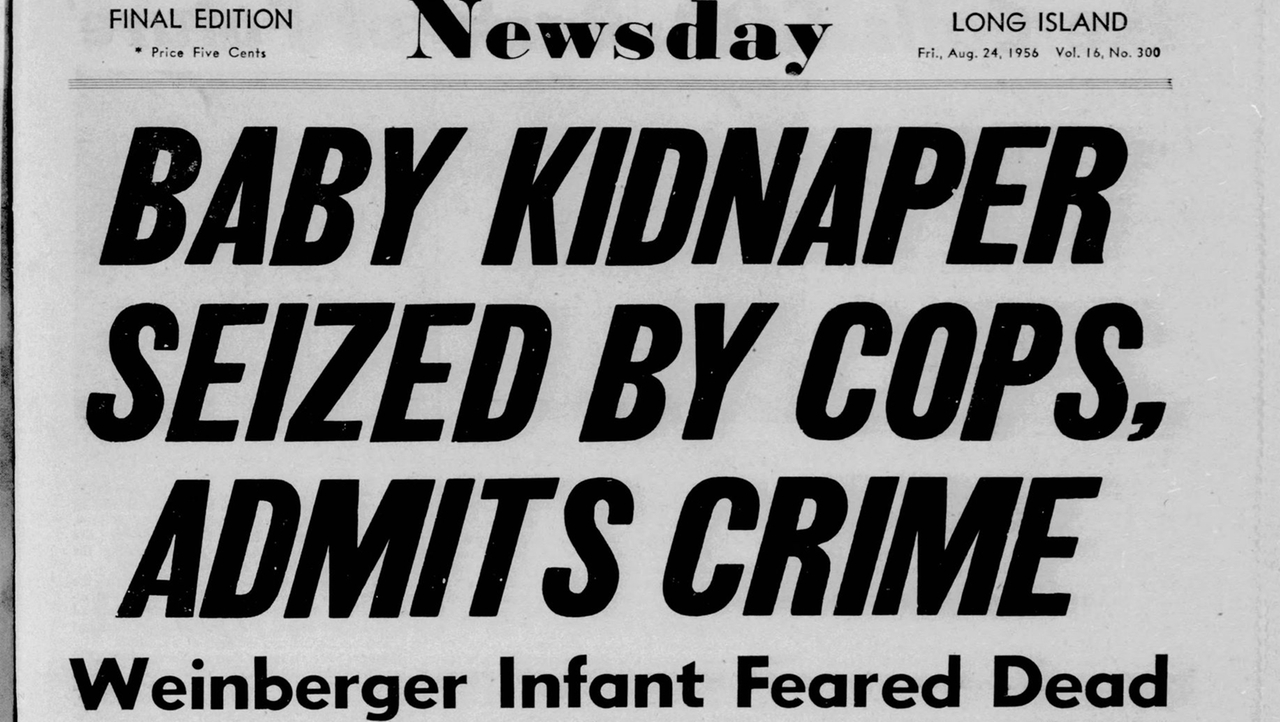
On the evening of August 23, 1956, Angelo La Marca, a Plainview mechanic, was dramatically apprehended by a contingent of FBI agents and Nassau County police detectives outside his Plainview home. His then 9-year-old son, Vincent La Marca, now 79, witnessed the swarm of investigators and, unaware of the reason, attempted to defend his father, who was returning from a visit to his grandparents' house in Elmont with his wife and two children. Vincent was shoved to the ground, watching as his father was handcuffed and led to a police car, an experience that would profoundly shape his life.
Angelo La Marca, then 31, was arrested in connection with one of Long Island's most infamous crimes: the kidnapping of 32-day-old Peter Weinberger. The infant was abducted in broad daylight on July 4, 1956, from his stroller on the back patio of his parents' Westbury home on Albemarle Road. His mother, Beatrice Weinberger (Betty), had briefly gone inside after a stroll, only to return minutes later to find the mosquito netting pulled down and a ransom note demanding $2,000. The note, written in green ink, warned against contacting the police and threatened the baby's life. Betty and Morris Weinberger, Peter's parents, immediately alerted authorities, shattering the prevailing perception of safety in suburban Nassau County.
The kidnapping triggered a frantic search and a media frenzy. Early attempts to deliver the ransom, first off Exit 26 and later Exit 28 of the Northern State Parkway, failed as the kidnapper did not appear. Betty Weinberger made a tearful radio and TV broadcast, pleading for her baby's return. The family and police received numerous calls, some raising the ransom demand to $5,000, but these were later identified as coming from impostors. Local clergy even offered their churches and synagogues as safe havens for the kidnapper to leave the baby. Federal law at the time required a seven-day waiting period before the FBI could intervene, a statute that would later be changed due to this case.
A breakthrough occurred when a federal probation officer noticed striking similarities between the handwriting in the ransom note and that of Angelo La Marca, who had recently completed probation for an illegal bootlegging operation. FBI handwriting experts confirmed the match, leading investigators to La Marca. Initially, La Marca denied involvement in the crime, but under questioning, his wife Donna confronted him, appealing to his conscience regarding the baby's mother. He then confessed to the kidnapping, revealing he had left the baby in a wooded area near Exit 37 of the Northern State Parkway.
Authorities, unable to immediately locate Peter, were led by La Marca to the precise spot the following morning. Tragically, Peter was found dead. Nassau County Medical Examiner Dr. Theodore J. Curphey testified during La Marca's trial that the baby died of asphyxia, with starvation and exposure as contributory causes. Vincent La Marca later reviewed his father's legal papers, suggesting that his father panicked after seeing a