Leonardo da Vinci: The Man Who Painted the Future
Read about the life and legacy of Leonardo da Vinci, the Renaissance polymath whose art, inventions, and notebooks shaped both creative and scientific worlds, and reflect on what cultural preservation means across African societies.
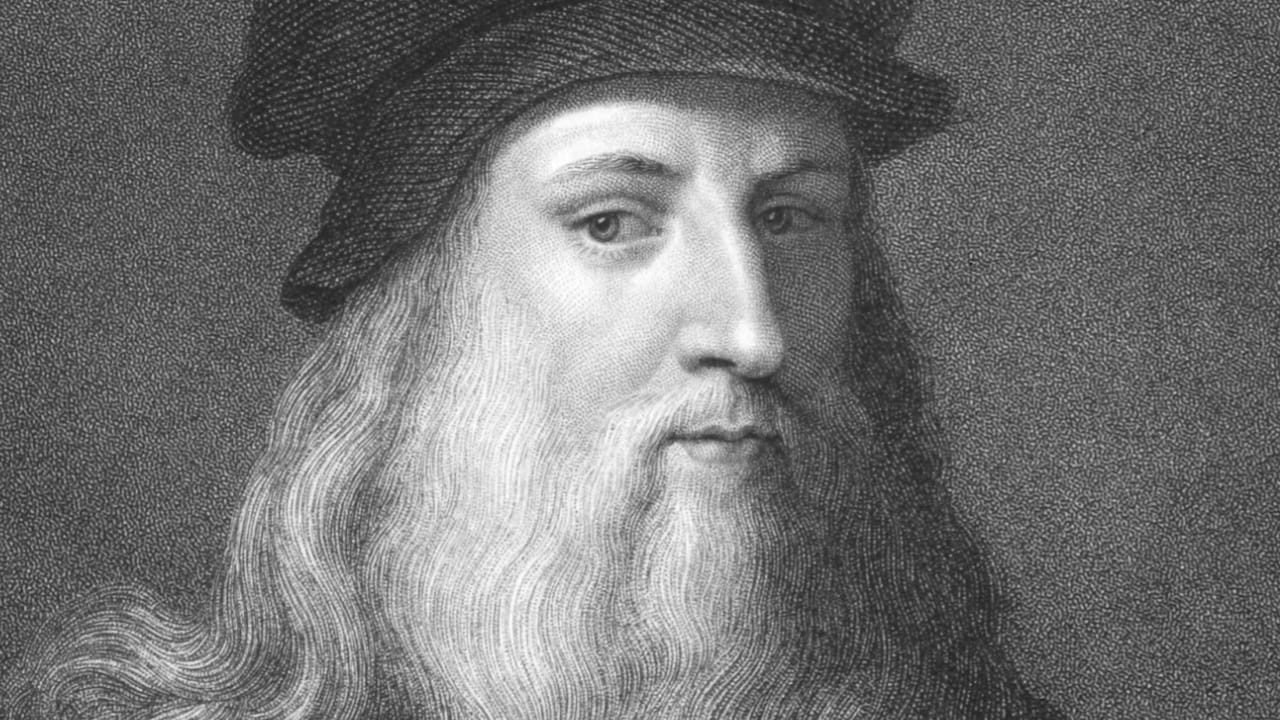
When we think of genius, it is all too easy to imagine a static figure rooted in history, someone whose brilliance belonged solely to the past. Yet when the story of Leonardo da Vinci is properly told, it becomes clear that his creative impact still shapes the world we live in, not only in art museums but in engineering labs, design studios, textbooks, and even in how we think about human capability itself. Leonardo was not just an extraordinary painter whose works have continued to captivate viewers centuries later; he was also a scientist, inventor, engineer, and thinker whose ideas anticipated later breakthroughs in technology and anatomy. His life and work were embodiments of the Renaissance ideal, a time when knowledge was not compartmentalized but interconnected.
Born on April 15, 1452, in Vinci, Italy, He was born out of wedlock, to a wealthy notary, Ser Piero, and a peasant woman, Caterina. In Renaissance Italy, such a birth often limited social and educational opportunities. However, as biographer Walter Isaacson notes, this proved to be a “terrific stroke of luck.” Free from the expectation of becoming a notary like his father, Leonardo was able to pursue his natural curiosity across art, science, and engineering. Many believe this early marginality also fueled his drive to define himself through achievement rather than inheritance, shaping the extraordinary range of his genius. And as we know it, Leonardo’s curiosity was what would now come to define him. He was raised in a period of cultural transformation, and he seized that moment with an almost untamed intellectual appetite. Though he left behind relatively few completed artworks, a small number compared to many of his contemporaries, the works that survive demonstrate an unmatched mastery of expression, technique, and psychological depth. Today, Leonardo remains one of the most studied and revered figures in history, and his legacy offers lessons that reach far beyond Europe and into every culture that values creativity and insight.
The Painter Who Painted the Human Experience
Leonardo’s paintings are not only beautiful; they are psychological studies, technical breakthroughs, and cultural touchstones that still hold relevance till today. Among his most iconic works is the Mona Lisa, painted between 1503 and 1519.
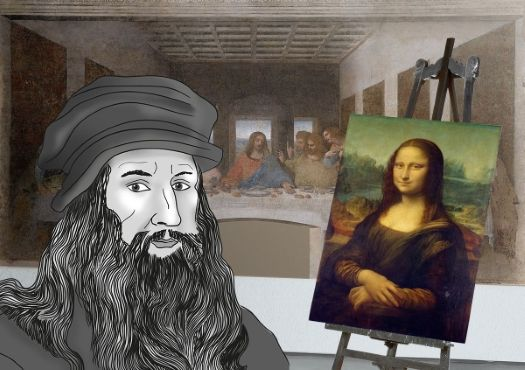
This portrait is famous for the sitter’s enigmatic expression, a subtle smile that has intrigued scholars and the public alike for centuries and for Leonardo’s pioneering use of sfumato, a technique that allows tones and colors to shade gradually into one another, producing softened edges and a lifelike quality. The Mona Lisa is not just a painting; it is an exploration of how human presence can be conveyed with quiet depth and restraint, a theme that resonates with viewers across generations.
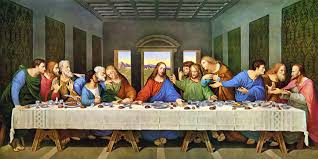
Another monumental work is The Last Supper, painted from 1495 to 1498 in Milan. Unlike a traditional static religious scene, Leonardo arranged the apostles in dynamic psychological clusters, capturing the moment Jesus announces that one of them will betray him. The composition radiates both emotional intensity and mathematical structure, showing how narrative and geometry can be harmonized in visual storytelling.
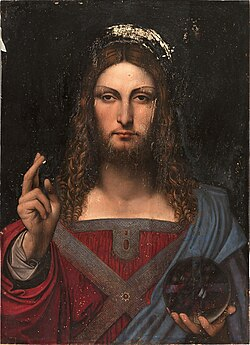
Perhaps the most controversial and emblematic testament to both Leonardo’s artistic genius and the way the art world assigns value is Salvator Mundi, attributed to Leonardo and completed around 1500, this painting of Christ holding a crystal orb sold at Christie’s auction in New York for a staggering $450.3 million, making it the most expensive painting ever sold at a public auction. Rumored to have been purchased on behalf of the Saudi Arabian Crown Prince Mohammed bin Salman by Prince Badr bin Abdullah Al Saud, the painting’s current whereabouts — whether displayed or stored — remain a subject of debate.
The price tag attached to Salvator Mundi raises compelling questions about how societies value cultural artifacts and what these valuations reveal about our collective priorities. A painting created over 5 centuries ago traded for what would fund countless artistic and educational initiatives, an irony that highlights both the prestige and the commercial pressures tied to cultural legacy.
Beyond the Easel: Science, Engineering, and the Notebooks That Spoke to Tomorrow
If Leonardo’s paintings reveal a deep understanding of human emotion, his scientific and engineering work reveals an equally profound understanding of the natural and mechanical world. Leonardo filled thousands of pages with sketches that anticipated later scientific developments by centuries. His notebooks include explorations in anatomy, mechanics, physics, botany, and hydraulics.
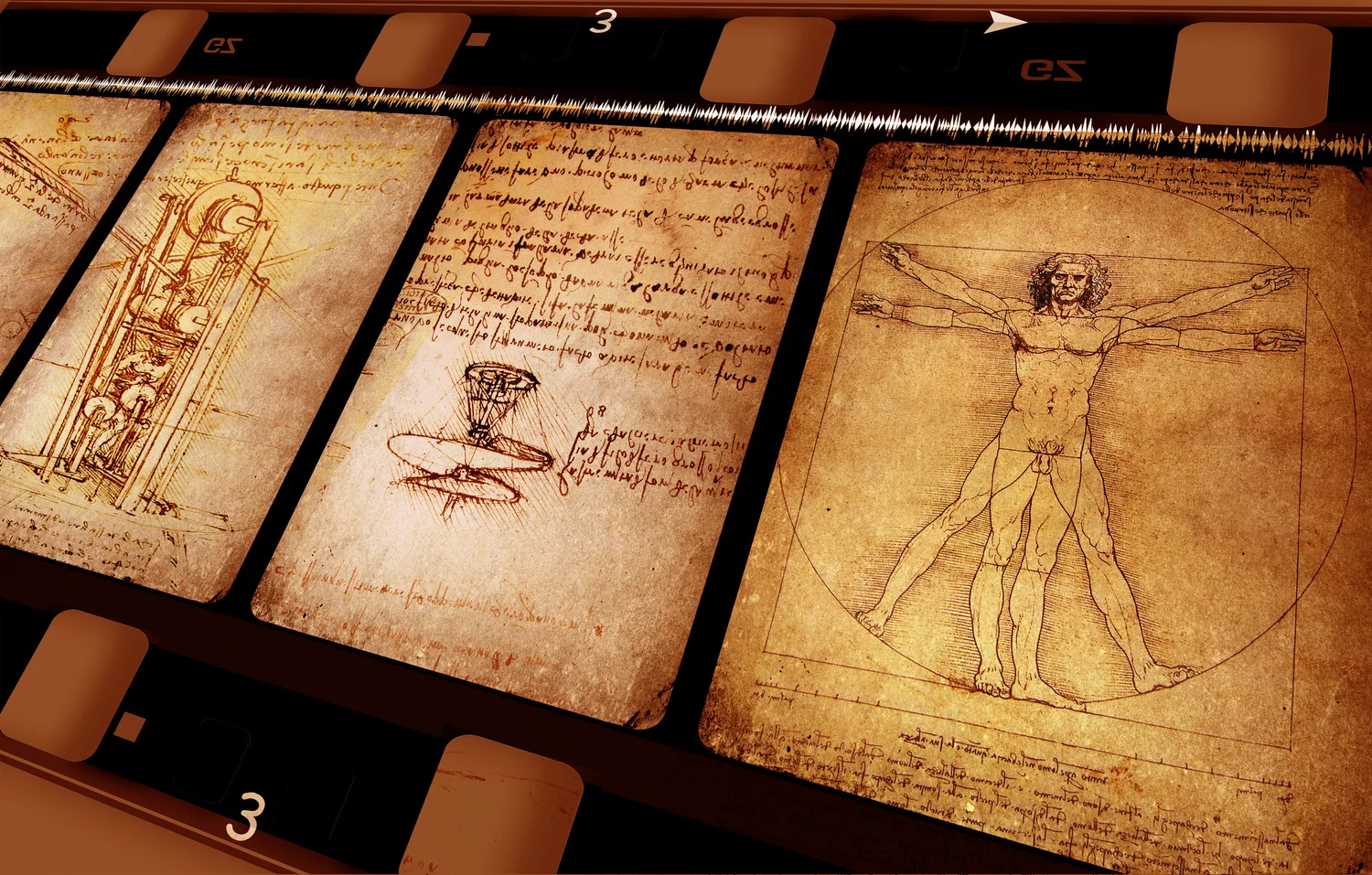
What distinguishes these drawings is not simply their imagination, but the disciplined way they attempted to observe and explain the world, effectively early models of experimental science.
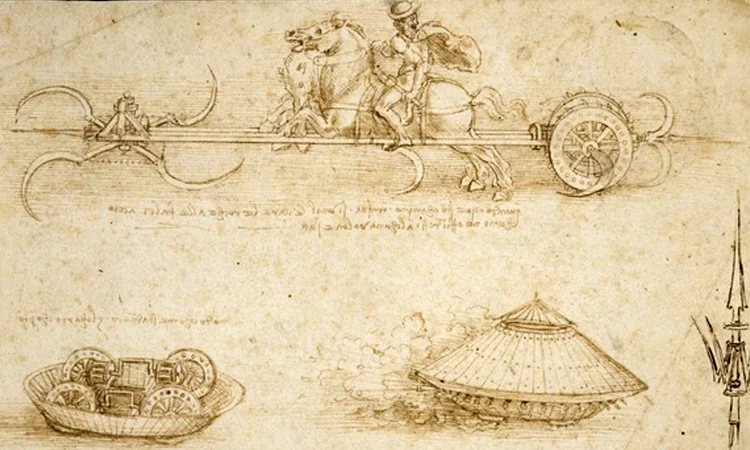
Among his many inventions were designs that foreshadowed modern technology. Leonardo sketched a prototype for a parachute, envisioning a pyramid-shaped canopy that could enable safe descent from high places, a concept that was successfully tested in the year 2000 using materials and dimensions described in his drawings. He also conceptualized the aerial screw, an early precursor to the modern helicopter, and devised ideas for moveable bridges, armored vehicles resembling tanks, and detailed mechanical automatons, long before the industrial revolution made such machines practical.
History
Rewind the Stories that Made Africa, Africa
A Journey Through Time, Narrated with Insight.
Leonardo’s approach was grounded in observation and anatomy. His Vitruvian Man, a drawing based on the ideas of the ancient Roman architect Vitruvius, illustrates the proportions of the human body and connects them to a worldview that sees human beings as reflections of cosmic order. The image has become a symbol of the blend between art and science that defined the Renaissance and remains one of the most recognizable icons of humanistic inquiry.
Legacy and Lessons: Preserving What Matters
Leonardo’s legacy lives not only in museums but in the educational frameworks and cultural values that encourage curiosity, cross-disciplinary thinking, and preservation. Across Africa and other regions outside the Renaissance heartland, the implications of his life’s work resonate deeply with ongoing conversations about cultural heritage and preservation.
African art traditions, from the Benin Bronzes of Nigeria to the rock art sites of the Sahara and Great Zimbabwe’s stone city, carry histories that are equally rich and deserving of global recognition. These artifacts are embodiments of knowledge, identity, and innovation; yet, too often, they are undervalued, displaced, or neglected. Where Leonardo’s works are enshrined and protected, many African cultural treasures struggle for visibility and preservation. The story of Salvator Mundi, sold for an extraordinary sum and then placed out of sight, should prompt reflection on whether all cultures truly value their artistic heritage, and how societies decide what is worthy of care.

If no one shows the value of something, it can easily be forgotten. African countries have increasingly taken steps to reclaim and protect heritage, from museum repatriation efforts to local initiatives preserving traditional crafts and oral literature. These efforts mirror the broader imperative hinted at in Leonardo’s notebooks: that ideas worth preserving are part of humanity’s shared legacy. Recognizing and respecting this shared cultural inheritance is essential for future generations who will inherit not only physical artifacts, but also the attitudes and values that accompany them.
The Universal Genius and Its Contemporary Relevance
In summary, Leonardo da Vinci was more than an artist or inventor; he was a thinker whose practice refused boundaries. He reminds us that understanding the world requires seeing connections between disciplines, cultures, and life experiences. His achievements were not accidental or isolated; they were the products of relentless curiosity and a belief that learning is an endless frontier.

In the 21st century, where specialization is often prized above holistic understanding, Leonardo’s life encourages a return to integrated thinking, whether in art, science, or cultural preservation. His lasting impact on both artistic technique and early engineering underscores that human creativity is most powerful when it embraces complexity rather than shuns it.
To honor such a legacy is not merely to admire old paintings or read dusty notebooks. It is to recognize the value of exploring widely, thinking deeply, and protecting the cultural and intellectual treasures that define us, in Africa, and across the world.