Knicks and Hip-Hop: Uniting New York's Soul
New York City's NBA championship parade for the Knicks was a vibrant spectacle deeply entwined with the city's hip-hop heritage and diverse identity. From legendary artists like Fat Joe and Wu-Tang Clan performing on floats to players embodying New York's gritty spirit, the celebration showcased a powerful fusion of music, community, and the enduring resilience of the city and its beloved team. The event honored not just a championship, but the cultural fabric that defines New York.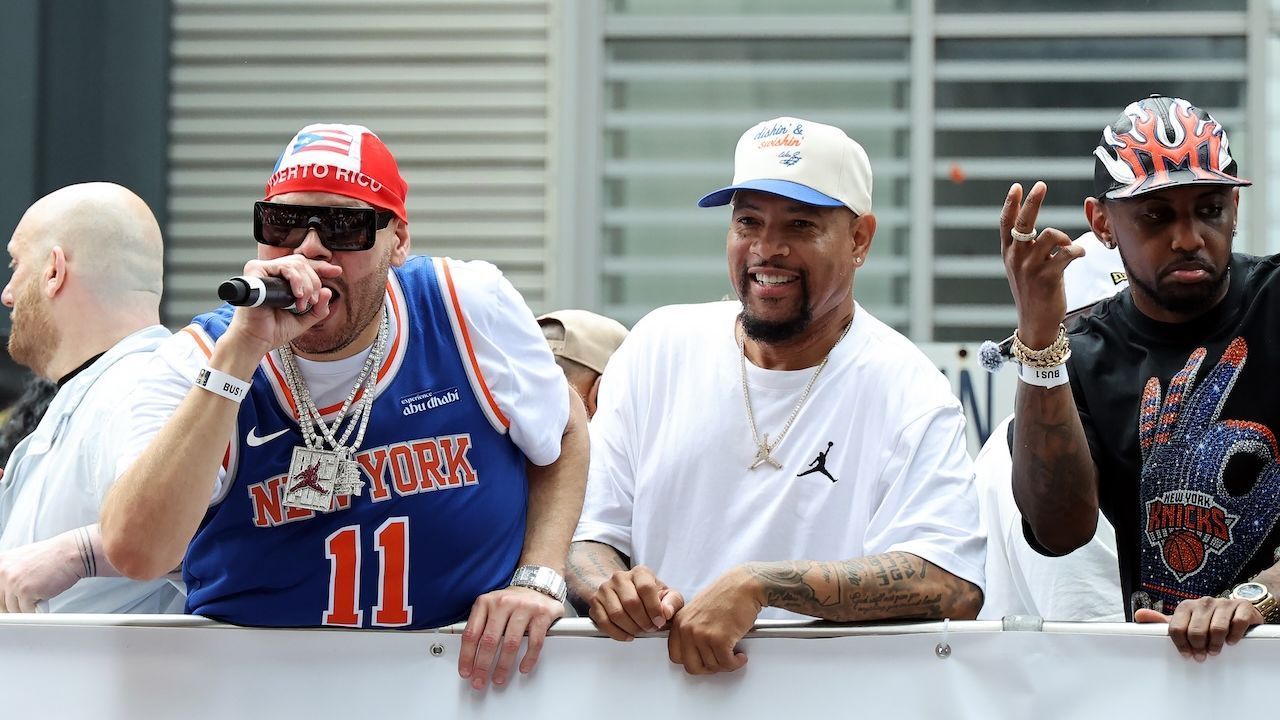
At 2 A.M. in New York City, just eight hours before the Knicks' championship parade, the presence of the Wu-Tang bus near City Hall offered an early indication of the profound intertwining of hip-hop with this triumphant Knicks team and the city's ingrained hustle culture. This connection runs deep, echoing back to 1973, the last time the Knicks clinched an NBA championship, coincidentally the year hip-hop was born in the Bronx. While hip-hop was then in its infancy, with DJs spinning records hooked to lampposts and no ticker-tape parade, today it is a mainstream force. Its legends, both living and lost, became integral to the celebration of a Knicks team destined to be honored across the city's concrete streets, studio apartments, and imperial buildings.
The celebration commenced at 10 A.M., with hip-hop royalty leading the procession. Diehard Knicks fan Fat Joe, also known as "Joey Crack," rolled down Broadway on a float, powerfully rapping "Lean Back." He was joined by Yonkers rap group The LOX, Fabolous, Mary J. Blige, Ja Rule, and Havoc of Mobb Deep. In a touching tribute, Joe assisted Havoc in performing the classic "Shook Ones, Part II," honoring Havoc's late rap partner, Prodigy, who passed in 2017. The connection extended to the team itself, with backup point guard Jose Alvarado, a fellow Puerto Rican from New York, performing 50 Cent's "Many Men (Wish Death)," a track resonating with the paranoia of nearing superstardom. Reserve guard and folk hero Tyler Kolek delighted fans with a karaoke-style rendition of 50 Cent's "P.I.M.P." This blend of reverence and irreverence, grit, swagger, and vulnerability, exemplifies New York City's rap music. For this music to soundtrack the Knicks' long-awaited championship, it was crucial that the artists themselves were part of the fandom.
The legendary Wu-Tang Clan's performance of "C.R.E.A.M." on the float was another highlight. Their entertainment during halftime of Game 4 of the NBA Finals had already reminded New Yorkers of their regional yet universal swagger and unorthodox lyricism. With their parade performance, Wu-Tang was once again on top, with Raekwon delivering lyrics with the same hunger as in "Shaolin," as fans completed verses they had heard on their neighborhood streets. It was a moment, much like the Knicks' championship, that signified triumph after struggles, asserting that grit is both an involuntary instinct and a conscious endeavor.
Two hours post-parade, New York City Mayor Mamdani, an Indian-Ugandan man raised in Morningside Heights, entered an old City Hall room adorned with portraits of historical figures like George Washington and John Jay. A longtime Knicks fan, Mamdani wore a Josh Hart jersey over his dress shirt, flashing the unflappable smile that propelled him to victory. He emphasized the cosmopolitan nature of this Knicks team—men from diverse backgrounds uniting in a city that, at its best, champions diversity. This mirrors hip-hop itself, with figures like Puerto Rican rapper Fat Joe, Black artist Ghostface Killah from Staten Island, Afro-Caribbean Styles P, London-born Nigerian OG Anunoby, and Afro-Latino Karl-Anthony Towns. Mamdani described it as feeling "so New York," recalling an officer waving the Nigerian flag at OG Anunoby and Dominican flags near Karl-Anthony Towns. His fondest Knicks memory was Toney Douglas's three-point barrage in 2011, and he walked out to "New York" by Ja Rule, Fat Joe, and Jadakiss, a song that instantly makes him feel "home." He expressed immense joy watching Fat Joe bring his peers—Harlem's Teyana Taylor, Queens' Ja Rule, Yonkers' Mary J. Blige and The Lox, and Queens' Havoc of Mobb Deep—onto the float, seeing it as a "homecoming" and a chance to appreciate those who wrote the city's soundtrack. He became emotional as Alicia Keys sang "Empire State of Mind," observing players sing and dance along to its powerful message for all dreamers in New York. The mayor reflected on how the team's unity offered a beautiful counterpoint to modern life's isolating individualism, a "reminder of what life can be like as a city."
As the parade concluded, fans dispersed, continuing the celebration across the city. Bars and restaurants in areas like the Lower East Side buzzed with fans in Knicks gear. Cash Cobain, a prominent figure in New York's thriving rap scene, celebrated from New Jersey, watching the Game 4 comeback without nerves. He, like his friend A$AP Rocky, declared, "I'm not a Knicks fan; I am a Knick." Roc Marciano, a revered Mafioso rapper, shared his relief over the "Knicks' curse being lifted," recalling early fandom memories like Louis Orr's winning shot on MLK Day. Marciano, who grew up in an affordable housing complex like Jose Alvarado, believes the Knicks embody New York rappers' spirit: the necessity to play hard and possess an underground ethos despite being in the greatest city. He connected the team's identity, especially players like OG Anunoby, to the struggles of inner-city life. His latest album, "656," even features a song referencing a Knicks win, illustrating how the team coincides with the tribulations and hopes of New Yorkers. Marciano recounted how fellow New York rapper Q-Tip urged him to watch the Game 4 comeback, inspiring him with the Knicks' resilience. The championship made him miss his late friend Ka, an intricate underground rapper and Knicks superfan who worked as a firefighter, whom he called the "most New York guy ever" and his "guardian angel."
In an Italian sports bar in East Williamsburg, Starker, a rising Nuyorican underground rapper, spoke of his own Knicks memories. Despite his burgeoning career, which forced him to miss the parade for interviews, he cherished witnessing OG Anunoby's "Hand of God" during the miraculous 29-point comeback in Game 4. He shared poignant anecdotes of his father, Lorenzo, who suffers from dementia. The Knicks' victory in Game 5, with Brunson dominating, provided a precious shared moment of laughter and triumph, a "last one" for Starker and his father amidst the challenges of his condition.
On Fat Joe's float, Jadakiss, Styles P, and Sheek Louch of The Lox performed "We Gonna Make It," an anthem of pride and hunger. The parade, for them, was a long-awaited moment, sparking a childlike wonder. Having endured countless Knicks losses alongside fans, Jadakiss couldn't even recall a favorite early memory. He described throwing T-shirts into the crowd "like he was Joe Montana." The Lox members, living in Westchester near the Knicks' practice facility, feel a unique connection to the team, seeing players like Brunson in their daily lives. Jadakiss likened Brunson's defiance of critics and his showstopping Game 5 performance to hip-hop's perseverance and its struggle to prove it was more than a fad. Styles P, joined by Melle Mel of Grandmaster Flash and the Furious Five, expressed astonishment at the parade's energy, a testament to hip-hop's journey from humble beginnings to mainstream adoration. Styles reflected on the significance of being there with his son, a rapper from Yonkers, hanging with the mayor, congresswomen, athletes, and actors, all thanks to his craft.