Kenya's Parliament in Turmoil: National Infrastructure Fund Bill Sparks Heated Debate and Accusations
Kenya's National Assembly has passed the National Infrastructure Fund Bill, aiming to fast-track development and attract private financing. However, the United Opposition vehemently opposes the Sh5 trillion fund, citing concerns over parliamentary oversight, potential misuse for elections, and constitutional breaches. They also raise national security alarms regarding a proposed partial sale of Safaricom, calling for enhanced fiscal discipline instead.The National Assembly, on Thursday, March 5, 2026, officially passed the National Infrastructure Fund Bill (National Assembly Bill No. 1 of 2026), marking a significant legislative step aimed at revolutionizing national infrastructure development.
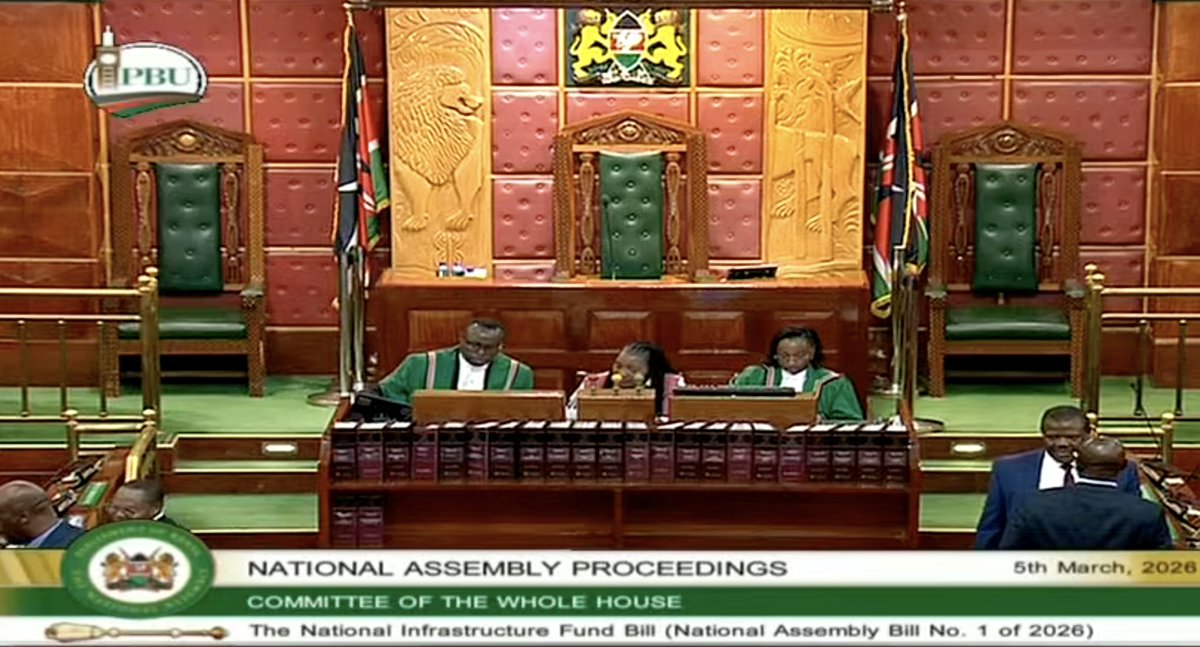
Introduced by Majority Leader Kimani Ichung'wah, the Bill was approved after lawmakers adopted it during the Third Reading in the House and will now proceed to President William Ruto for assent before becoming law.
The primary objective of the proposed National Infrastructure Fund (NIF) is to significantly fast-track the development of crucial national infrastructure projects.
Beyond accelerating development, the NIF seeks to attract vital private and alternative financing, thereby reducing the country's reliance on public debt.
It is also designed to support commercially viable infrastructure initiatives across Kenya.
However, the passing of the Bill was met with strong opposition from the United Opposition, who voiced serious concerns about its implications.
Led by figures such as Kalonzo Musyoka and Ex-Deputy President Rigathi Gachagua, the Opposition accused the government of attempting to establish a financial vehicle that would operate without proper parliamentary oversight.
They specifically claimed that the proposed Sh5 trillion fund could be potentially misused to influence the upcoming 2027 General Election and effectively bypass established parliamentary scrutiny.
The Opposition further highlighted what they described as a lack of transparency and accountability surrounding the fund.
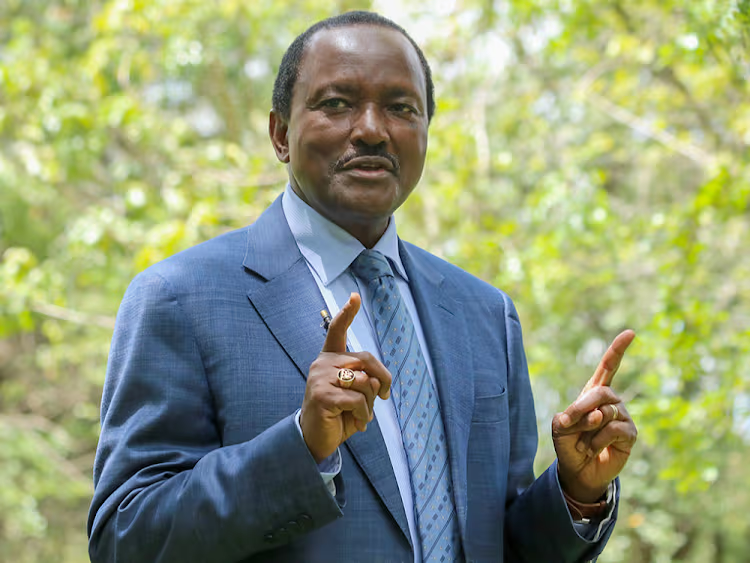
Kalonzo Musyoka, leader of the Wiper Patriotic Front, pointed out that Kenya already had over 60 public funds operating outside theConsolidated Fund as of 2024, many of which suffer from overlapping mandates, weak oversight, and poor reporting – a situation previously flagged by the Controller of Budget as a major governance risk.
Musyokacritically noted that "Kenya's infrastructure deficit stems not from a lack of resources, but from a failure to execute, procurement corruption and financial opacity."
A central point of contention raised by the Opposition was the conduct of National Treasury Cabinet Secretary John Mbadi.
He was accused of contradicting himself, having assured legislators that the National Infrastructure Fund would be subject to parliamentary oversight, only to later state under oath in a court affidavit that it was not a fund at all.
Musyoka strongly criticized this discrepancy, stating, "A Cabinet Secretary who assures Parliament of a Sh5 trillion vehicle's constitutional status, then swears under oath to its private, unincorporated nature, has not made a technical error. He has misled the legislature on a matter of the highest fiscal and constitutional consequence."
The coalition subsequently called on the National Assembly to summon Mbadi to reconcile these conflicting positions.
Furthermore, the United Alternative Government's opposition extended to a proposed partial sale of the government's stake in Safaricom.
Musyoka warned that reducing state ownership in the telecommunications giant posed significant national security risks that had not been adequately disclosed to Parliament.
He underscored that "Safaricom's network underpins the National Integrated Identity Management System, Huduma Namba, Lipa Na M-PESA government payments, eCitizen and national security-adjacent communication systems."
The Opposition expressed concern that the Sessional Paper did not specify potential acquirers of the divested shares, raising the alarm about foreign state actors potentially gaining access to critical national infrastructure.

Drawing a parallel, Musyoka cited the Kenya Pipeline Company's initial public offering as a cautionary tale, noting that it was marred by issues such as overvaluation, a non-competitive advisor selection process, limited retail investor participation, and poor secondary market performance.
He argued that if the government could not credibly execute such an IPO, there was no basis for public trust in its ability to responsibly manage a partial divestiture of Safaricom or oversee a new multi-billion shilling National Infrastructure Fund.
The Opposition also anchored their arguments in constitutional principles, specifically Article 206, which mandates that all public revenue flow through the Consolidated Fund and be subject to parliamentary appropriation.
They contended that the proposed NIF would bypass this crucial safeguard.
As an alternative, the United Alternative Government proposed deepening Kenya's infrastructure bond market, reforming the public-private partnership framework, and enforcing greater fiscal discipline and oversight to address the country's infrastructure needs.