Kenya Remembers The 'Welder': Raila Odinga's First Anniversary Ignites Political Storm
The first anniversary of Raila Odinga's death is marked by solemn ceremonies, reflections on his democratic legacy, and concerns about the erosion of his cherished ideals. While family and political figures call for a respectful commemoration, the Orange Democratic Movement navigates a significant political vacuum left by his absence.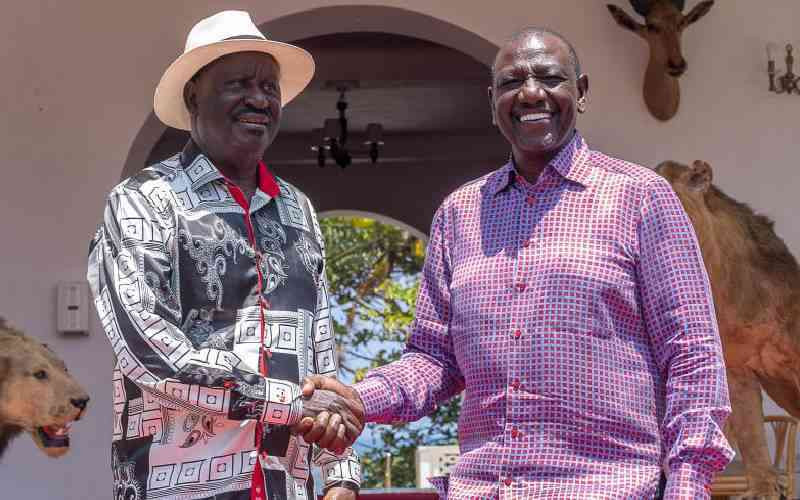
The first anniversary of the passing of Raila Amolo Odinga, a pivotal figure in Kenyan politics, was commemorated with solemn ceremonies and reflections on his profound legacy. While celebrations acknowledged the life of an influential man who significantly advanced Kenya's democracy, concerns have arisen that the democratic ideals he championed are facing erosion, with former allies and government operatives reportedly pushing back against these very principles just a year after his death. The political landscape, one year after his demise, is notably engulfed in a vacuum, with the Orange Democratic Movement (ODM) grappling with a reality unimaginable during his leadership.
A poignant candlelighting ceremony, led by his widow Ida Odinga, took place on October 14, 2026, at Kang'o ka Jaramogi in Bondo, Siaya County. This emotional gathering, organized by the Anglican Church of Kenya (ACK), brought together family members, friends, and supporters for prayers, Scripture readings, gospel music, and worship, honoring his life and legacy. Bishop Rt. Rev. Prof. David Kodia of the ACK Diocese of Bondo emphasized that the candle lighting symbolized hope, renewal, and continuity beyond death, signifying a new beginning and a transition of life.
Ida Odinga shared deeply personal accounts of her grief, admitting her ongoing struggle to accept her husband's absence. She recounted a telephone conversation with Raila the night before his death, making his passing the following morning a profound shock. Ida urged Kenyans to remember Raila beyond political and religious divides, acknowledging that his legacy belonged to many and that individuals perceived him differently—as a politician, engineer, brother, father, or friend. She stressed that the anniversary should remain a solemn occasion for celebration of life, rather than being transformed into a political rally.
Echoing this sentiment, ODM Vice Chair Otiende Amollo issued a stern warning to politicians against politicizing the anniversary commemoration on October 15, 2026. He cautioned that attempts to turn the event into a political contest, or ferrying supporters to Bondo, would undermine the solemnity and disrespect the bereaved family. Amollo insisted that the event was intended to honor Raila's life with humility and respect, characterizing it as a family, religious, and cultural occasion, not an arena for showcasing political strength or rallying support for competing factions. He appealed to politicians to refrain from mobilizing organized groups typically associated with political rallies and to keep their political ambitions, such as discussions of presidential terms, out of the commemoration.
Raila Odinga's political journey, spanning decades, was instrumental in shaping Kenya's multiparty democracy. He served as Prime Minister from 2008 to 2013 and repeatedly contested the presidency, consistently advocating for democratic reforms, engaging in opposition politics, and striving to broaden political participation. His profound compassion was rooted in his own experiences of persecution and fear, exemplified by the treacherous political climate leading up to the first multi-party elections in 1992, a period marked by danger, oppression, and challenges for the burgeoning opposition.
The current political reality for the Orange Democratic Movement after Raila Odinga's death mirrors the challenges he faced in carving out his own political identity following the death of his father, Jaramogi Oginga Odinga, in 1994. The party now confronts the task of navigating a future without the dominant figure who built and led it, confronting a significant political vacuum. Amidst these changes, Ida Odinga's call for Kenyans to uphold the democratic values her husband championed—tolerance, dialogue, and respect for opposing views—remains a crucial message, emphasizing that disagreements should never escalate to violence and that all voices deserve to be heard within a democratic framework.